


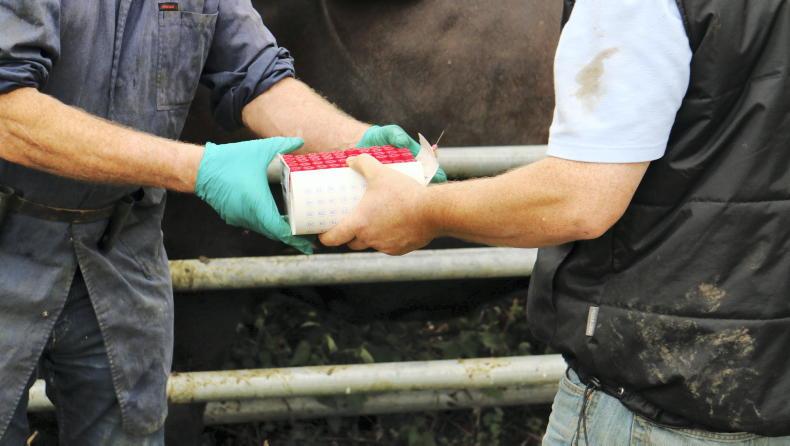
The inclusion of IBR testing in the National Beef Welfare Scheme for suckler farmers is a serious mistake by Minister for Agriculture Charlie McConalogue and must be revisited, Irish Farmers' Association (IFA) livestock chair Brendan Golden has said.
He said the IFA rejected outright the inclusion of this unnecessary and costly measure in the scheme directly to the Minister and his officials well in advance of the scheme being announced.
They chose, he added, to ignore these views and proceed with a programme requirement that is causing huge concern to farmers in addition to adding unnecessary and exorbitant costs to suckler farmers.
"[The] IFA highlighted the issue for farmers who would have positive IBR test results in the programme and the potential liabilities they would face if this is not declared at the point of sale.
"The inclusion of this measure has the potential to interfere with the normal marketing of weanlings from herds in the programme, devaluing animals and exposing suckler farmers to potential liability for purchaser’s losses," he said.
Replace
The IFA has said it has repeatedly called for the measure to be replaced with a vaccination component which would be of benefit to both suckler farmers and the purchasers of weanlings.
"In addition to the interference with the marketing of weanlings from farms in this scheme, the measure is effectively a transfer of supports committed by the Minister to suckler farmers in last year’s budget to service providers such as vets and testing laboratories.
"All of the concerns highlighted by [the] IFA are now coming to the fore, as farmers incur exorbitant charges from vets for IBR testing and receive positive test results for their animals, with no support structure to manage the disease and serious marketing concerns for their weanlings as a result," he said.
Badly designed
This scheme, Golden argued, has been badly designed, grossly underfunded and exposes suckler farmers to unacceptable risks and costs.
The Minister must revisit the scheme requirements as a matter of urgency and provide a scheme that supports suckler farmers directly for actions that are practical to implement, add value to the farm and have minimal leakage, he argued.



SHARING OPTIONS