Ireland has been found by the Court of Justice of the European Union (CEJU) to be non-compliant with the EU Habitats Directive.
The ruling comes following a case known as a "measure case", taken by the European Commission against Ireland.
The Commission alleged that Ireland had not identified a sufficient network of Natura 2000 sites where important or endangered animal or plant species, or certain rare or vulnerable habitat types are present to a sufficient level.
Ireland has been charged by the court to pay the legal fees of the Commission in the case, for an as yet unknown sum.
Issues
The Commission’s case against Ireland alleged that the country does not have the necessary site-specific conservation measures in place at any of its 423 Natura 2000 sites.
The burden of work in relation to Natura 2000 sites falls to the National Parks and Wildlife Service (NPWS).
As of today, the NPWS pointed out that more than 92% (406) of the sites have completed the full, formal land designation process by statutory instrument, with the remainder to be completed before the end of this year.
In respect of site-specific conservation objectives (SSCOs), the case alleges an absence of these at 217 sites. As of today, the NPWS claims that SSCOs have been formally identified and published in respect of all 423 sites in the case.
Compliance
On the CEJU ruling, Minister of State for Heritage Malcolm Noonan TD, who holds responsibility for the NPWS, said he is studying the judgment carefully with his colleagues in the service and the Government’s attorney general.

Minister Malcolm Noonan commented on the CEJU ruling. \ Claire Nash
The Minister pointed out that the court’s findings refer to the Natura 2000 position in January 2019, not presently.
“This Government has made very considerable progress in recent years. We are transforming and renewing the National Parks and Wildlife Service and have created a dedicated directorate to lead on the implementation of conservation measures across all of Ireland’s Natura 2000 sites.
“I am confident that we will respond to this judgment swiftly with positive and constructive actions in order to bring Ireland into full compliance,” he insisted.
‘Considerable distance’
NPWS director general Niall O'Donnchu added that the judgment in this case was anticipated but was adamant it is one which will be taken “extremely seriously”.
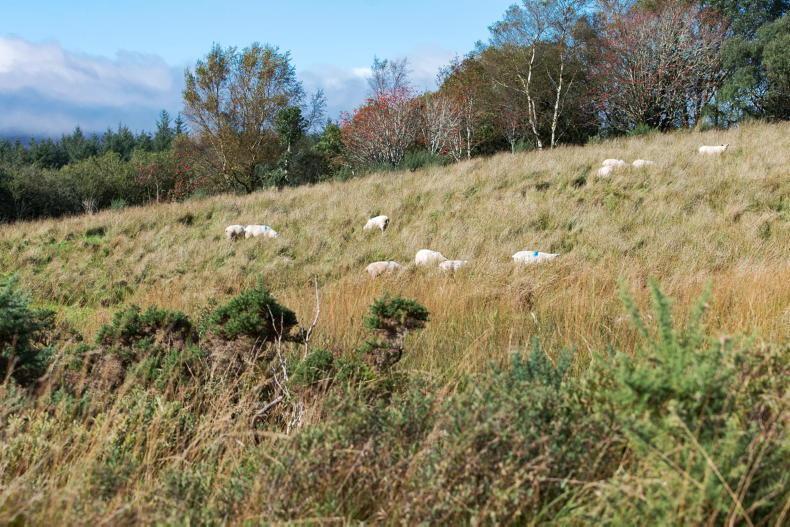
Ireland has not done enough at its Natura 2000 sites, the European Commission alleged. \ Clive Wasson
“We have come a considerable distance since January 2019. More than 95% of all Natura 2000 sites are now covered by statutory instrument.
“100% of sites are now covered by published site specific conservation objectives and we are making significant progress with regards to conservation measures. It is our firm intention that the judgement will spur NPWS on to further action,” he said.
Read more
NPWS plans 'incentives and supports' for designated lands
Park nature restoration law and reassess land designations – INHFA
Ireland has been found by the Court of Justice of the European Union (CEJU) to be non-compliant with the EU Habitats Directive.
The ruling comes following a case known as a "measure case", taken by the European Commission against Ireland.
The Commission alleged that Ireland had not identified a sufficient network of Natura 2000 sites where important or endangered animal or plant species, or certain rare or vulnerable habitat types are present to a sufficient level.
Ireland has been charged by the court to pay the legal fees of the Commission in the case, for an as yet unknown sum.
Issues
The Commission’s case against Ireland alleged that the country does not have the necessary site-specific conservation measures in place at any of its 423 Natura 2000 sites.
The burden of work in relation to Natura 2000 sites falls to the National Parks and Wildlife Service (NPWS).
As of today, the NPWS pointed out that more than 92% (406) of the sites have completed the full, formal land designation process by statutory instrument, with the remainder to be completed before the end of this year.
In respect of site-specific conservation objectives (SSCOs), the case alleges an absence of these at 217 sites. As of today, the NPWS claims that SSCOs have been formally identified and published in respect of all 423 sites in the case.
Compliance
On the CEJU ruling, Minister of State for Heritage Malcolm Noonan TD, who holds responsibility for the NPWS, said he is studying the judgment carefully with his colleagues in the service and the Government’s attorney general.
Minister Malcolm Noonan commented on the CEJU ruling. \ Claire Nash
The Minister pointed out that the court’s findings refer to the Natura 2000 position in January 2019, not presently.
“This Government has made very considerable progress in recent years. We are transforming and renewing the National Parks and Wildlife Service and have created a dedicated directorate to lead on the implementation of conservation measures across all of Ireland’s Natura 2000 sites.
“I am confident that we will respond to this judgment swiftly with positive and constructive actions in order to bring Ireland into full compliance,” he insisted.
‘Considerable distance’
NPWS director general Niall O'Donnchu added that the judgment in this case was anticipated but was adamant it is one which will be taken “extremely seriously”.
Ireland has not done enough at its Natura 2000 sites, the European Commission alleged. \ Clive Wasson
“We have come a considerable distance since January 2019. More than 95% of all Natura 2000 sites are now covered by statutory instrument.
“100% of sites are now covered by published site specific conservation objectives and we are making significant progress with regards to conservation measures. It is our firm intention that the judgement will spur NPWS on to further action,” he said.
Read more
NPWS plans 'incentives and supports' for designated lands
Park nature restoration law and reassess land designations – INHFA









SHARING OPTIONS