To identify the level of anthelmintic resistance in sheep flocks, it is vital to follow good practice when dosing lambs and taking dung samples, a leading sheep consultant has said. Speaking during a webinar hosted by SCOPS (Sustainable Control of Parasites in Sheep), Leslie Stubbings outlined how best to check if products are effective in dealing with strongyle (round) worm infections. To get a good result, lambs should be monitored for egg counts pre-dosing, with 250 eggs per gramme an “absolute minimum” and the ideal level around 500 eggs per gramme. If lambs have a low worm burden at dosing it increases the risk of getting an inaccurate result, which ultimately could lead to bad management decisions going forward, Stubbings maintained.
Correct amount
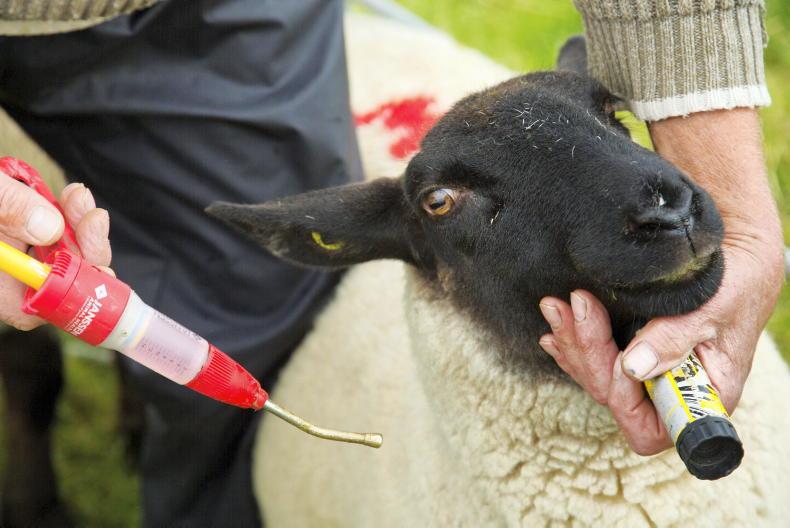
Once the decision has been made to dose, ensure lambs receive the correct amount. Treat reasonably even groups of lambs together, and dose to the heaviest lamb in the group. Dosing guns should be re-calibrated each time they are used.
To highlight the importance of accurate dosing, Stubbings said that if lambs are dosed to the average weight of the group, not the heaviest animal, it will already mean a significant proportion are only getting 80% of what they need.
In addition, if the dosing gun is off by 10%, then some lambs are only getting 72%, and allowing another 10% lost due to poor dosing technique, it could mean lambs are only getting 65% of what they need.
Reduction
Assuming dosing is completed correctly, all that is left in the sheep post-treatment are those worms resistant to anthelmintics. Where yellow wormers are used, faecal egg counts should be taken from the lambs seven days later, while for all other products, the reduction should be measured 14 days post-dosing.
Both pre- and post-treatment, fresh samples should be taken from around 15 individual animals within the group. The samples are then pooled in the lab for analysis.
There is little point checking for wormer resistance in ewes, as adult sheep tend to regain immunity post lambing, which can mask a result.
“It’s just not reliable – every year and every farm is different,” said Stubbings.
Nematodirus
Nematodirus is not the target species for efficacy tests, as there are few issues with resistance among white wormers and dosing should be done before a mass hatching of eggs occurs in spring. Farmers should follow the alert warnings for high risk periods, issued by SCOPS.
Read more
Cow cull scheme could draw farmers from west - ICMSA
Father-son drystock duo puts focus on efficiency in Roscommon
To identify the level of anthelmintic resistance in sheep flocks, it is vital to follow good practice when dosing lambs and taking dung samples, a leading sheep consultant has said. Speaking during a webinar hosted by SCOPS (Sustainable Control of Parasites in Sheep), Leslie Stubbings outlined how best to check if products are effective in dealing with strongyle (round) worm infections. To get a good result, lambs should be monitored for egg counts pre-dosing, with 250 eggs per gramme an “absolute minimum” and the ideal level around 500 eggs per gramme. If lambs have a low worm burden at dosing it increases the risk of getting an inaccurate result, which ultimately could lead to bad management decisions going forward, Stubbings maintained.
Correct amount
Once the decision has been made to dose, ensure lambs receive the correct amount. Treat reasonably even groups of lambs together, and dose to the heaviest lamb in the group. Dosing guns should be re-calibrated each time they are used.
To highlight the importance of accurate dosing, Stubbings said that if lambs are dosed to the average weight of the group, not the heaviest animal, it will already mean a significant proportion are only getting 80% of what they need.
In addition, if the dosing gun is off by 10%, then some lambs are only getting 72%, and allowing another 10% lost due to poor dosing technique, it could mean lambs are only getting 65% of what they need.
Reduction
Assuming dosing is completed correctly, all that is left in the sheep post-treatment are those worms resistant to anthelmintics. Where yellow wormers are used, faecal egg counts should be taken from the lambs seven days later, while for all other products, the reduction should be measured 14 days post-dosing.
Both pre- and post-treatment, fresh samples should be taken from around 15 individual animals within the group. The samples are then pooled in the lab for analysis.
There is little point checking for wormer resistance in ewes, as adult sheep tend to regain immunity post lambing, which can mask a result.
“It’s just not reliable – every year and every farm is different,” said Stubbings.
Nematodirus
Nematodirus is not the target species for efficacy tests, as there are few issues with resistance among white wormers and dosing should be done before a mass hatching of eggs occurs in spring. Farmers should follow the alert warnings for high risk periods, issued by SCOPS.
Read more
Cow cull scheme could draw farmers from west - ICMSA
Father-son drystock duo puts focus on efficiency in Roscommon
SHARING OPTIONS