Last week we travelled the country on the Irish Farmers Journal Crop Tour, supported by BASF’s Farming the Biggest Job on Earth campaign. Here are some of the main take-home points from our visit to the fields and the weighbridge.
Dry weather
The dry weather this season made things a lot easier and overall people looked to be happy to get work done at the right time and in good conditions. The good weather helped some crops. Sunshine helped oilseed rape during flowering and helped grain fill in some fields.
However, a lot of spring barley suffered in the dry weather and then saw secondary growth come through.
George Blackburn of Cooney Furlong Grain Company in Co Wexford commented: “We won’t have record breaking 4t/ac crops this year. I think it just got too much hardship during the growing season. The drought affected it badly enough in May.”
Speaking to agronomists across the week it was clear that winter wheat lost some potential in the recent dry weather. Agronomists said that winter wheat crops looked like they could hit record yields.
They were full, healthy and had low disease pressure, but in the dry weather over the last month crops ran out of steam and grain fill looked to be reduced as a result.
BYDV also looked to infect crops in the winter time, particularly in the south of the country in Waterford and Wexford. Kevin Looby of Denn Feeds pointed out that ground conditions weren’t suitable for travel with an insecticide in the winter time and farmers could do little to avoid the virus as a result.
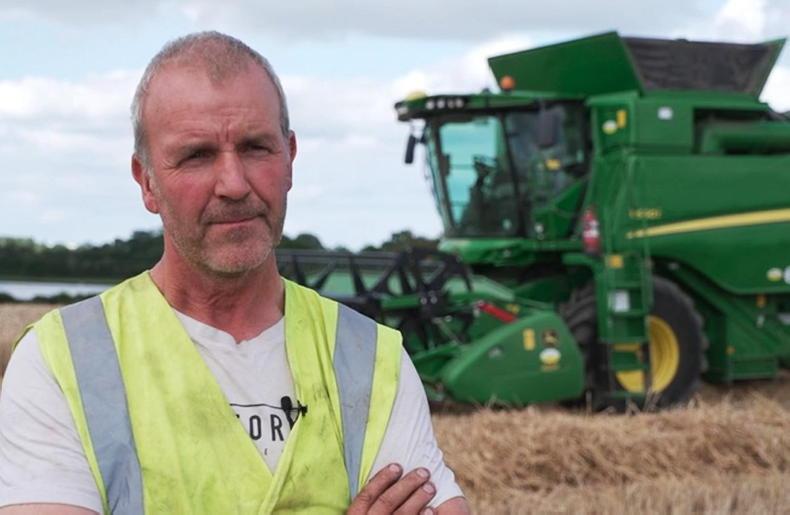
Ronan Snow farms in North Dublin and was cutting winter wheat when we visited him.
Yellow rust
“Compared to last year every day was a spraying day up in the northeast. We did get a lot of rust, but we’re ready for the rust,” said Jayne Smyth of BASF.
Brian Reilly of Drummonds commented that while tebuconazole has curativity we can’t be complacent on its availability. He said the key thing is to spray the varieties on time to avoid a problem with rust and the chemistry will work if sprayed on time.
“T0s are a fundamental part of growing winter wheat in Ireland today. You have to put a T0 on because all varieties are going to get rust and all varieties are not really strong on septoria that are on the list at the minute.
“There are potentially very good varieties coming, but they’re another year away. You need to put a T0 on. It’s all preventative. We don’t have the curative anymore.”
Take-all
Take-all came up in numerous conversations on the crop tour. It affected many winter barley crops and was visible in winter wheat crops, although it wasn’t dramatically visible.
However, when you pull the roots of a plant it was clear to see with black, brittle roots. Early sowing promotes take-all and many crops were sown early last autumn.
Rotation is key
Over the course of the crop tour we heard time and time again that winter crops after a break crop, like oilseed rape or beans, hit the highest yields. We also heard how break crops are crucial in preventing take-all and that ideally growers would be planting a break crop, then winter wheat and then winter barley. Oats would be an option for year three.
Oilseed rape
The importance of break crops was continually emphasised, noting that another benefit was the impact of roots on soil structure and the addition of yield to the following crop. With the early harvest this year it is opening up an opportunity to plant oilseed rape.
Area of the crop declined last year as weather didn’t suit to get crops in and some rotation slots were not available, but this year should be an ideal one to plant.
In the past, there was a fear of growing oilseed rape, but varieties have become much more consistent with the introduction of pod shatter resistance and disease and virus resistance genes.
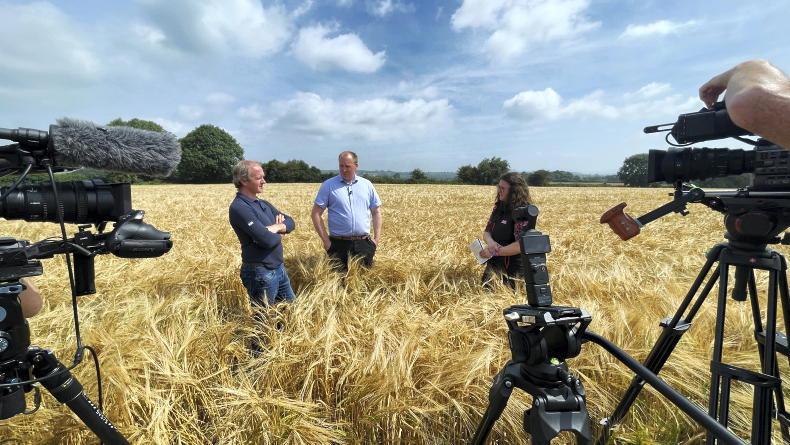
IFJ Crop Tour 24 July 2025.
Yields this year have been excellent at 1.8-2.5t/ac and above in some cases. James O’Loughlin of Quinns of Baltinglass said they like to see farmers growing the crop.
He said: “Previously oilseed rape would have been labelled as a bit of a risky crop, but what we have found in the last five year is that it has actually become the opposite and it has become very consistent.”
Brian Reilly commented that oilseed rape allows growers to use different herbicide actives as well which is a big help in the battle against grass weeds and other problem weeds and it helps to prevent herbicide resistance.
Dave Leahy of BASF said growers have become really good managers of these crops. Nitrogen applications have moved from 200kg N/ha to 120kg N/ha without any yield reduction by measuring the Green Area Index (GAI) of crops. Correct timing of plant growth regulators and fungicides have also helped those yields.
Notable quotes from the Crop Tour
“We’re lucky enough to buy Irish grain off the customers we deal with from one end of the year to the other. The beauty of that is we’re able to supply the farmers with seed, we’re looking after their crops. We’re able to get quality grain back from them and that makes a big difference when it’s going back into the mill.”
James O’Loughlin, agronomist at Quinns of Baltinglass.
“Price is always going to be a challenge. You’re always competing with imported grains which all have their own rules and regulations, what they can produce and what they can use and we’re restricted.”
Ronan Snow, north Dublin farmer.
“It’s just too easy for other mills and other grain buyers to go to the port and collect it [grain] in a lorry with very little traceablility, an awful lot less traceability than we have here and possibly grown to lower standards than we have.”
Kevin Looby, agronomist Denn Feeds on Irish grain.
“Potentially first wheats are going to do really well, second wheats there’s a lot of take-all out there in second wheats and there was a lot of take-all in winter barley as well. It’s unforgiving in yields, but rotation is the way out of this.”
Brian Reilly, Drummonds agronomist.
“From an environmental point of view you’re not going to get anything more carbon efficient in terms of food production than a crop of oats.”
James Irish BASF on the low carbon footprint of Irish grain.
“Crops have got an awful lot of solar radiation. They’ve shot out 10 days earlier than normal. We were putting head sprays on spring barley on the 1 and 2 June when you usually wouldn’t be doing it until the 10-12 June on the early crops. It’s probably entitled to come in a bit quicker because of that, but at the same time you’d always be of the opinion that the longer a crop can hold on for the more yield is in it.”
George Blackburn, agronomist Cooney Furlong Grain on spring barley.
You can watch back all of the videos from the Irish Farmers Journal Crop Tour by scanning this QR code.

QR code.
Last week we travelled the country on the Irish Farmers Journal Crop Tour, supported by BASF’s Farming the Biggest Job on Earth campaign. Here are some of the main take-home points from our visit to the fields and the weighbridge.
Dry weather
The dry weather this season made things a lot easier and overall people looked to be happy to get work done at the right time and in good conditions. The good weather helped some crops. Sunshine helped oilseed rape during flowering and helped grain fill in some fields.
However, a lot of spring barley suffered in the dry weather and then saw secondary growth come through.
George Blackburn of Cooney Furlong Grain Company in Co Wexford commented: “We won’t have record breaking 4t/ac crops this year. I think it just got too much hardship during the growing season. The drought affected it badly enough in May.”
Speaking to agronomists across the week it was clear that winter wheat lost some potential in the recent dry weather. Agronomists said that winter wheat crops looked like they could hit record yields.
They were full, healthy and had low disease pressure, but in the dry weather over the last month crops ran out of steam and grain fill looked to be reduced as a result.
BYDV also looked to infect crops in the winter time, particularly in the south of the country in Waterford and Wexford. Kevin Looby of Denn Feeds pointed out that ground conditions weren’t suitable for travel with an insecticide in the winter time and farmers could do little to avoid the virus as a result.
Ronan Snow farms in North Dublin and was cutting winter wheat when we visited him.
Yellow rust
“Compared to last year every day was a spraying day up in the northeast. We did get a lot of rust, but we’re ready for the rust,” said Jayne Smyth of BASF.
Brian Reilly of Drummonds commented that while tebuconazole has curativity we can’t be complacent on its availability. He said the key thing is to spray the varieties on time to avoid a problem with rust and the chemistry will work if sprayed on time.
“T0s are a fundamental part of growing winter wheat in Ireland today. You have to put a T0 on because all varieties are going to get rust and all varieties are not really strong on septoria that are on the list at the minute.
“There are potentially very good varieties coming, but they’re another year away. You need to put a T0 on. It’s all preventative. We don’t have the curative anymore.”
Take-all
Take-all came up in numerous conversations on the crop tour. It affected many winter barley crops and was visible in winter wheat crops, although it wasn’t dramatically visible.
However, when you pull the roots of a plant it was clear to see with black, brittle roots. Early sowing promotes take-all and many crops were sown early last autumn.
Rotation is key
Over the course of the crop tour we heard time and time again that winter crops after a break crop, like oilseed rape or beans, hit the highest yields. We also heard how break crops are crucial in preventing take-all and that ideally growers would be planting a break crop, then winter wheat and then winter barley. Oats would be an option for year three.
Oilseed rape
The importance of break crops was continually emphasised, noting that another benefit was the impact of roots on soil structure and the addition of yield to the following crop. With the early harvest this year it is opening up an opportunity to plant oilseed rape.
Area of the crop declined last year as weather didn’t suit to get crops in and some rotation slots were not available, but this year should be an ideal one to plant.
In the past, there was a fear of growing oilseed rape, but varieties have become much more consistent with the introduction of pod shatter resistance and disease and virus resistance genes.
IFJ Crop Tour 24 July 2025.
Yields this year have been excellent at 1.8-2.5t/ac and above in some cases. James O’Loughlin of Quinns of Baltinglass said they like to see farmers growing the crop.
He said: “Previously oilseed rape would have been labelled as a bit of a risky crop, but what we have found in the last five year is that it has actually become the opposite and it has become very consistent.”
Brian Reilly commented that oilseed rape allows growers to use different herbicide actives as well which is a big help in the battle against grass weeds and other problem weeds and it helps to prevent herbicide resistance.
Dave Leahy of BASF said growers have become really good managers of these crops. Nitrogen applications have moved from 200kg N/ha to 120kg N/ha without any yield reduction by measuring the Green Area Index (GAI) of crops. Correct timing of plant growth regulators and fungicides have also helped those yields.
Notable quotes from the Crop Tour
“We’re lucky enough to buy Irish grain off the customers we deal with from one end of the year to the other. The beauty of that is we’re able to supply the farmers with seed, we’re looking after their crops. We’re able to get quality grain back from them and that makes a big difference when it’s going back into the mill.”
James O’Loughlin, agronomist at Quinns of Baltinglass.
“Price is always going to be a challenge. You’re always competing with imported grains which all have their own rules and regulations, what they can produce and what they can use and we’re restricted.”
Ronan Snow, north Dublin farmer.
“It’s just too easy for other mills and other grain buyers to go to the port and collect it [grain] in a lorry with very little traceablility, an awful lot less traceability than we have here and possibly grown to lower standards than we have.”
Kevin Looby, agronomist Denn Feeds on Irish grain.
“Potentially first wheats are going to do really well, second wheats there’s a lot of take-all out there in second wheats and there was a lot of take-all in winter barley as well. It’s unforgiving in yields, but rotation is the way out of this.”
Brian Reilly, Drummonds agronomist.
“From an environmental point of view you’re not going to get anything more carbon efficient in terms of food production than a crop of oats.”
James Irish BASF on the low carbon footprint of Irish grain.
“Crops have got an awful lot of solar radiation. They’ve shot out 10 days earlier than normal. We were putting head sprays on spring barley on the 1 and 2 June when you usually wouldn’t be doing it until the 10-12 June on the early crops. It’s probably entitled to come in a bit quicker because of that, but at the same time you’d always be of the opinion that the longer a crop can hold on for the more yield is in it.”
George Blackburn, agronomist Cooney Furlong Grain on spring barley.
You can watch back all of the videos from the Irish Farmers Journal Crop Tour by scanning this QR code.
QR code.









SHARING OPTIONS