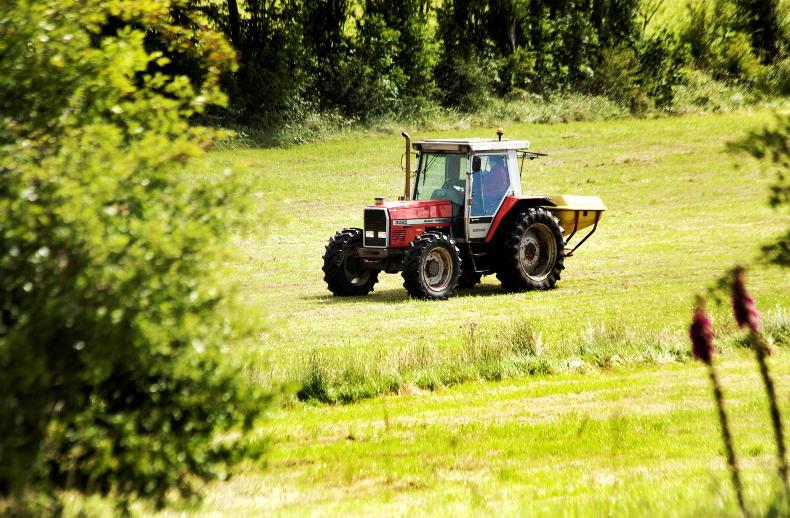
The European Parliament’s agriculture committee has adopted new rules, including active farmers, young farmer top-ups, producer organisations and greening, due to apply next year.
European Commissioner for Agriculture Phil Hogan first introduced the omnibus legislation in September 2016
ADVERTISEMENT
A wide majority of 39 committee members to five voted in favour of the so-called omnibus legislation introduced by Commissioner for Agriculture Phil Hogan last year and bogged down in lengthy negotiations with MEPs and EU member states in recent months.
Italian MEP Paolo de Castro, the parliament’s chief negotiator in the process, described the legislation as a “midterm review of the CAP”, covering 173 legislative changes to the operation of the CAP. These include:
Flexibility for each country to increase the young farmer top-up to 50% of their BPS instead of the current 25% and to maintain it for five full years, even when a young farmer hits deadlines during the period.
The ability for member states to trigger emergency payments when a crisis wipes out 20% of farmers’ incomes in a given sector, instead of 30% currently, and to increase the amounts paid.
Freedom for the Commission to launch crisis packages, such as those used in the past two years’ milk price crash, without first going through intervention and private storage aid.
More power for producer organisations to negotiate supply conditions with processors, and the extension of these powers to all farming sectors.
Relaxed greening rules with a wider selection of crops allowed in ecological focus areas, including some energy and protein crops. The definitions of arable land and permanent grassland are also tweaked to introduce more flexibility.
Deputy de Castro said he expected the European Parliament plenary and the Council of EU ministers to give the legislation final approval next month, allowing it to enter into force on 1 January 2018. While this was the original plan, there had been doubts recently that this deadline could be met.
ADVERTISEMENT
ANC connection
This schedule has a knock-on effect on payments to Irish farmers in Areas of Natural Constraint (ANC). Department of Agriculture officials said last week that they would decide how to distribute next year’s additional €25m ANC budget before the omnibus legislation comes into force because changes in EU rules could interfere with this process.

This content is available to digital subscribers and loyalty code users only. Sign in to your account, use the code or subscribe to get unlimited access.
However, if you would like to share the information in this article, you may use the headline, summary and link below:
Title: MEPs pass legislation for more flexible CAP
The European Parliament’s agriculture committee has adopted new rules, including active farmers, young farmer top-ups, producer organisations and greening, due to apply next year.
The reader loyalty code gives you full access to the site from when you enter it until the following Wednesday at 9pm. Find your unique code on the back page of Irish Country Living every week.
CODE ACCEPTED
You have full access to the site until next Wednesday at 9pm.
CODE NOT VALID
Please try again or contact support.
A wide majority of 39 committee members to five voted in favour of the so-called omnibus legislation introduced by Commissioner for Agriculture Phil Hogan last year and bogged down in lengthy negotiations with MEPs and EU member states in recent months.
Italian MEP Paolo de Castro, the parliament’s chief negotiator in the process, described the legislation as a “midterm review of the CAP”, covering 173 legislative changes to the operation of the CAP. These include:
Flexibility for each country to increase the young farmer top-up to 50% of their BPS instead of the current 25% and to maintain it for five full years, even when a young farmer hits deadlines during the period.
The ability for member states to trigger emergency payments when a crisis wipes out 20% of farmers’ incomes in a given sector, instead of 30% currently, and to increase the amounts paid.
Freedom for the Commission to launch crisis packages, such as those used in the past two years’ milk price crash, without first going through intervention and private storage aid.
More power for producer organisations to negotiate supply conditions with processors, and the extension of these powers to all farming sectors.
Relaxed greening rules with a wider selection of crops allowed in ecological focus areas, including some energy and protein crops. The definitions of arable land and permanent grassland are also tweaked to introduce more flexibility.
Deputy de Castro said he expected the European Parliament plenary and the Council of EU ministers to give the legislation final approval next month, allowing it to enter into force on 1 January 2018. While this was the original plan, there had been doubts recently that this deadline could be met.
ANC connection
This schedule has a knock-on effect on payments to Irish farmers in Areas of Natural Constraint (ANC). Department of Agriculture officials said last week that they would decide how to distribute next year’s additional €25m ANC budget before the omnibus legislation comes into force because changes in EU rules could interfere with this process.

If you would like to speak to a member of our team, please call us on 01-4199525.
Link sent to your email address
We have sent an email to your address. Please click on the link in this email to reset your password. If you can't find it in your inbox, please check your spam folder. If you can't find the email, please call us on 01-4199525.
ENTER YOUR LOYALTY CODE:
The reader loyalty code gives you full access to the site from when you enter it until the following Wednesday at 9pm. Find your unique code on the back page of Irish Country Living every week.
SHARING OPTIONS