I’m sometimes asked what’s a good design of yard for a suckler herd? Some of the basic requirements for a winter shed for suckler cows and their calves are:
Labour efficient, particularly where the farmer works off the farm. An accessible feed face with a good barrier and having the cows on slats over a big tank will eliminate most of the work that was previously done in an older set-up. The bedded area should be fully accessible by front loader for cleaning out and well sloped down to the tank to keep the straw dry.Security: there must be little risk of animals getting out. Good gates and doors on the shed and a secure yard will eliminate worries. Animal handling: a chute and crush at the back of the shed works well, albeit taking up a bit of room. A secure crush out in the yard is every bit as good, if animals can be got into it, and back to the shed, without bother. A modern calving gate in a bedded pen is a must.A reliable water supply and lots of ventilation. The shed shown here fits the bill. It was built this year on a greenfield site in Co Clare. The owner of this shed is not farming full time and feeding is often done by a family member. So, the morning routine has to be easy and the shed and yard escape-proof. The building work was carried out by Cooraclare contractor Declan Fennell.
Picture one
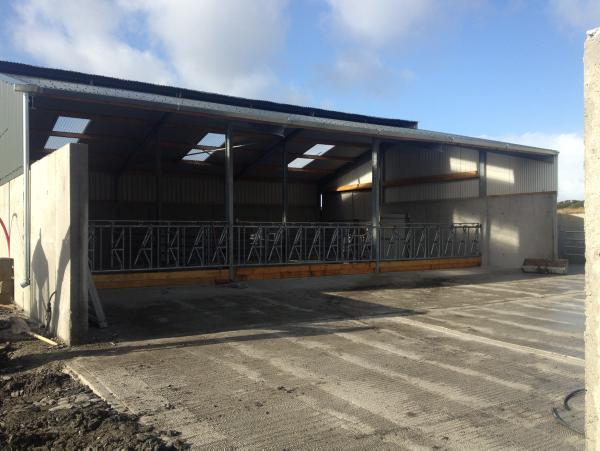
The shed and yard are designed for about 22 suckler cows plus their calves, perhaps 24 cows at a push. The shed is three bays long, with 15 foot slatted pens in front and 14 foot bedded lie-back pens behind — a tried and trusted design. Each pen will hold seven or eight cows. There is plenty of room for calves in the pens behind. Cows move in and out through creep gates.
||PIC2||
The shed has its back to the west. The eight foot overhang will keep feed dry and rain out of the slatted pens and, in turn, help keep bedding at the back that bit cleaner.
Feeding will be fast and easy here — there’s lots of room in front of the feed face. There’s room in this yard to store silage bales, etc.
Picture two
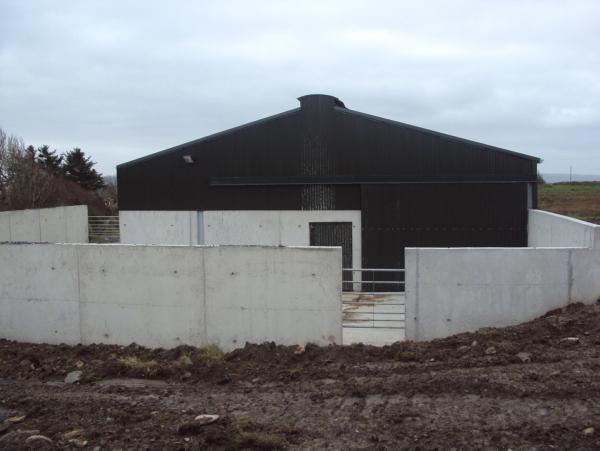
No one is leaving here in a hurry — this yard is secure. It is surrounded on all sides by this eight feet high, mass concrete wall. There are just two gates in the wall — one main access for tractors, lorries, etc, and a small access gate to the fields for stock. Both gates are new, properly hung and lockable.
Meanwhile, at the shed itself, the small door allows cows in and out of the pens, while the sliding door gives tractor access to the bedded area for cleaning out or perhaps for bringing in a round bale of straw.
||PIC3||
Picture three
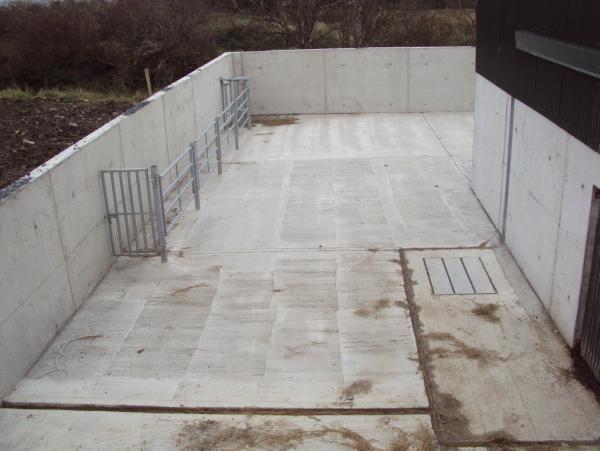
The apron around the shed is concreted — adding to cleanliness and comfort. And the yard isn’t cramped; there’s enough swing room for a tractor and loader in the sliding door.
The chute hasn’t many bells and whistles but it’s functional. The end gate near us and the automatic headgate will be effective control. Control would be helped further by a gate attached to the wall and swinging over to the end of the chute. The gap is 20 feet.
Picture four
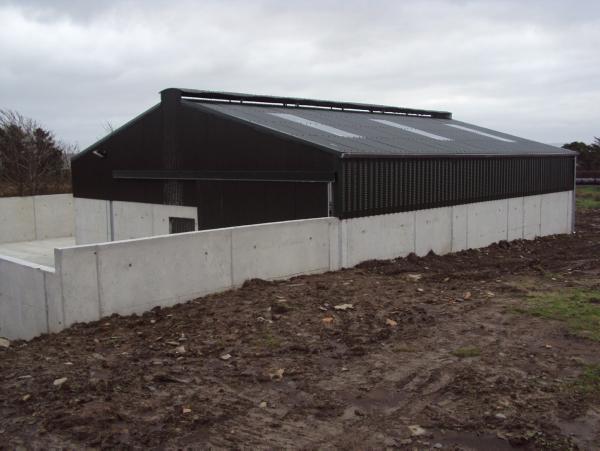
This shed has model ventilation: as well as an open feed face it has vented sheeting at the back, over the heads of the calves, and it has a roof opening.
||PIC4||
Calves will be all the healthier for it. The canopy over the opening will keep out what bit of rain would otherwise get in.
This shed is built partly back into a hill which is common across much of the country. That usually involves about a day’s extra digger work which would add about €500 to the price of the job.
Declan Fennell told me that he excavated about six feet of ground at one end of the shed. He put plenty of steel reinforcing in the eight foot high wall at the back of the shed, running along the creep area, and then backfilled outside to within a few feet of the top, levelling off the field surface and removing any need to move about lots of spoils.
Picture five
Each slatted pen is 16 feet wide and 15 feet deep, or 20m2 in all. The space requirement for suckler cows, as recommended by the Department of Agriculture is 2.5m2, so each pen will hold seven to eight cows, depending on their size.
||PIC5||
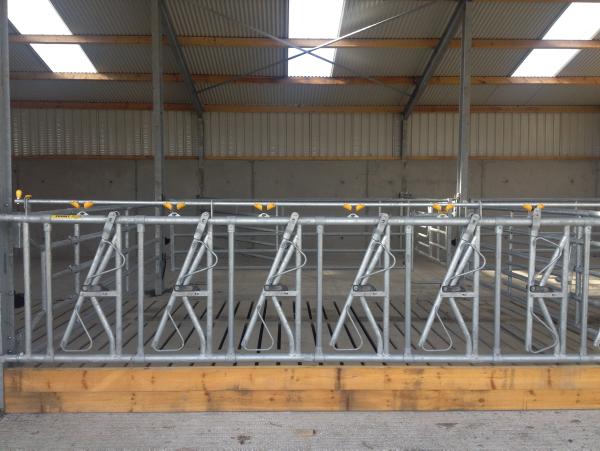
The rear pens are 16 by 14 feet or 20m2. The recommended space per calf is 1m2 to 2m2. There are locking barriers in each bay. Locking barriers typically cost €450 per bay and a diagonal barrier €250. They allow cows be held, if required.
The tank is nine feet deep, 58 feet long and 13ft 6in wide. This gives it capacity of 44,000 gallons (200,000 litres). It is covered with a 14ft x six-inch slat and there is 12 inches of toe space at the front and back. The slats are 14ft x six-inch.
Picture six
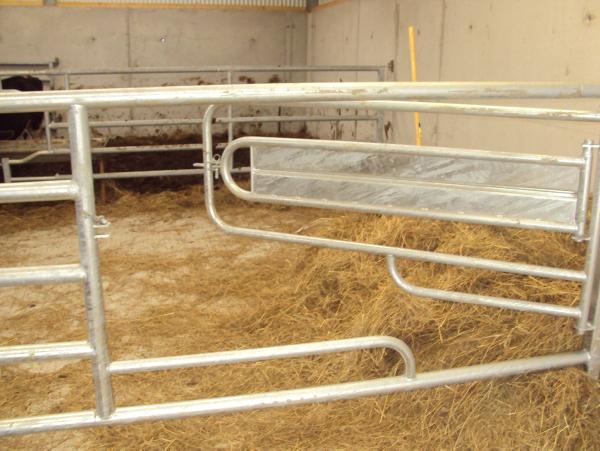
This one calving gate serves two pens.
A three-bay shed of this layout plus surrounding will cost €52,000 to €58,000 depending on exact specification.
I’m sometimes asked what’s a good design of yard for a suckler herd? Some of the basic requirements for a winter shed for suckler cows and their calves are:
Labour efficient, particularly where the farmer works off the farm. An accessible feed face with a good barrier and having the cows on slats over a big tank will eliminate most of the work that was previously done in an older set-up. The bedded area should be fully accessible by front loader for cleaning out and well sloped down to the tank to keep the straw dry.Security: there must be little risk of animals getting out. Good gates and doors on the shed and a secure yard will eliminate worries. Animal handling: a chute and crush at the back of the shed works well, albeit taking up a bit of room. A secure crush out in the yard is every bit as good, if animals can be got into it, and back to the shed, without bother. A modern calving gate in a bedded pen is a must.A reliable water supply and lots of ventilation. The shed shown here fits the bill. It was built this year on a greenfield site in Co Clare. The owner of this shed is not farming full time and feeding is often done by a family member. So, the morning routine has to be easy and the shed and yard escape-proof. The building work was carried out by Cooraclare contractor Declan Fennell.
Picture one
The shed and yard are designed for about 22 suckler cows plus their calves, perhaps 24 cows at a push. The shed is three bays long, with 15 foot slatted pens in front and 14 foot bedded lie-back pens behind — a tried and trusted design. Each pen will hold seven or eight cows. There is plenty of room for calves in the pens behind. Cows move in and out through creep gates.
||PIC2||
The shed has its back to the west. The eight foot overhang will keep feed dry and rain out of the slatted pens and, in turn, help keep bedding at the back that bit cleaner.
Feeding will be fast and easy here — there’s lots of room in front of the feed face. There’s room in this yard to store silage bales, etc.
Picture two
No one is leaving here in a hurry — this yard is secure. It is surrounded on all sides by this eight feet high, mass concrete wall. There are just two gates in the wall — one main access for tractors, lorries, etc, and a small access gate to the fields for stock. Both gates are new, properly hung and lockable.
Meanwhile, at the shed itself, the small door allows cows in and out of the pens, while the sliding door gives tractor access to the bedded area for cleaning out or perhaps for bringing in a round bale of straw.
||PIC3||
Picture three
The apron around the shed is concreted — adding to cleanliness and comfort. And the yard isn’t cramped; there’s enough swing room for a tractor and loader in the sliding door.
The chute hasn’t many bells and whistles but it’s functional. The end gate near us and the automatic headgate will be effective control. Control would be helped further by a gate attached to the wall and swinging over to the end of the chute. The gap is 20 feet.
Picture four
This shed has model ventilation: as well as an open feed face it has vented sheeting at the back, over the heads of the calves, and it has a roof opening.
||PIC4||
Calves will be all the healthier for it. The canopy over the opening will keep out what bit of rain would otherwise get in.
This shed is built partly back into a hill which is common across much of the country. That usually involves about a day’s extra digger work which would add about €500 to the price of the job.
Declan Fennell told me that he excavated about six feet of ground at one end of the shed. He put plenty of steel reinforcing in the eight foot high wall at the back of the shed, running along the creep area, and then backfilled outside to within a few feet of the top, levelling off the field surface and removing any need to move about lots of spoils.
Picture five
Each slatted pen is 16 feet wide and 15 feet deep, or 20m2 in all. The space requirement for suckler cows, as recommended by the Department of Agriculture is 2.5m2, so each pen will hold seven to eight cows, depending on their size.
||PIC5||
The rear pens are 16 by 14 feet or 20m2. The recommended space per calf is 1m2 to 2m2. There are locking barriers in each bay. Locking barriers typically cost €450 per bay and a diagonal barrier €250. They allow cows be held, if required.
The tank is nine feet deep, 58 feet long and 13ft 6in wide. This gives it capacity of 44,000 gallons (200,000 litres). It is covered with a 14ft x six-inch slat and there is 12 inches of toe space at the front and back. The slats are 14ft x six-inch.
Picture six
This one calving gate serves two pens.
A three-bay shed of this layout plus surrounding will cost €52,000 to €58,000 depending on exact specification.






SHARING OPTIONS