



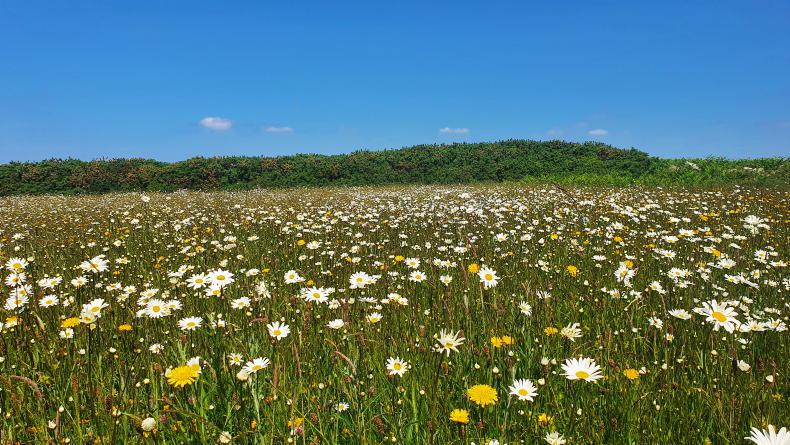
Some 90% of Ireland’s protected habitats are in unfavourable conservation status, a new report on the status of Ireland’s protected habitats has found.
Fifty-one per cent of these habitats are showing deteriorating trends across their national ranges, which includes sites that are designated as special areas of conservation (SAC), as well as the wider countryside.
Published every six years, the report presents a comprehensive overview of the conservation status of the 59 habitats and 60 species in Ireland that are protected under the EU habitats directive.
Positive signs
The report shows early signs of recovery in areas where focused conservation efforts have been made, with 9% of habitats showing improving trends.
There are further positive findings for species, with 58% in ‘favourable’ conservation status and over two-thirds showing either 'stable' or 'improving' trends.
Commenting on the findings, Minister of State for nature Christopher O’Sullivan said: “Given the huge efforts to turn the tide on biodiversity loss in recent years, these will be disappointing findings for many, but we cannot lose hope.
Nature cannot be rebuilt in a day, nor, in many cases, even in a decade
“This report is evidence that targeted conservation and restoration actions do deliver positive outcomes.
"We must be heartened by the huge effort under way across all corners of the country to protect and restore our natural world and remind ourselves of the need for patience: while nature can bounce back quickly, the recovery of habitats and species to the high standards set out in the habitats directive can take time.
“We must also redouble our commitment to nature by continuing investment, strengthening collaboration and improving delivery as we strive to stop the loss of biodiversity and move towards a future where it is protected and restored.
"In the context of the Nature Restoration Law, this will mean working with colleagues across Government to improve partnerships and resourcing, including with agencies, local authorities and landowners, and I am committed to delivering on this,” he said.
Targeted programmes
The Department of Housing, which is responsible for nature, said that targeted programmes have been successful, such as National Parks and Wildlife Service (NPWS) initiatives to protect the lesser horseshoe bat, as have agricultural schemes such as LIFE Programmes, EIPs and the NPWS Farm Plan Scheme, all of which play an important role in supporting private landowners to take action to protect habitats and species.
“The Agri-Climate Rural Environment Scheme (ACRES) under the Common Agricultural Policy (CAP) is playing a key role as it offers targeted actions for farmers, particularly in areas dominated by semi-natural vegetation and Natura 2000 sites,” it added.
Challenge
Minister O’Sullivan added that while the scale of the challenge is significant, these results prove that where we act, we can make a difference.
“Targeted conservation work in communities across the country is beginning to reverse negative trends. Peatland restoration programmes and collaboration have driven improving trends for raised bog and associated habitats. The all-Ireland pollinator plan has made a major impact on the expansion of hay meadows.
“We have a long way to go, but we are starting to get a clearer picture of what’s working and where to focus our efforts. This is exactly the kind of evidence base we need as we look ahead to Ireland’s nature restoration plan,” he said.
Director general of the NPWS Niall Ó Donnchú said: “Nature cannot be rebuilt in a day, nor, in many cases, even in a decade. The real time to begin was yesterday.
"And though today’s findings may feel disheartening, they also reveal the quiet but powerful momentum of nature and species renewal already under way.”
Next steps
The report’s findings will help to guide the implementation of Ireland’s national biodiversity action plan and inform future restoration programmes including the national nature restoration plan required by the EU nature restoration regulation.
There will be a continued focus on ecological monitoring and collaboration across public bodies to enhance the scientific rigour associated with this assessment process.



SHARING OPTIONS