



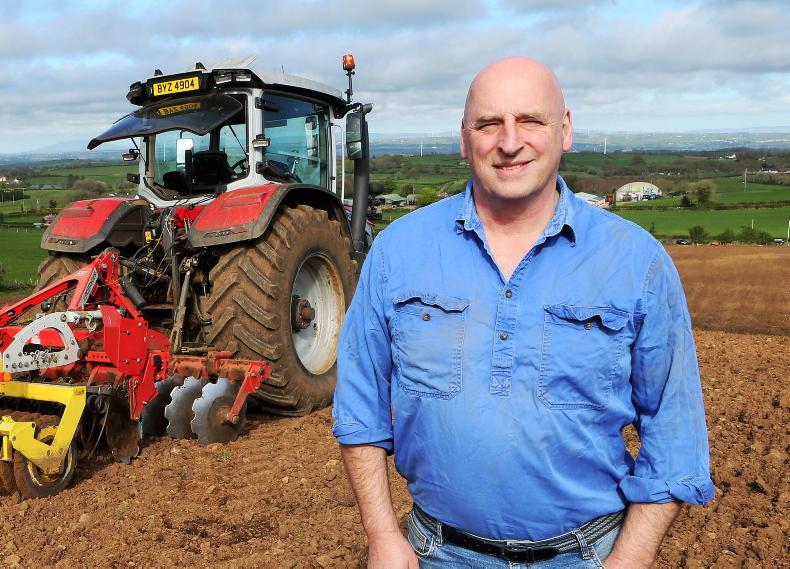
There are many reasons to be positive about the future for farming in NI, although we must be mindful of current challenges especially relating to the environment, the new president of the Ulster Farmers’ Union (UFU) John McLenaghan, has said.
In an interview with the Irish Farmers Journal, the new UFU leader suggested that those who ignore the challenges are risking the future for the next generation on their farms.
He maintained there is currently “a bit of time” to embrace new technologies and solutions to deal with excess nutrients on some farms.
“Farmers who have been most successful in this industry have always recognised the need for their businesses to be evolving,” he said.
So, does he think more intensive farmers should be embracing the likes of the Sustainable Use of Livestock Slurry (SULS) project, which involves taking separated slurry solids off-farm to anaerobic digestion?
“For some farms, it will be what ensures longevity for that farming business. They need somebody to take that problem away from them to continue at current levels of productivity. They will not be able to continue unless they embrace that. The important thing is that we have those opportunities – alternative technologies whatever they happen to be,” responded McLenaghan.
While there might be farmers who effectively “bury their head in the sand”, on the other side of the argument are some organisations who want to see an end to livestock farming and commentators etc who advocate for reductions in animal numbers.
But in between is a reality that food production needs to rise to cater for a growing global population, while it is becoming increasingly difficult to produce food in some parts of the world due to a changing climate.
McLenaghan believes we are approaching a pivot point.
“Can we produce more from less and in such a way that we are not diminishing our ability to keep doing it – that is the real challenge that society faces. We need to do what we are doing now, better, in order to do more in the future,” he said.
John McLenaghan is optimistic that progress will soon be made on the thorny issue of bovine TB.
“We will get on the road to solving the TB problem – we know what to do and we know it can be done. Everybody knows what to do,” he said.
Rather than just repeat arguments around the fact that badgers help spread TB, he made the point that high rates of disease impact the welfare of these animals.
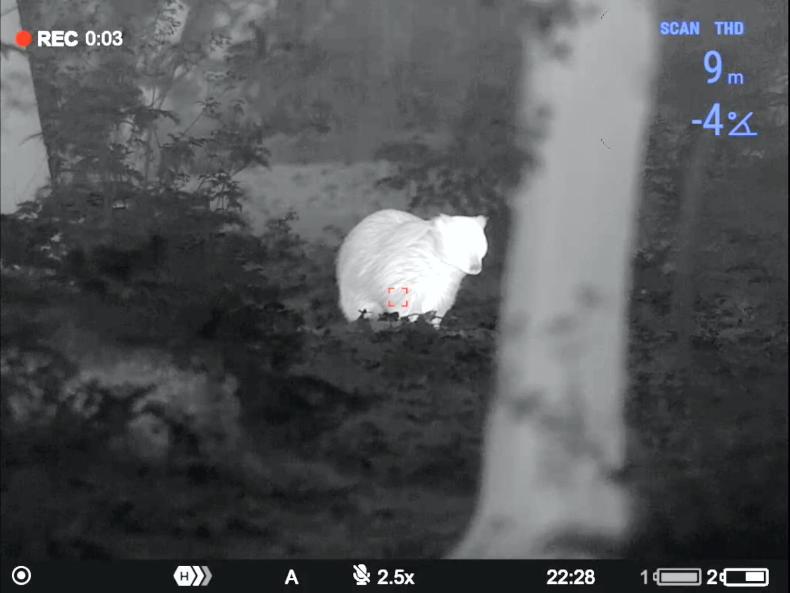
He also quoted the recent example of Rathlin Island where rats and ferrets have been removed to help preserve seabird populations. It is a similar situation with badgers, who have no natural enemy and with nothing limiting their expansion, it is leading to a population explosion and pressure on other wildlife such as nesting birds.
“What I see is there is recognition purely from a wildlife perspective that the badger population needs to be brought under control. If we didn’t have TB in cattle, we probably would have been looking at the badger situation before now – it has muddied a bit of thinking,” said McLenaghan.
Ultimately, he believes some form of meaningful intervention by DAERA to control the disease in badgers will receive a positive response from farmers and help to unlock other actions to control the disease.
“We want a healthier badger population – if we get that, we will very quickly control the disease within cattle,” said McLenaghan.
Social media is now an important way of communicating with farmers and the general public, but despite strong views often expressed online, UFU policy is still set through its committee structure, said John McLenaghan.
Those committees feed views into the UFU Executive and it is this body which makes decisions on behalf of members. “We [the presidential team] do what we are told. It is the executive which gives us the direction,” he said.
“We have an ultra-democratic decision-making process.”
He also pointed out that the union must do what is best for the industry as a whole, not just one sector, so there is often a balance to be struck.
The UFU continues to make the case for a sheep scheme, said John McLenaghan.
“We have called for a sheep scheme from the start. For some reason it was missed out in the original farm support proposals,” he said.
One option might be to divert funds from the Beef Carbon Reduction (BCR) scheme when it potentially finishes at the end of 2027; however, that has not been discussed with DAERA and the new UFU President would much prefer if another source of money is found.
At the same time, he said he recognises the £330m of earmarked funding for agriculture from Stormont is not guaranteed going forward and farmers must be able to explain why it should continue and what could be delivered if more was available.
“We can’t just expect more to be given to us without providing any justification for it,” he added.
On the future for the BCR scheme, which was initially to run for 4 years, he indicated it should continue beyond 2027.
“It has helped drive down our carbon footprint – is that still a worthwhile aim? I believe it is. So why would you stop?” he said.
Carbon audits
While the UFU accepts that farmers must deliver actions to justify continued payments, including participation in the soil nutrient health scheme and bovine genetics project, there are concerns from members around a third potential condition related to carbon audits.
“If it is needed by others along the supply chain, then it is up to them to get that message back to farmers,” said McLenaghan.
New UFU President John McLenaghan runs a successful and innovative farm outside Garvagh in Co Derry.
Having graduated from Reading University with a degree in agricultural economics he came back to the home farm in the early 1990s.
The aim was to expand the existing dairy herd as well as a commercial egg enterprise, with eggs graded and packed, before being sold into local shops and catering outlets.
With full control of their egg business, that brought challenges, but also opportunities, which was in total contrast to dairy, where the price was only known a month after it was produced, he recalls.
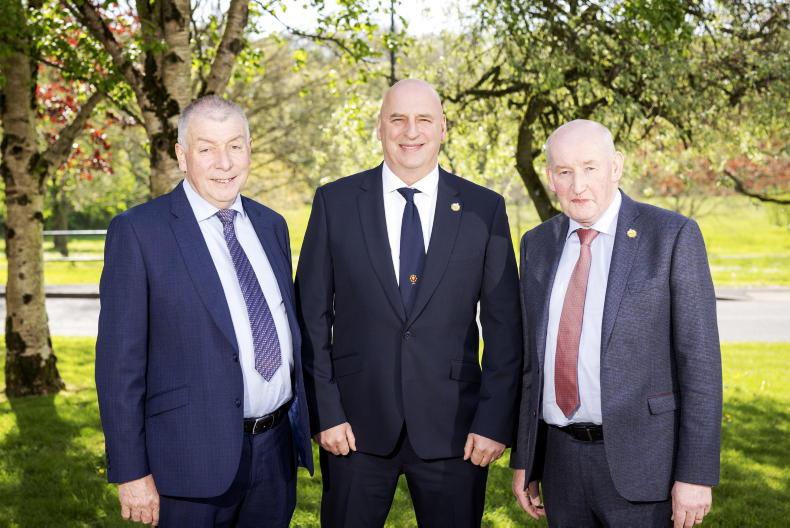
To help maintain a profit margin in eggs, the McLenaghans looked at how they could manage costs and that led to them putting up the first 250kW wind turbine in NI back in 2005.
In 2006, they were the first egg unit in Ireland to switch from battery cages to colony cages.
Around that time John McLenaghan also completed a Nuffield Scholarship which looked at alternative uses for manures, including the likes of anaerobic digestion (AD).
“The nitrates directive was coming in and I recognised that the amount of manure being produced was going to be a limiting factor on the farm,” he said.
Planning approval was secured for one of the first biogas plants on the island of Ireland.
However, milk prices had crashed, so the decision was taken to expand the AD plant and feed silage to it rather than cows.
That biogas plant is now the main enterprise and runs alongside a beef finishing unit. Some eggs continue to be marketed, but there is no longer any poultry on the farm. The feedstock for AD is mainly slurry, chicken manure, grass silage, some wholecrop as well as byproducts from dairy and potato processing.
John McLenaghan doesn’t rule out re-starting a dairy enterprise in the future, but that will be a decision for the next generation.
Normally the new UFU President nominates a charity for their two years in office.
John McLenaghan has decided to take a more flexible approach. At the Balmoral Show, money will be raised for Rural Support.


SHARING OPTIONS