



A revised Nutrients Action Programme (NAP) put out for public consultation on Monday, is not perfect, but it has been “significantly improved” and “a world away from where we started,” the president of the Ulster Farmers’ Union (UFU), John McLenaghan has said.
In a letter to members, the UFU leader said his organisation had worked relentlessly to remove unworkable measures and secure practical alternatives to what was originally put forward in May 2025.
Those alternatives were set out in a report that has formed the basis of the DAERA consultation, produced by a Stakeholder Task and Finish group chaired by an independent facilitator, Karen Brosnan. It includes representatives from across farming, food processing, environmental groups and government.
The NAP measures are principally aimed at tackling water quality in NI and in his letter to members, McLenaghan made clear that NI is under intense scrutiny and action is required.
“If government fails to act, the courts can and will intervene and the outcome would be far more severe and less workable for farmers than anything currently on the table.
"The UFU’s priority throughout has been to avoid a situation where regulation is imposed on us through the courts,” he said.
NIAPA
Also commenting, the chair of the NI Agricultural Producers Association (NIAPA) James Lowe said a monumental effort had gone in to find compromise and ensure an agreed way forward.
“What was originally proposed was not workable or practical. There will still be some pain for farmers, but what we have ended up with will support productive farming, the environment and is economically sustainable,” he said.
Water quality
The consultation document sets out the main water quality issues in NI, with nitrates levels increasing in rivers and lakes, especially in recent years.
However, the main problem remains high Phosphorus (P), which was on a sustained downward trend since 1998, but that trend has now reversed and almost half of our rivers have excess P.
There is a recognition that farmers have invested significantly since the NAP was first introduced in 2007 and the industry is not the only source of excess nutrients, with action required across the likes of wastewater treatment, septic tanks and urban drainage.
However, the NAP rules deal with nutrient pollution from agriculture – other problem areas come under other government departments and different laws.
Whole farm limits proposed for N
One of the main concerns raised following publication of the 2025 NAP proposals was around new chemical fertiliser nitrogen (N) limits, with those limits taking into account the N potentially available from slurry and manures.
Analysis by AgriSearch highlighted potential unintended consequences, with the restrictions on fertiliser use likely to result in reduced forage production and greater reliance on imported concentrate feed, thereby putting further pressure on the environment.
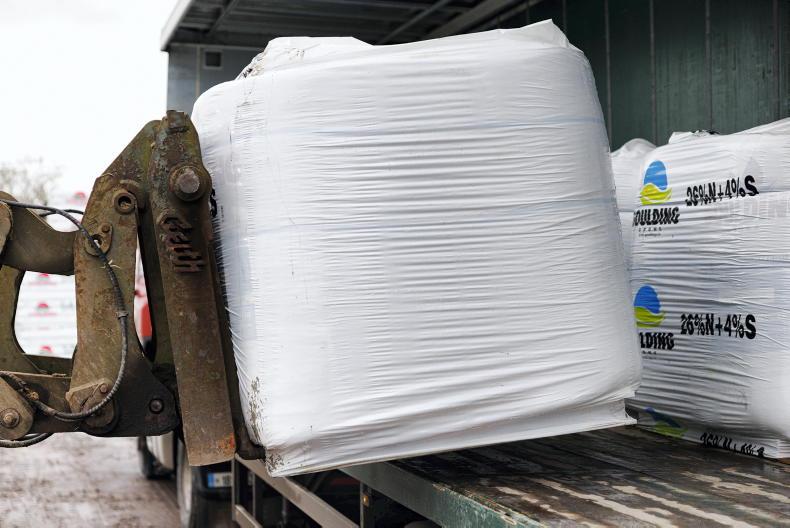
On a non-derogated dairy farm, the new annual limit equated to just 5.5 bags/ac of CAN to grow silage crops, and on a typical beef and sheep farm making two cuts of silage, fertiliser input would have been limited to just 2.5 bags/acre.
Those proposals have been dropped, with the latest NAP document suggesting whole farm limits based on how much grass a farm produces.
Only those farms that can “demonstrate higher grass production” of 12 to 15t dry matter per hectare (DM/ha) will be able to apply up to 272kg N/ha/year and they will also have to do soil sampling every four years to support this higher N allowance.
Those with moderate to high yields (10 to 12t DM/ha) can apply up to 242kg N/ha, while other farms can put on up to 222kg DM/ha.
In effect, those proposals are similar to what is currently in place. Under the existing NAP rules, a dairy farm in NI can apply up to 272kg/ha/year of fertiliser N (8.25 bags/ac), while a beef farm can spread up to 222kg N/ha/year (6.75bags/ac).
The 2025 proposals also included a complete ban on the use of unprotected urea, starting from 1 January 2026.
That has been amended in the latest plan and farmers will be able to use unprotected urea early in the season from 1 February to 31 March, given that the risks of high ammonia losses due to it being spread in dry conditions, are not as great at that time of year.
From 1 April to 15 September only protected urea can be spread.
Farmers will be required to keep records to demonstrate compliance.
New group to oversee NAP
A steering group is to be established and it will oversee the implementation of the new NAP rules and review progress. It is intended that the rules will apply from 2027 to 2030.
The new group will include representatives from farming, government, food processing and environmental organisations. The first main review by the group is to be done within two years following implementation of the relevant legislation.
Increased advice in ‘focused areas’
Throughout the consultation document there are numerous references to the need for more advice and education around measures to improve water quality.
There is also a proposal to introduce a “focused approach” in river catchment areas where nutrient losses from agriculture pose the greatest risk to water.
Something similar was set out in the 2025 NAP consultation, although it suggested that farms in these areas might be forced to reduce stocking rates, if improvements did not occur.
The possibility of mandatory controls is not in the latest document and instead the focused approach will rely on “advice, education and voluntary action”. That includes advisory farm visits, with farmers also to be invited to take part in groups to discuss practical actions to improve water quality.
Buffer strips in arable fields
A major concern raised by crop growers in the 2025 NAP proposals centred around a requirement to leave a 3m uncultivated buffer alongside a waterway in arable fields to help reduce nutrient losses.
Rather than impose a mandatory buffer, the latest proposals are for this to be left as a “voluntary” option, with the width of the buffer dependent on the local site and the risk of nutrient runoff.
There is also a proposal in the latest NAP consultation to introduce a requirement for farmers to take “mitigation measures” at planting stage to help reduce the risk of nutrient runoff from late harvested crops such as maize.
Actions could include an upturned outside furrow running parallel with a waterway or the inclusion of a “grass filtration buffer”.
Change to definition of ‘heavy rain’
The current NAP regulations prohibit slurry spreading when heavy rain is falling or forecast within 48 hours, with ‘heavy rain’ defined as “more than 4mm of rain per hour”. That definition is to be added to by including the words ‘or when a Met Office weather warning for rain is in operation’.
Voluntary liming on suitable land
The 2025 NAP proposals also included a suggestion that more intensively stocked livestock farms (over 150kg manure N/ha) would have to undertake regular liming of their fields.
As with some other proposals, that mandatory requirement will now be a voluntary option, with farmers encouraged to have up-to-date soil analysis and regularly lime fields as determined by soil pH.
Revisions to round bale storage
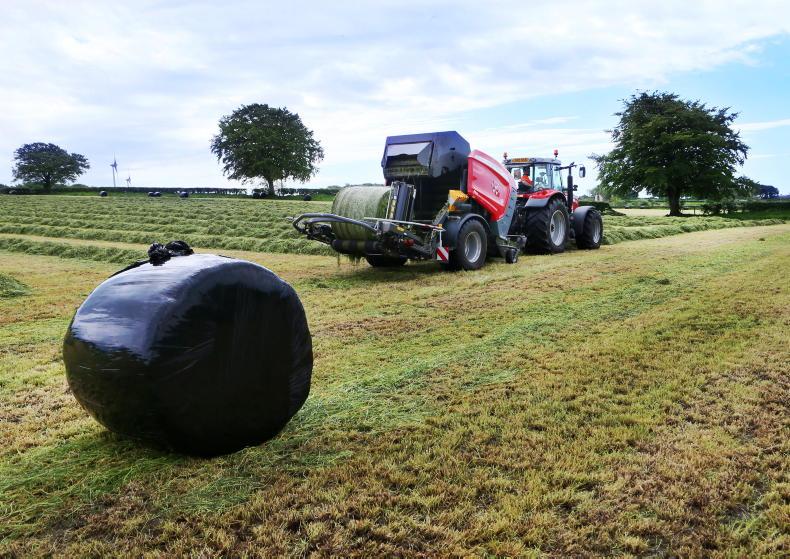
Silage bales must be stored at least 10m from waterways and in the 2025 NAP proposals it was suggested that this would be increased to 20m, with farmers not allowed to stack bales more than two high, unless stored in a site with effluent collection facilities.
Under the latest plan, the 10m requirement has been retained, although it is proposed to include an amendment which states that bales should not be stored in areas “where there is increased risk of run-off into a waterway”.
Various sources of potential funding
As well as the imminent Sustainable Farming Investment Scheme (SFIS) to be released by DAERA, there are other potential sources of funding to help deal with water quality issues in NI.
A five-year Lough Neagh Catchment Programme running to 2031 is expected to come with a budget of £49.3m (€56.7m).
Of that, €33m is coming from the Department of the Taoiseach through the Shared Island Initiative, with £11.5m (€13.2m) from DAERA and €10.5m from the Irish Government’s Department of Housing, Local Government and Heritage.
The programme is expected to provide advice to farmers around management of water and financial assistance for the likes of fences, riparian strips and tree/hedge planting along watercourses, as well as livestock drinkers.



SHARING OPTIONS