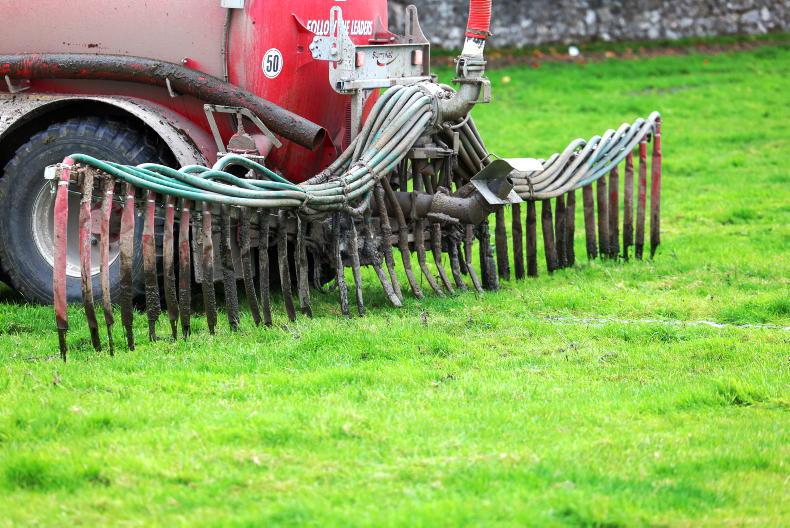
Approximately 120 different practical actions that could cut greenhouse gas emissions on dairy units are being investigated as part of a new project involving 56 commercial farms across four main dairy regions of the UK.
The UK Dairy Carbon Network is a three-year, multi-million-pound project funded by DEFRA, led by the Agri-Food and Biosciences Institute (AFBI) and involving various research organisations from across NI and Britain.
In NI, a network of 20 dairy farms has been established, which is being managed by AgriSearch.
Speaking at the first farm walk for the new NI network on Tuesday, Professor Elizabeth Magowan from AFBI explained that each farm has chosen two or three specific actions they will concentrate on over the lifetime of the project. Those actions are contained within four main categories of breeding, nutrition, animal health or nutrient management.
Ultimately, the aim is to demonstrate effective ways to cut emissions, while maintaining productivity. “Hopefully we can inform and develop good policy as a result,” said Magowan.
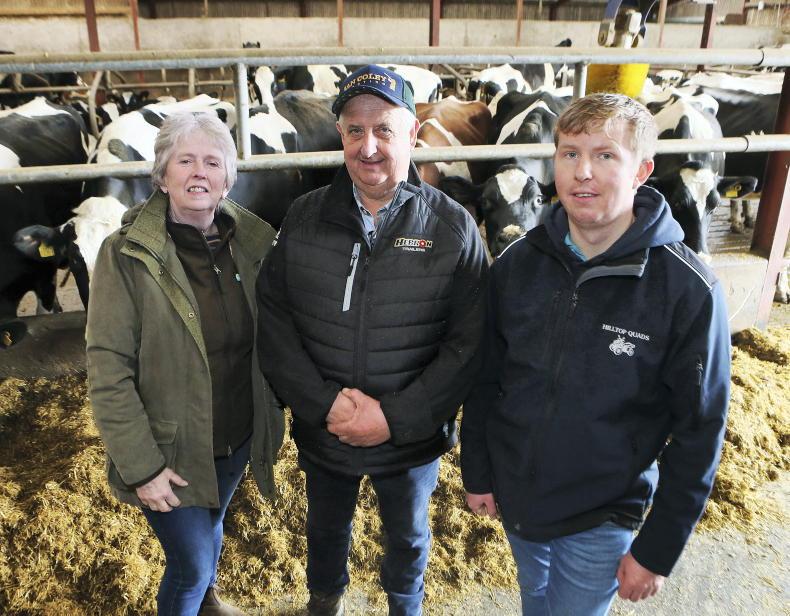
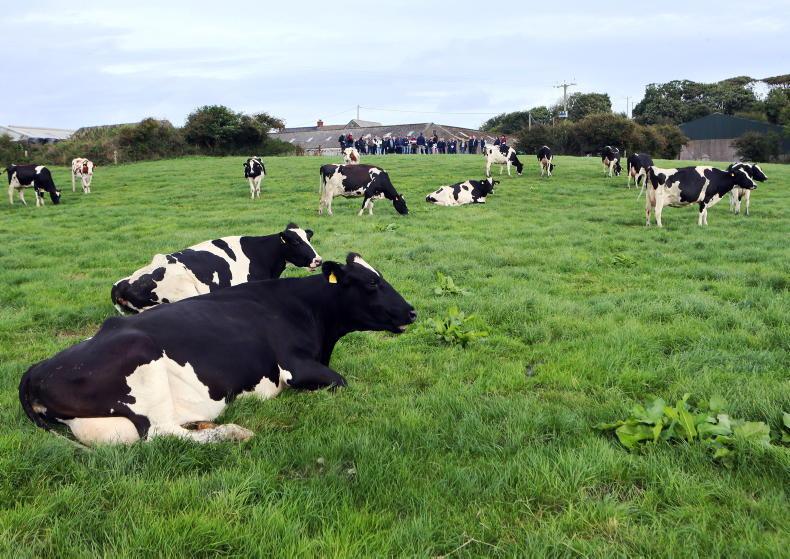
The event on Tuesday was hosted by Ivan, Elaine and Lewis Williamson near Scarva, who milk 80 cows in a mainly autumn-calving system, supplying Leprino Foods. The herd is grazed by day from April to October and housed at night on a Total Mixed Ration (TMR).
Current rolling average annual yield stands at 10,022 litres at 4.1% butterfat and 3.41% protein on 4.1t of concentrate fed.
The TMR is based on grass silage, with 3 cuts taken across the season – there are no alternative forages made.
Within the dairy carbon network project, the Williamsons have chosen to focus on 2 actions. The first is around forage and grazing management, with historically around 5% of the farm reseeded each year.
The second action is breeding to improve feed efficiency. Heifers have been genomically tested for the last three years, while the current aim is to use bulls with high percentages for butterfat and protein and a maximum 800kg for milk.
Pick a reseed mix to suit your farm
Despite the difficult autumn in 2025, the Williamsons did manage to get a 20-acre field reseeded with a Balmoral grass seed mix from Morton’s.
That mix contains 5.25kg of the intermediate diploid, AberWolf, 4.75kg of the late diploid, AberBann and 3kg of AberGain, a late tetraploid ryegrass variety.
Addressing the event on Tuesday, David Little from grass seed company Germinal, told farmers to pick a grass seed mix that suits their land type and location.
He said the company no longer sells any early heading ryegrass varieties in NI due to lack of demand. Instead, around 60% of sales are intermediate varieties which typically have a heading date of mid to late May – they tend to be used in mixes for silage swards, with late varieties suited for grazing swards.
When it comes to ploidy, he said tetraploid varieties are usually preferred by grazing livestock and can produce high yields, but they result in a more open sward, prone to poaching.
“When I started, my main rule of thumb was two-thirds diploid and one-third tetraploid in a mix. It now depends on the farm, but 40% tetraploid – I don’t like going any more than that – ground cover is important, especially in heavy soils,” said Little.
He cautioned against growing single varieties. “By putting a few varieties in there, you are spreading your risk, but I am not an advocate of too many varieties either,” he said.
However, there is potentially a role for a tetraploid to be used to overseed a new sward, sown out last autumn, that was subsequently damaged by rain, given that tetraploids are larger seeds which are quicker to establish.
That difficult backend in 2025 made it nearly impossible to get post-emergence sprays applied, so chickweed is now an issue in many of these swards at present.
Clover
He also maintained that white clover will have an increasingly important role to play in the future, given the pressure to cut nutrient losses to the environment.
In any sward, pH should be at least 6 and pushing towards 6.5 when clover is present, while phosphorus and potassium should be at Index 2. “Always keep your soil fertility right – it will improve the persistency of your sward,” said Little.
Min till
When doing a full plough reseed, there is added cost and the danger that the most fertile soil is ploughed down, so as a result, more farmers are using min till techniques.
However, he said it is important to ensure any trash on the surface is minimised and there is good soil-to-seed contact.
“There is more interest in min till reseeding, but for us selling seed, we get a lot less issues when the plough is used,” said Little.
Genomics to drive breeding decisions
Having genomically tested heifers for the last three years means most of the Williamson herd has now been DNA-sampled.
In recent years, breeding stock and sires have been selected using the US Dairy Wellness Profit Index, although as part of the UK Dairy Carbon Network, bulls will be chosen using AHDB’s Profitable Lifetime Index (PLI) and EnviroCow index.
Indicies
Both indices are among those to be offered to farmers who get their herds genotyped as part of the new Bovine Genetics Project being led by Sustainable Ruminant Genetics (SRG).
Speaking at Tuesday’s event, Hannah Martin from SRG explained that the indices are closely correlated, except EnviroCow puts higher weightings onto traits such as feed efficiency, lifespan and production.
EnviroCow is expressed on a scale of around +3 to -3, with an AHDB study showing cows with a one-point higher score produce 10% less of the greenhouse gas methane, consume 10% less feed, but produce 33% more butterfat and protein in their lifetime.
Approximately 120 different practical actions that could cut greenhouse gas emissions on dairy units are being investigated as part of a new project involving 56 commercial farms across four main dairy regions of the UK.
The UK Dairy Carbon Network is a three-year, multi-million-pound project funded by DEFRA, led by the Agri-Food and Biosciences Institute (AFBI) and involving various research organisations from across NI and Britain.
In NI, a network of 20 dairy farms has been established, which is being managed by AgriSearch.
Speaking at the first farm walk for the new NI network on Tuesday, Professor Elizabeth Magowan from AFBI explained that each farm has chosen two or three specific actions they will concentrate on over the lifetime of the project. Those actions are contained within four main categories of breeding, nutrition, animal health or nutrient management.
Ultimately, the aim is to demonstrate effective ways to cut emissions, while maintaining productivity. “Hopefully we can inform and develop good policy as a result,” said Magowan.
The event on Tuesday was hosted by Ivan, Elaine and Lewis Williamson near Scarva, who milk 80 cows in a mainly autumn-calving system, supplying Leprino Foods. The herd is grazed by day from April to October and housed at night on a Total Mixed Ration (TMR).
Current rolling average annual yield stands at 10,022 litres at 4.1% butterfat and 3.41% protein on 4.1t of concentrate fed.
The TMR is based on grass silage, with 3 cuts taken across the season – there are no alternative forages made.
Within the dairy carbon network project, the Williamsons have chosen to focus on 2 actions. The first is around forage and grazing management, with historically around 5% of the farm reseeded each year.
The second action is breeding to improve feed efficiency. Heifers have been genomically tested for the last three years, while the current aim is to use bulls with high percentages for butterfat and protein and a maximum 800kg for milk.
Pick a reseed mix to suit your farm
Despite the difficult autumn in 2025, the Williamsons did manage to get a 20-acre field reseeded with a Balmoral grass seed mix from Morton’s.
That mix contains 5.25kg of the intermediate diploid, AberWolf, 4.75kg of the late diploid, AberBann and 3kg of AberGain, a late tetraploid ryegrass variety.
Addressing the event on Tuesday, David Little from grass seed company Germinal, told farmers to pick a grass seed mix that suits their land type and location.
He said the company no longer sells any early heading ryegrass varieties in NI due to lack of demand. Instead, around 60% of sales are intermediate varieties which typically have a heading date of mid to late May – they tend to be used in mixes for silage swards, with late varieties suited for grazing swards.
When it comes to ploidy, he said tetraploid varieties are usually preferred by grazing livestock and can produce high yields, but they result in a more open sward, prone to poaching.
“When I started, my main rule of thumb was two-thirds diploid and one-third tetraploid in a mix. It now depends on the farm, but 40% tetraploid – I don’t like going any more than that – ground cover is important, especially in heavy soils,” said Little.
He cautioned against growing single varieties. “By putting a few varieties in there, you are spreading your risk, but I am not an advocate of too many varieties either,” he said.
However, there is potentially a role for a tetraploid to be used to overseed a new sward, sown out last autumn, that was subsequently damaged by rain, given that tetraploids are larger seeds which are quicker to establish.
That difficult backend in 2025 made it nearly impossible to get post-emergence sprays applied, so chickweed is now an issue in many of these swards at present.
Clover
He also maintained that white clover will have an increasingly important role to play in the future, given the pressure to cut nutrient losses to the environment.
In any sward, pH should be at least 6 and pushing towards 6.5 when clover is present, while phosphorus and potassium should be at Index 2. “Always keep your soil fertility right – it will improve the persistency of your sward,” said Little.
Min till
When doing a full plough reseed, there is added cost and the danger that the most fertile soil is ploughed down, so as a result, more farmers are using min till techniques.
However, he said it is important to ensure any trash on the surface is minimised and there is good soil-to-seed contact.
“There is more interest in min till reseeding, but for us selling seed, we get a lot less issues when the plough is used,” said Little.
Genomics to drive breeding decisions
Having genomically tested heifers for the last three years means most of the Williamson herd has now been DNA-sampled.
In recent years, breeding stock and sires have been selected using the US Dairy Wellness Profit Index, although as part of the UK Dairy Carbon Network, bulls will be chosen using AHDB’s Profitable Lifetime Index (PLI) and EnviroCow index.
Indicies
Both indices are among those to be offered to farmers who get their herds genotyped as part of the new Bovine Genetics Project being led by Sustainable Ruminant Genetics (SRG).
Speaking at Tuesday’s event, Hannah Martin from SRG explained that the indices are closely correlated, except EnviroCow puts higher weightings onto traits such as feed efficiency, lifespan and production.
EnviroCow is expressed on a scale of around +3 to -3, with an AHDB study showing cows with a one-point higher score produce 10% less of the greenhouse gas methane, consume 10% less feed, but produce 33% more butterfat and protein in their lifetime.
SHARING OPTIONS