



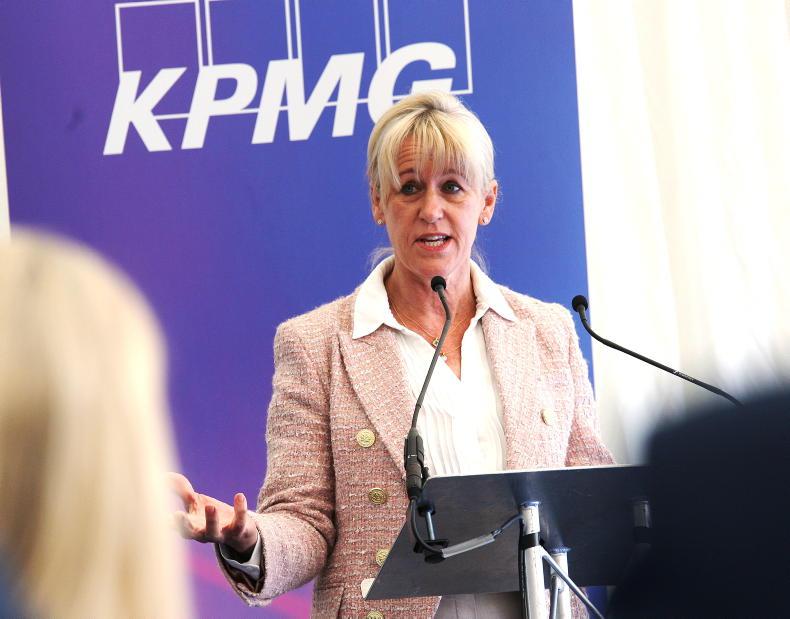
Defra Secretary of State Emma Reynolds has confirmed that a new Farming and Food Partnership Board will be created in response to a review of farm profitability undertaken by the former president of the National Farmers’ Union (NFU), Minette Batters.
The new board, chaired by the Defra Secretary, is to bring together leaders from farming, food production, retail, finance and government, with the aim to “drive growth, productivity and long-term profitability across the sector”.
Back in April 2025, Ms Reynolds’ predecessor Steve Reed, announced that the former NFU leader had been tasked with undertaking a six-month review of farm profitability.
In the end, Batters has come forward with 57 recommendations contained within a report that runs to nearly 150 pages.
Probably the main recommendation is for the new board to be established, although in her report, Batters names it the Great British Farm Advisory Board (GBFAB).
Her vision is that all parts of the UK are represented, to include NI, with the board setting out a strategy to increase the share of home-grown ingredients used in retail, restaurants etc while also delivering 30% growth in British food exports by 2030.
She suggests that the new board should have 10 members and therefore be similar in size to the Bord Bia board in the Republic of Ireland. Initially the new entity should be chaired by the Defra Secretary, with an independent chair in place after 12 months.
Value of farming
The first set of recommendations made in the Batters report actually relate to how UK agriculture is viewed by economists and government. She points out that the way the figures are calculated shows farming only contributed £14.5bn to the UK economy in 2024, which works out at just 0.56% of the UK total.
In one regard, the figure suggests farming is virtually irrelevant, yet it does not reflect the fact agriculture and horticulture actually drive so many other jobs, especially in food processing, but also the likes of machinery dealers, input suppliers and vets.
“The Office of National Statistics should conduct an external/independent assessment of the full current and potential value of farming,” recommends Batters.
English brand
She is also keen that England has its own national food identity, mirroring that which exists in other parts of the UK. She believes this would help build relationships between consumers and farmers, ensuring people eat more locally grown food and creating opportunities for food tourism.
Advice
One other issue Batters also picked up on during her review was around skills, knowledge transfer and business management.
She said concerns were raised that farmers don’t have the necessary skills to make best use of data and that too much funding is going to universities and research organisations to fund work that has no practical application on farm.
“There is a widespread concern that outcomes and recommendations from research are not passed down to farmers in a useful and meaningful way,” she states in her report.
To address these various issues, she wants to see a new Sustainable Farm Service developed which would be “a single centre for advice, skills, and farming’s engagement with research and innovation.” One of the main case studies cited by Batters is the example of the research and advisory service provided by Teagasc in the Republic of Ireland.



SHARING OPTIONS