



A new TB partnership steering group involving industry and government has made “real progress” since it was established in January 2025, Agriculture Minister Andrew Muir has said.
Contributing to a Stormont debate on a Sinn Féin motion relating to bovine TB, the DAERA minister highlighted a number of issues that are being taken forward, including new criteria allowing the establishment of alternative control herds. The aim is to allow both calf rearing and beef finishing units to take in cattle from TB restricted farms.
“I expect to see further advice on that shortly,” he told MLAs.
Other priorities include work to introduce movement testing of cattle and the roll-out of on-farm biosecurity assessments. “Around 700 farms per year are expected to benefit from that important initiative, and they will receive two visits, most likely from their own trusted veterinary practitioner,” he said.
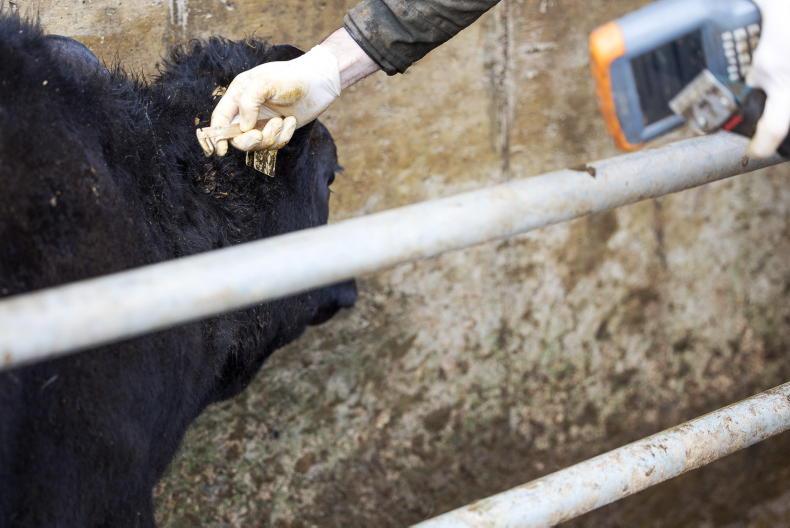
He said his officials and the new steering group are also looking at potential criteria where breakdown herds could be required to use the gamma interferon (blood) test. That test picks up some TB reactors missed by the traditional skin test, but also leads to more false positives, so can be quite expensive to use.
In the last financial year to March 2026, he said 24,000 blood tests were completed in NI, compared to 17,000 in the previous 12 months. “Subject to funding, I would like to increase that to a further 30,000 in the coming year,” Minister Muir confirmed.
Cull
On potential wildlife intervention, he said the October 2023 judicial review which quashed the decision by his predecessor, Edwin Poots, to proceed with a badger cull in TB hotspot areas, meant he has to undertake a new public consultation, before making final decisions.
“Significant progress has been made in preparing the consultation, which will be issued once the necessary environmental assessment work is completed,” he added.
However, Sinn Féin MLA Declan McAleer, who introduced the motion on Monday, said there was a “growing perception” that action is not being matched by the urgency of the problem. He argued the judicial review judgement had criticised processes in and around a 2021 public consultation, not the merits of the proposed wildlife intervention policy itself. The West Tyrone MLA called for a new consultation process to be done “without any further delay”.
The strongest calls for a badger cull came from TUV MLA Timothy Gaston who pointed out there was no issue eradicating ferrets on Rathlin Island to help protect seabirds.
DUP MLA Michelle McIlveen said it was impossible to ignore scientific evidence that a package of measures is required, including wildlife intervention, enhanced testing and strengthened biosecurity. A similar argument was put by Alliance MLA John Blair who said that wildlife intervention must be “effective, responsible and informed by the best available evidence”.
In his remarks, SDLP MLA Daniel McCrossan suggested various actions should be considered, including vaccination, while UUP MLA Robbie Butler argued there was no lack of reports, evidence and understanding of the issue. “What we have lacked consistently is decisive implementation. That includes all necessary measures, including wildlife intervention,” he said.
The motion was supported by all the main political parties.
In the last financial year to March 2026, the department estimates TB will cost the taxpayer around £65m, with that cost rising to approximately £70m in the new financial year.
UFU
Commenting after the debate, UFU deputy president Glenn Cuddy maintained that farmers are tired of strategies and blueprints, with delivery at pace now needed.
“There is no credible pathway to eradication without dealing with the wildlife reservoir. That argument isn’t new; it’s supported by science and experience elsewhere. The time for hesitation is over,” he said.


SHARING OPTIONS