Next month it will be 20 years since the first cows were milked at Drumgoon Dairy in South Dakota, US.
Established by Co Fermanagh native Rodney Elliott and his wife Dorothy, the Elliotts had sold up their dairy farm outside Maguiresbridge and along with their three children, moved to the US in February 2006. Starting out with 153 acres, by the end of the year, a herd of 1,400 cows was in place.
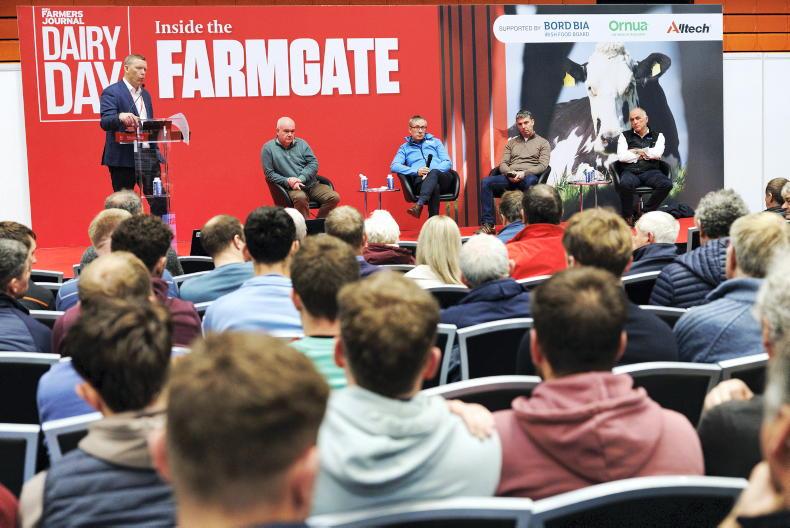
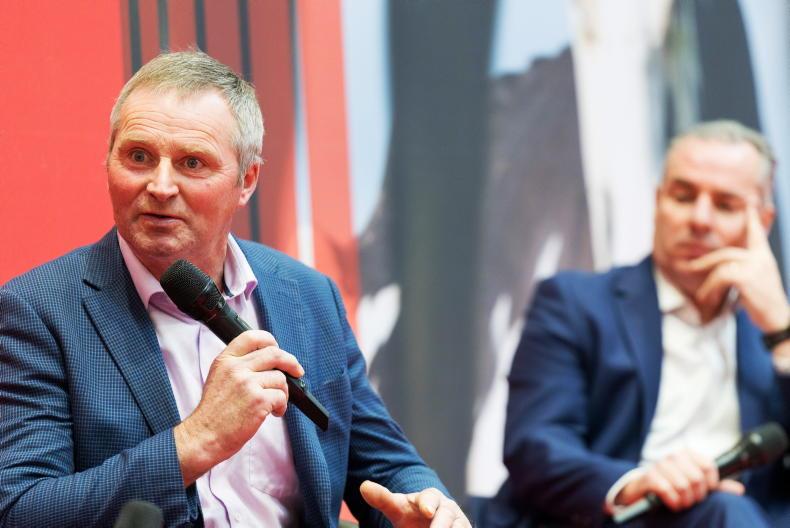
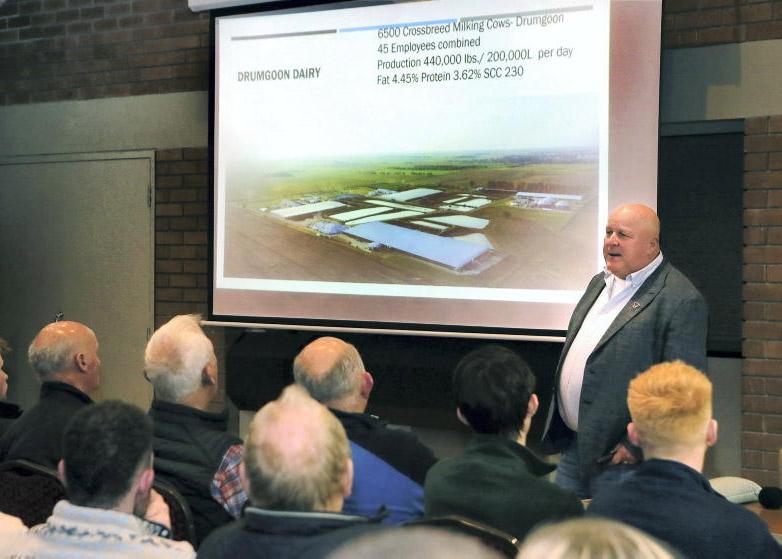
At a Holstein NI and AI Services event at Dungannon on Monday, Rodney Elliott outlined how the herd has expanded since then, with 6,500 cows now milked at the original site. The business has also entered into a 50:50 partnership milking 5,000 cows on another farm and has a 15% stake in a calf rearing business in Kansas.
On the home farm, there are now three main sheds, each with their own milking parlour, along with a facility for up to 700 dry cows. Animals are housed in sand bedded cubicles, with fans used to ensure continuous air flow in buildings.
Cows are milked three times per day and split between fresh calvers, a breeding group and cows in late lactation / not being retained. The Elliotts did run a “hospital” group treated for mastitis, but most animals ended up taking it again. No mastitis treatments are now given, which has pushed average SCC to 230, but means there is no risk of contaminated milk leaving the farm, said Elliott.
Milking is done through double 36-, 25- and 24-unit parallel parlours. There is no meal fed and clusters are on for a maximum of 300 seconds to ensure efficient flow. Parlours are operational 22 hours per day.
In 2021 the decision was taken to install robots in one of the sheds and when fully operational it was the largest DeLaval robotic operation in the US, with 20 working units. Elliott described robots as “a wonderful way to milk cows” and he had some animals giving over 20,000l in three consecutive lactations.
However, the robots are now gone. He said analysis of financials showed it was costing 2p/l to run the machines, with $27,500 annually spent per robot on consumables, repairs etc.
The local dealership was 165 miles away, so the Elliotts grew increasingly frustrated with the back-up service. But perhaps most importantly, staff did not like working in the robot barn. “We had a huge turnover of staff and a lot of time was spent training new people. Now the robots are gone six to seven months, I really don’t miss them,” said Elliott.
Holstein
At Drumgoon, the herd was predominantly cross-bred, with a lot of Swedish Red and Jersey semen used. However, over the last four years, the farm has concentrated on Holstein genetics. “I am confident now that the Holstein can breed us a cow that we want and which works in our system. In 4 to 5 years, it will be an all-Holstein herd,” said Elliott.
All cows are bred to AI, with sexed semen used in heifers to breed replacements. Crossbred cows all go to Angus. Semen is sourced from Alta Genetics.
With record beef prices in the US, beef calves are a valuable commodity and some dairy herds are now putting most of their cows to beef bulls, which is forcing up prices for dairy heifers.
“Up until two years ago we were dairy farmers, now we are beef farmers. Our milk price today (32p/l) would probably not pay to milk cows. If we look at our books, we get all of our profit on day 1 and we then milk cows to pay the bills,” said Elliott.
He said Augus calves at two days old are currently making $1,350 and they were as high as $1,725 this year. Finished Angus steers are realising around $4,500 (nearly £3,500).
AD
The other major development at Drumgoon dairy has been the installation of an anaerobic digestion (AD) plant.
It was the result of a “big push” towards green energy by the Biden administration and was completed in 2023. There is no other feedstock used other than cow manure, with biogas upgraded to Renewable Natural Gas (biomethane) and injected into the gas grid.
“It has made life easier in some ways. We like the digestate as it is odourless and pasteurised,” said Elliott.
He added that sustainability and the environment are becoming “more and more important” in US dairy, with a lot of effort put into nutrient management planning and soil analysis, and a sustainability bonus now an important part of farm income.
The second site at County Line Dairy
The Elliotts sell their milk to two different cheese plants and one of those buyers approached Rodney about whether he could supply more milk.
He said he spent six months looking for a site, before coming upon the Czech family 16 miles away, with whom he formed a 50:50 partnership to build a new dairy facility in 2024.
There are now 5,000 cows on the farm, milked through a 100-point carousel (rotary) parlour.
The herd is all Holstein, currently averaging 12,300l in three times-a-day milking. There are 750 cows milked per hour through the parlour.
The Czechs are also large crop growers, with slurry used to grow predominantly maize and also some alfalfa.
Calf-rearing moved to Kansas
In 2016 approximately 4,000 cows were being milked at Drumgoon and while an audit by his bank confirmed everything was going well on the cow side of the business, it also identified heifer rearing was “a fragmented mess”, said Rodney Elliott.
The suggestion was made to head south, where feed tends to be cheaper. The Elliotts initially found a rearing farm in Kansas, but then became a 15% investor in a new facility in western Kansas in 2018.
The farm was previously a beef feedlot and is now the largest permitted facility in Kansas with the ability to keep 170,000 head. There are 50,000 calf hutches and 450 calves arrive on the farm each day.
A total of 71 farms are sending calves to be reared, with some as far as 1,500 miles away.
Drumgoon and County Line currently have around 7,500 head in Kansas. Calves leave every two days and make the 14-hour, 626-mile journey overnight. Death loss on arrival is only 0.3%. The heifers return to South Dakota when five to six months pregnant. Average losses over the period are 3.6% and 92% of heifers are pregnant after three services to AI.
A challenge to source labour for the farms
With the unemployment rate in South Dakota standing at just 2%, Drumgoon remains highly dependent on immigrant labour.
However, authorities in the US under the direction of President Trump have been tightening down on immigration and after an audit last year, the business lost 37 workers in 10 days.
“We got a lot of visa workers back in, but it is still a huge challenge to find good-quality labour,” explained Rodney Elliott.
When asked what he thought of President Donald Trump, he said he didn’t agree with a lot of what has been done in his second term, but there were other issues which did need sorting.
“Donald Trump is still extremely well supported in rural USA,” he said.
Rising price of land in the US
The first land bought at Drumgoon cost $2,150/ac, which at exchange rates at the time, was little over £1,000/ac.
In 2011, the price paid for land had increased to $3,500/ac and that compares to 160 acres bought this year for $12,000/ac.
The farm also rents land, with current prices of around $250 to $300/ac.
In total, 40% of the feed at Drumgoon is from owned and rented land, with the rest bought off crop growers.
Elliott told Monday’s meeting that he could make rented land stack up at $300/ac, but when it came to buying land at $12,000/ac, he said: “I could never build a cash flow for that”.
He also highlighted the importance of having a “social licence” to operate, with a lot of effort put in by the Elliotts to supporting the local community and hosting visitors.
“Once you start buying some land you lose some friends occasionally because they become opposition,” he acknowledged.
Farm facts
Drumgoon Dairy
County Line Dairy