


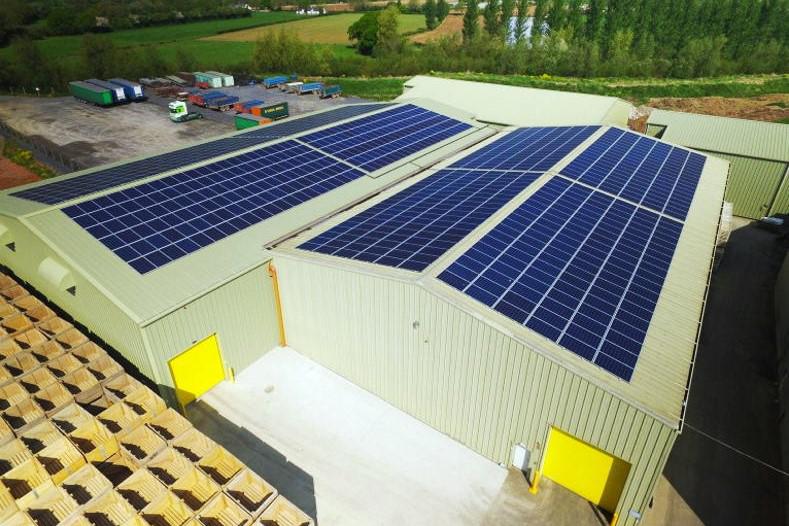
In last week’s edition, we brought you details of the expanded range of grants for solar PV systems offered by the Sustainable Energy Authority of Ireland (SEAI).
The improved Non-Domestic Microgeneration Scheme will introduce a variety of new tiered grant supports for solar PV systems, with capacities ranging from 6kWp (peak output of a solar system in kilowatts) to 1,000 kWp (1MW).
The grant aid rates will range from €2,400 to €162,600. These grants are available to businesses, public buildings, sports clubs, community organisations and farmers.
We reached out to the Department of the Environment, Climate and Communications and the SEAI for several clarifications.
However, as of last week’s print deadline, we had not received a response on time, so we’re publishing the Q&As in this week’s edition.
Are farmers of all sizes, scale and sectors eligible for the grant?
Yes, if they have a non-domestic MPRN and Tax Registration Number (whether as a sole trader, limited company or farm partnership) they are eligible.
Farms which share an electricity meter with the farmhouse are also eligible.
Are farmers who have availed of the TAMS II or Solar Capital Investment Scheme grant aid eligible to apply, and can the same components be used for the new system?
The grant is for new installations (installed after a letter of offer) that meet the scheme T&Cs and code of practice. The grant can be used to increase the size of an existing system by adding additional solar panels. There may be specific unique installation cases where the farmer would need to seek clarification of eligibility from SEAI before application.
Can farmers export the electricity to the grid when they avail of the Non-Domestic Microgeneration Scheme?
The Clean Export Guarantee (CEG) tariff is available to all renewables self-consumers – who meet the requirements as set out by the Commission for Regulation of Utilities (CRU).
The scheme is designed for rooftop/ground-mounted systems supplying energy mainly to sites with on-site electricity demand. The scheme cannot support an installation that is “for the sole purpose of exporting renewable electricity to the grid”, as previously reported, but allows for the receipt of remuneration for any excess electricity exported to the grid.
The scheme operates under de minimis State aid arrangements currently, and is not subject to the same restrictions as the scheme covered under TAMS around system-sizing. However, the SEAI recommends that systems are sized for self-consumption. Again, farmers should seek clarification from SEAI if they are unsure of the eligibility of specific systems.
Do farmers have to have a power purchase agreement for the renewable electricity in place before securing the grant aid?
No.
Do farmers have to have proof of connection eligibility before securing the grant aid?
No. However, the grant is provided to the applicant post-completion of the works, following confirmation that the relevant ESB connection agreement (NC5, NC6, NC7 or NC8 as applicable) is in place, along with the other specified post-completion criteria in the T&Cs.
Are ground-mounted systems eligible for this grant aid and is proof of planning permission required to be eligible for the scheme?
Yes, ground-mounted systems are eligible. Proof-of-planning permission may be sought at payment stage. Note, however, that there are very wide exemptions for rooftop solar.
Is a smart meter required to be eligible for the scheme?
No. However, a smart meter is required as part of the eligibility requirements for the CEG tariff.
Does the scheme work on a vouched expenditure basis, as in, the farmer is eligible to reclaim the grant once the system is paid for?
As above, the grant is provided to the applicant post-completion of the works, following confirmation that all post-works completion criteria is complete and in order.
How long will this pilot be running for and what is the Government’s intention after the pilot is completed?
The scheme is funded in 2023, with an expectation that it will continue to 2025, subject to normal budgetary allocation processes.
Are businesses that previously received SEAI support for a solar PV system under another scheme eligible for the Non-Domestic Microgeneration Scheme?
For a new system, they are eligible. For any existing system, they are not eligible.
Is this entirely separate to the Small Scale Generation Scheme (SSG), which has been in development for some time now?
The amended non-domestic solar PV scheme facilitates both microgeneration and small-scale generation applicants.
The high-level design for the Small-Scale Renewable Electricity Support Scheme (SRESS) – previously referred to as the Small Scale Generation Scheme (SSG) – was recently approved by Cabinet on 23 June 2023.
It is envisioned that the Final Scheme Design will launch in Q4 of 2023.
The expanded ranges in the amended non-domestic solar PV scheme will act as the first phase of the SRESS for renewable self-consumers above 50kW and up to 1MW.


SHARING OPTIONS