



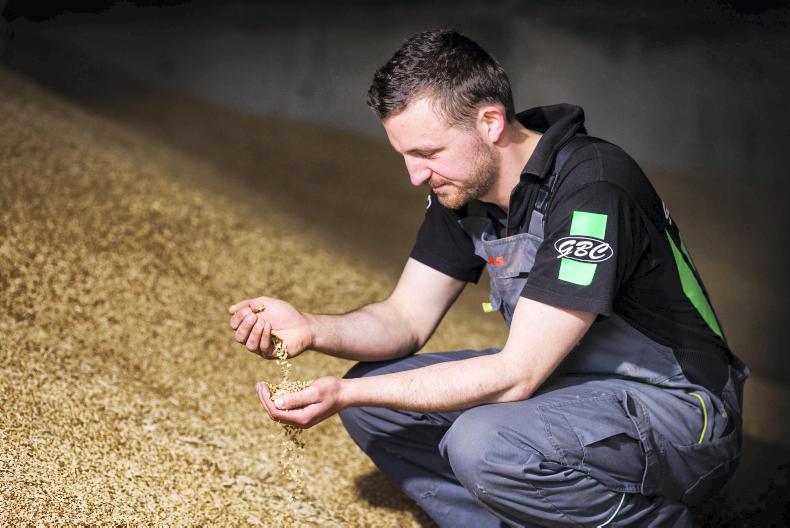
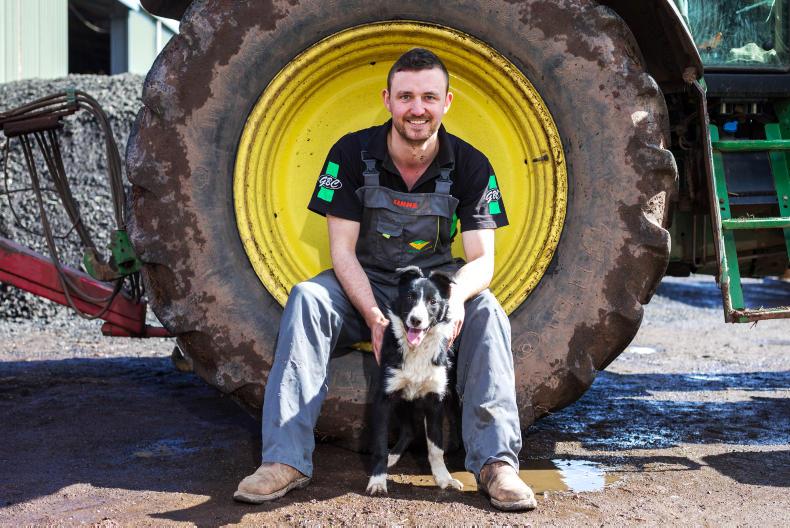
The Comrie family are now in their seventh generation of farming at Drummie Farm – a 650 acres mixed farm, located 10 miles to the west of Perth. David Comrie works alongside his father as well as a full-time worker, who has been working on the arable and livestock farm for over 20 years.
He does the bulk of the ploughing, drilling and baling, while David and his father handle most of the stock work, combining and spraying between themselves.
Having previously studied agriculture at Scotland’s Rural College (SRUC) David has been working full-time at the farm for 18 months now.
International experience
While David was a student he worked for Revesby Farms in Lincolnshire during the summer.
After his graduation in 2014, he spent two silage seasons working for Graeme Bagrie Contracts in New Zealand, followed by six months at Flawborough Farms in Nottinghamshire.
David said: “Everyone operates differently, and it’s good to experience how a few other farms go about it. Working away from home has given me a different way of looking at things.
“I’ve tried to gain a good deal of experience elsewhere, rather than going straight from school or college into the business,” he said.
David enjoys most activities in farming, but still has his preferences. “If I was to put my finger on one thing that I like most, it would be mowing grass. There’s something especially satisfying about it.”
The farm has 500 acres for crops, with around half the land dedicated to spring barley for malting. They also grow winter wheat for distilling, winter oats and let land for vining peas.
The family are also trying 40 acres of spring oats this year and if all goes well they may also put in a second wheat crop. All grain from the farm is sold through WN Lindsay and Frontier Agriculture.
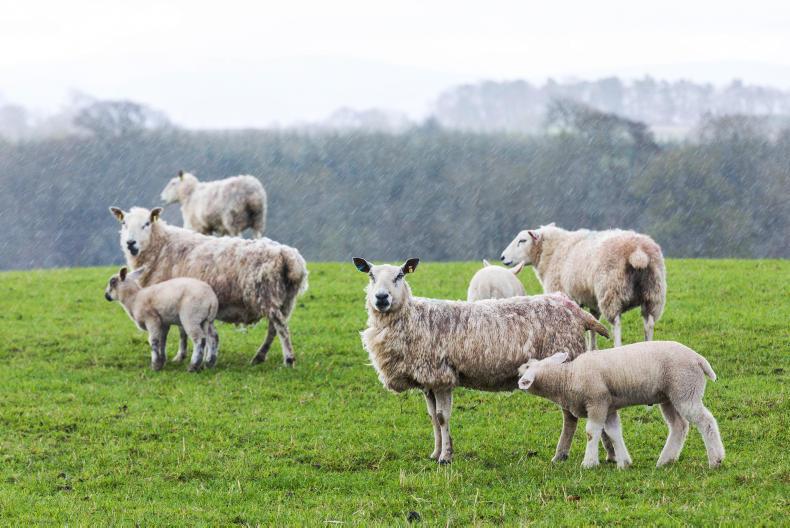
David said: “On the stocking side of things, we have 320 Texel cross ewes, put to Texel and Suffolk tups. The lambs are sold live weight through United Auctions in Stirling.
There are 60 Cheviot sheep, which are used to breed replacements, and most years we will buy a few hundred store lambs to finish alongside our own lambs of forage rape. Also, we finish around 80 store cattle a year, going to APB Food Group in Perth.”
Future challenges
“With whatever changes come to subsidies, all farmers are going to be in the same boat, so the best thing I see is to make sure we are on top of all of our costs and try to be as efficient a business as possible,” said David.
“The bigger threat for us from Brexit could come in the form of the sheep side of the business, with the potential for imported New Zealand lamb able to undercut the home-produced lamb meat. Though, as nothing concrete has been announced by anyone, this is only speculation.
“On the whole, I am fairly optimistic about the future of farming. At the end of the day, there will always be mouths to feed.”
Embracing the latest technology
Discussing the recent disruptive weather, David said: “The last two back ends have been particularly unsettled, with last year’s final barley field being cut in early October and only finishing drilling wheat in mid-November.
“We only started drilling on 20 April, by this time we’d be hoping to have finished it. To get around this, we have recently replaced our combine with one with a greater capacity which will allow us to make the most of the weather window available. Hopefully we will have to run less grain through the dryer and give us more time for back-end drilling.”
Compared with some of the farms David has worked on before, he finds their own farm may need to be brought up-to-date with improved precision technologies.
David said: “Things are slowly changing, with a basic GPS guide for more accurate fertiliser spreading and keeping of records being bought last spring.’’



SHARING OPTIONS