



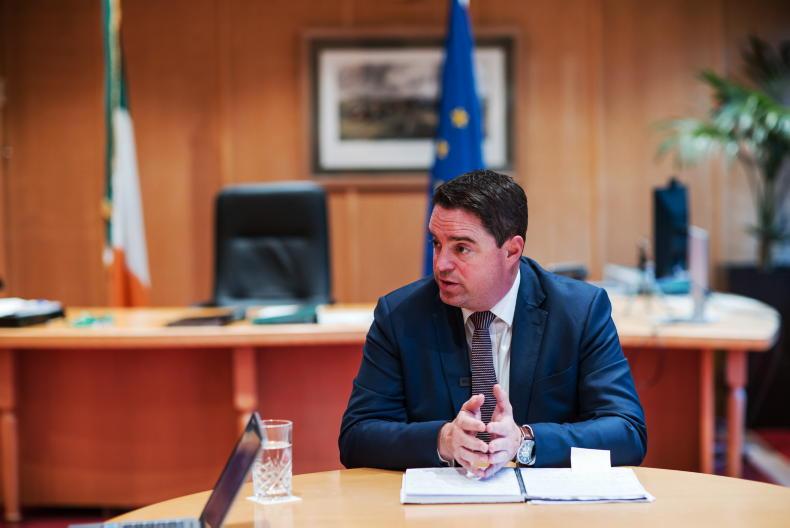
There’s an old saying in politics that you can please half of the people all of the time, or all of the people half of the time, but you can’t please all of the people all of the time. I think Minister for Agriculture Martin Heydon, like most of his predecessors, would say that was reaching for the stars. Farmers are hard to please.
There was a general welcome for the budget day announcement that the fertiliser exceptional aid fund would receive the maximum 200% Government top-up to the €15.4m put in place by Brussels. It had been well flagged, so there was no standing ovation. Fuel protesters grumbled that the €30.8m should not have been plucked from the €100m set aside for agri-diesel support.
The fun started last week when the details of the scheme were announced. It was pretty straightforward: €40/t of fertiliser purchased, based on the 2025 figures that are immediately usable. A minimum €100 payment applies to all EU schemes, meaning anyone who purchased less than 2.5t would be excluded. A maximum payment of €4,000 for 100t was set, although that might be reviewed upwards if there is money left over.
Macra was first out of the traps, saying that the Minister should have looked after the 22,000 smaller farmers who wouldn’t have purchased 2.5t. Five thousand of that group would be organic farmers, and no one is suggesting a fertiliser support payment for people who don’t use fertiliser. But what about the other 17,000 who bought some fertiliser?
Macra proposed that the Minister make the minimum €100 payment to all of those, which would only have taken €1.7m, costing about €1.50/t. That would be 3% of the fund going to the smallest one-fifth of farmers.
The IFA was next into the fray. It had previously calculated that if every tonne of fertiliser purchased was paid out on, that would equate to €34/t. And it said that’s what should happen; paying out to the very big and the very small user. Larger tillage and livestock farmers were having their payments capped at perhaps only half or even one-quarter of their total volume of fertiliser. The Minister’s proposal was now caught in a pincer movement.
The INHFA, which represents smaller farmers, was surprisingly silent, as were the grain growers while the ICSA and ICMSA weren’t too put out by the scheme. They were privately critical of the short notice given by the Department for the stakeholder meetings held to discuss it. This has been a bugbear among farmer representatives in recent months, citing little notice for fodder and food security committee meetings in particular. The smaller organisations have limited resources, and the same faces find themselves attending the wide range of meetings that take place.
Too much access to Government being grounds for complaint - It really is hard to please us. And I didn’t even mention CBAM.



SHARING OPTIONS