



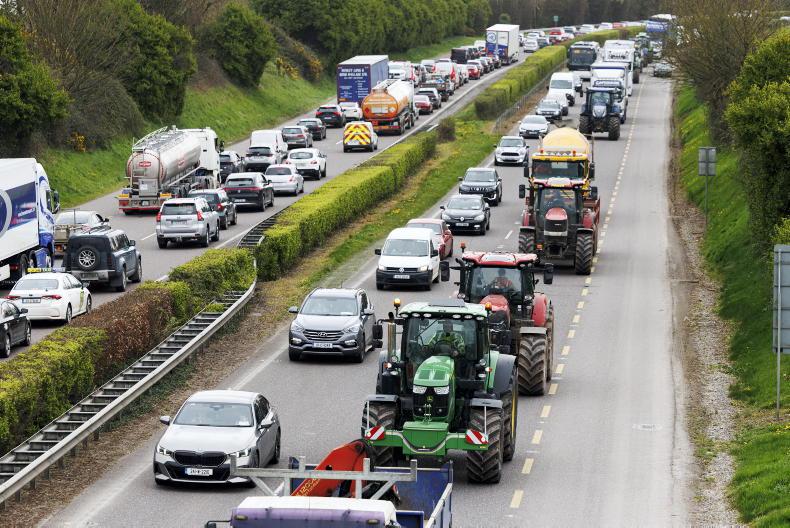
Some might see a protest against high fuel prices that involves burning diesel when driving around the country as self-defeating. For sure, the main farm and contractor organisations were notable by their absence on Tuesday when tractors, lorries, buses and trucks all descended on Dublin and other major cities, as indeed were the Irish Road Hauliers Association (IRHA).
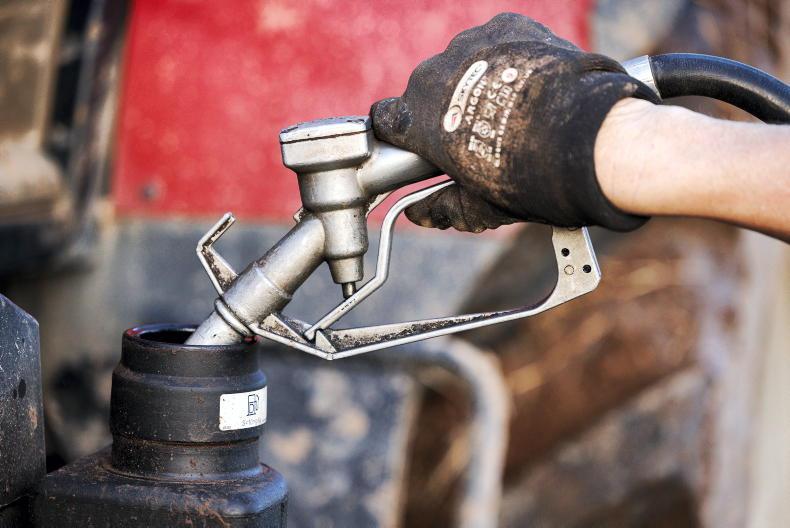
However, all were keen to highlight that they share the protesters’ fears over how the agriculture, haulage and transport sectors will cope with the massive and sudden hike in fuel prices.
As the IRHA put it: “Our focus remains on constructive engagement with the Department of Transport to deliver supports for our members.” In other words, better to be in the tent than outside of it at this point in time.
Opposition party members were prominent at the protests, ramping up the pressure on the Government to do more.
Some of the most prominent among the protesters have been long-time critics of the carbon tax. A couple of them are echoing what they said when bringing Dublin to a standstill back in November 2019 and January 2020.
Scepticism around the climate-change agenda and how it affected farming was the motivation then. There is a further irony in the fact that this fuel and fertiliser crisis is a direct result of the foreign policy aggression of the great climate change denier himself, Donald Trump.
The protesters have made some very valid points. The fact that the Government benefits directly from every fuel price hike, as excise duties from a significant percentage of the petrol and diesel pump price, is undeniable.
Darragh O’Brien might have thought being shifted from the housing portfolio to Minister for Transport would mean a move out of the public eye. Now he finds himself back in the opposition parties firing line for the months, and perhaps years, ahead.
Conflict across the Middle East means that fuel availability might supersede fuel price as an issue of national concern.
O’Brien has said that if the Government foregoes excise duty on fuel, it will mean less money for budgetary supports or tax cuts in the autumn. Hauliers and contractors are saying that they will have gone bust by then, as they can’t afford to absorb these input cost increases, and the public can’t afford to have them passed on to them.
That is a debate that is familiar to farmers, who are the ultimate price-takers. How it progresses will be one of the stories of the summer in Ireland.
I know we all should be counting our blessings that our country is not a conflict zone when so many are, but that won’t pay the bills.


SHARING OPTIONS