Scottish researcher Davy McCracken delivered a powerful and insightful presentation at the third annual Uplands Conference in Antrim this week, hosted by CAFRE and Teagasc.
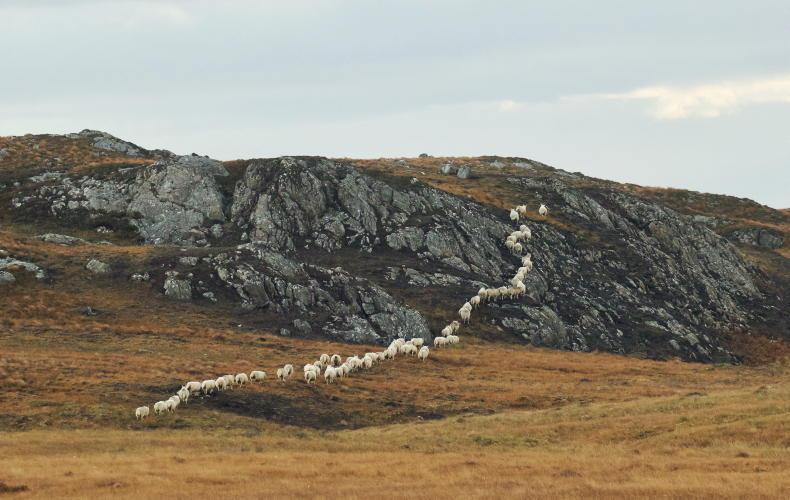
McCracken said his team is using a range of new and existing technology initiatives to measure and define the challenges and opportunities of hill farming.
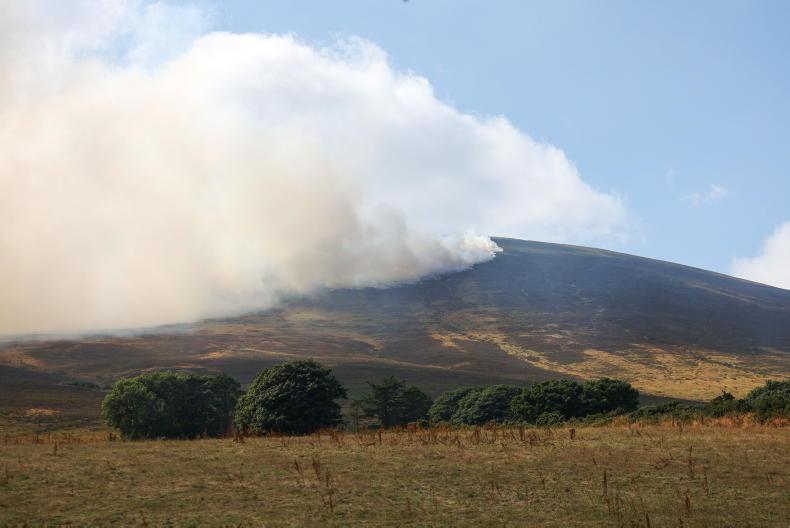
Hill grazing for bracken control, genetic selection in sheep, virtual fencing, sensors for measurement and drones for assessment all make what is happening on the mountains real (see more page P33). More importantly, it is delivering data for improving biodiversity, improving labour efficiency, and realising more of the potential on offer in the uplands.
Speaking from the floor, Derry’s John Gilliland said that policies in both the UK and Ireland were going down the route of getting rid of livestock, yet all the presentations at the conference suggested livestock introduction was one of the best ways of managing improved uplands.
In response McCracken said, yes ecological principles do not change, and we have a long history of over 35 years of research that shows farming and livestock are essential for high-nature value farming in the uplands. He said habitats rely on livestock.
Farmers also commented from the floor about the invasive species (rhododendrons/ferns) that are taking over many of the upland areas in Ireland, and organics is making this even worse.
Another important question came very near the end of the panel discussion. A farmer asked what the experts thought about how to reward or pay land owners for eco system services – in other words how to reward farmers for the public good benefit of maintaining the uplands and increasing habitats for all sorts of species etc.
Nothing on the horizon
All the speakers felt there has to be a value on uplands management. However, all said there didn’t seem to be anything on the horizon in terms of a financial reward to farmers. McCracken said in the UK “we are not getting there – quantifying public good is difficult and carbon sequestration and habitats are hard to put a value on”.
What is very important in this equation is the dynamic around measuring and recording carbon stocks in the uplands.
Emission factors are crucial, and without this critical research the validation of these formulas for measuring and recording carbon stocks are no good. Without this farmers can’t tell the true carbon story of food produced in the hills.
Interestingly, the level of carbon emitted by upland peatlands looks to be grossly overestimated based on initial research findings from the CAFRE hill farm by Ulster University.
The early results show that drained peatland on the hill farm sequestered an average of 2.53t of carbon dioxide equivalents per year, compared to the UK peatland inventory that has peatlands as emitters of approximately 3.32t of carbon dioxide equivalents per year.
These results are hugely significant. In the Republic of Ireland there are over one million hectares being scored as part of the ACRES scheme (60% privately owned and 40% commonage). Twenty per cent of Northern Ireland is peatland, and 86% is in what is termed a ‘degraded state’.
Clearly Teagasc must partner up more with SRUC and CAFRE, because there is a serious lack of timely research ongoing. Yes, there have been some short-term EIP projects, but there is a need for a medium- to long-term co-ordination of the learnings from the EIP projects and implementing key learnings on a research hill farm.
Detailed research
There is clearly a real need for detailed research in this space in Ireland, because the land areas involved are huge and the scientific information is seriously lacking.
In this absence, the anti-livestock lobby has little challenge to the theory that land abandonment is the solution.
Clearly Department policy is driving in completely the wrong direction with fewer and fewer farmers and livestock in the uplands with more and more invasive species. This is the exact opposite direction to where the research is pointing for optimum habitat and carbon storage.
Surely there is some shared Ireland funding that could be accessed to arrest what is happening before our eyes. Teagasc really need investment in this area to catch up on our near neighbours.