


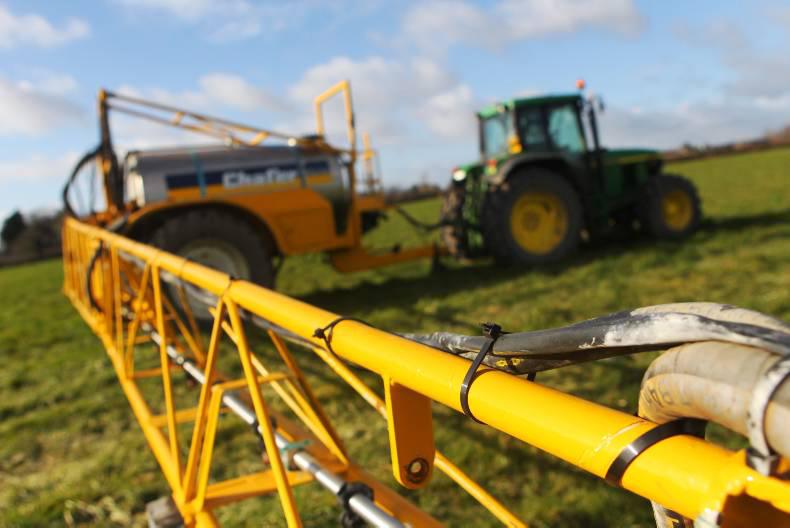
So Roundup is in the firing line once again. A couple of months ago, the cancer research arm of the World Health Organisation declared glyphosate to be “probably carcinogenic to humans”. Glyphosate is the active ingredient in Monsanto’s Roundup and since I suspect some of the seasoned readers of this column may have had indecent exposure to this herbicide over the years, I thought I’d bring you up to speed.
I have to say the news came as a shock to me as I thought you could practically drink the stuff. However, while glyphosate should be treated with caution, it has always been regarded as a very low toxicity herbicide that’s safe and bio-degrades quickly. And that’s still the case.
Nonetheless, glyphosate may present a greater occupational exposure risk than we previously thought. And minute traces of glyphosate regularly show up in human urine – not just in mine -– and residues have been found in bread.
Now it has to be said that there are people – some of whom drive electric cars, wear sandals and sport a ponytail – who would want to discredit any Monsanto product.
Monsanto is seen by such as the American mega-monster behind GM crops and Roundup is guilty by association. Generic glyphosate has been blamed by the lunatic fringe for the decline in bees and butterflies and other crazy stuff as well. In the Netherlands, they’ve weird priorities; glyphosate is banned for amenity purposes and yet it’s perfectly legal to intoxicate yourself on the so-called soft drugs.
But when the World Health Organisation (WHO) classifies glyphosate as a probable carcinogen, we have to take it seriously. However, not all scientists agree that there’s a link between cancer and glyphosate. Not least is the German Federal Institute for Risk Assessment which is the European authority on such matters. And, of course, Monsanto entirely refutes the WHO claims.
Let’s put this in context. After all, sunshine is a known carcinogen, as are cigarettes and alcohol, all things some of us can’t live without. Chip oil, diesel fumes and wood smoke are in the 2A (glyphosate) classification; as are hairdressers, who are occupationally at risk.
It’s because of all the chemicals hairdressers use to beautify the hair of the lady in your life. So be careful the next time you give her a peck if she has a new hairdo – you may need your PPE on. And don’t share hair brushes – not that I need one. I’d definitely say Roundup’s to blame for the loss of my foliage.
Incidentally, the old reliable fungicide, chlorothalonil, is rated at a lesser 2B, a possible carcinogen.
So not much to worry about then? Well, yes and no. At the very least there may be an occupational risk to sprayer operators. Glyphosate should be used in an environmentally responsible manner and not excessively as it’s under the spotlight and the greenies have it in their sights. It’s a chemical we cannot afford to lose; arable farming would be practically impossible without glyphosate and especially so for non-inversion crop establishment.
Glyphosate is not just essential in this part of the world; its use in some poorer African communities allows children to go to school instead of pulling weeds. Since it came off patent in 2000, it has provided very affordable weed control. But if we abuse it now, we’ll lose it.
And finally, with the Roundup applied for a week on the winter barley (to kill meadow grass) the combine is, at long last, ready to roll but the weather has deteriorated. Wouldn’t you know it.



SHARING OPTIONS