




DEAR EDITOR,
If the EU is serious about food security and Ireland is desperate to reduce emissions from agriculture, then fertiliser should not be subject to the Carbon Border Adjustment Mechanism (CBAM).
The complexity of the regulations surrounding the CBAM can easily get lost in the explanation, and therefore I feel the resulting impact that this tax will have for every farm in the country is not grasped by the people that matter.
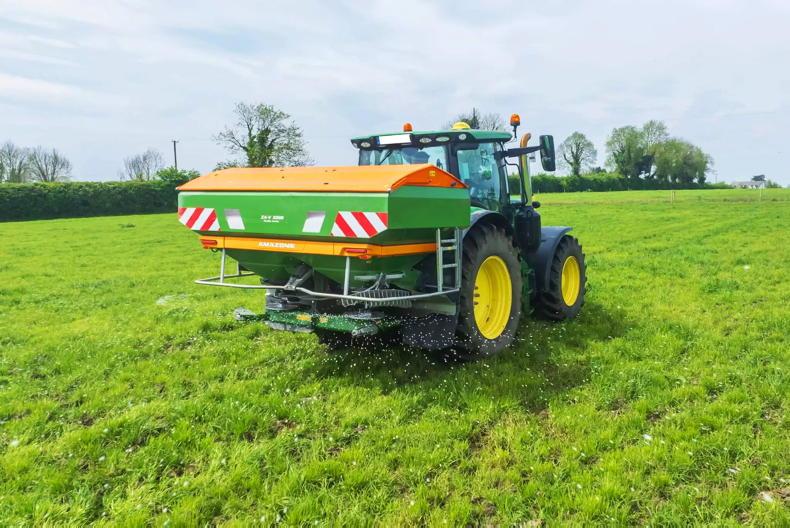
The precision with which fertiliser is used on Irish farms goes much of the way to determining the profitability of an enterprise. In recent years, trading fertiliser has become increasingly volatile, with prices fluctuating depending on geopolitical events, resulting in food inflation. In an EU determined to enforce ‘simplification’ across its regulatory standards, the CBAM is failing at all hurdles, and will only add further cost and confusion to the farming industry, resulting in increased production costs and food inflation.
On 1 January 2026, the CBAM is tasked with:
The CBAM will significantly affect the costs of many fertilisers, not just urea. The CBAM is being implemented to protect the indigenous fertiliser industry across various EU member states – Ireland does not have an indigenous fertiliser industry, so the CBAM only serves as a tax on food production and a further cost to Irish farmers.
The lack of clarity on carbon certificates, carbon value and how this value is retrospectively applied to fertiliser after it is sold, each make everything about the CBAM unworkable for all.
A unified approach from all stakeholders is needed to outline the consequences the CBAM will have within Irish agriculture. This message needs to be clearly impressed upon our local and European politicians as well as the relevant European civil servants.



SHARING OPTIONS