The latest fluke forecast from Met Éireann and the Department of Agriculture has predicted higher risk in the north, west and midlands than the east and south.
There is predicted to be a moderate risk of liver fluke-related disease this winter for farmers in the north, west, south-west and midlands. For farmers in the east and parts of the south there is a lower disease risk expected.
However, the Department has warned that farmers in lower risk areas should still remain vigilant for signs of disease.
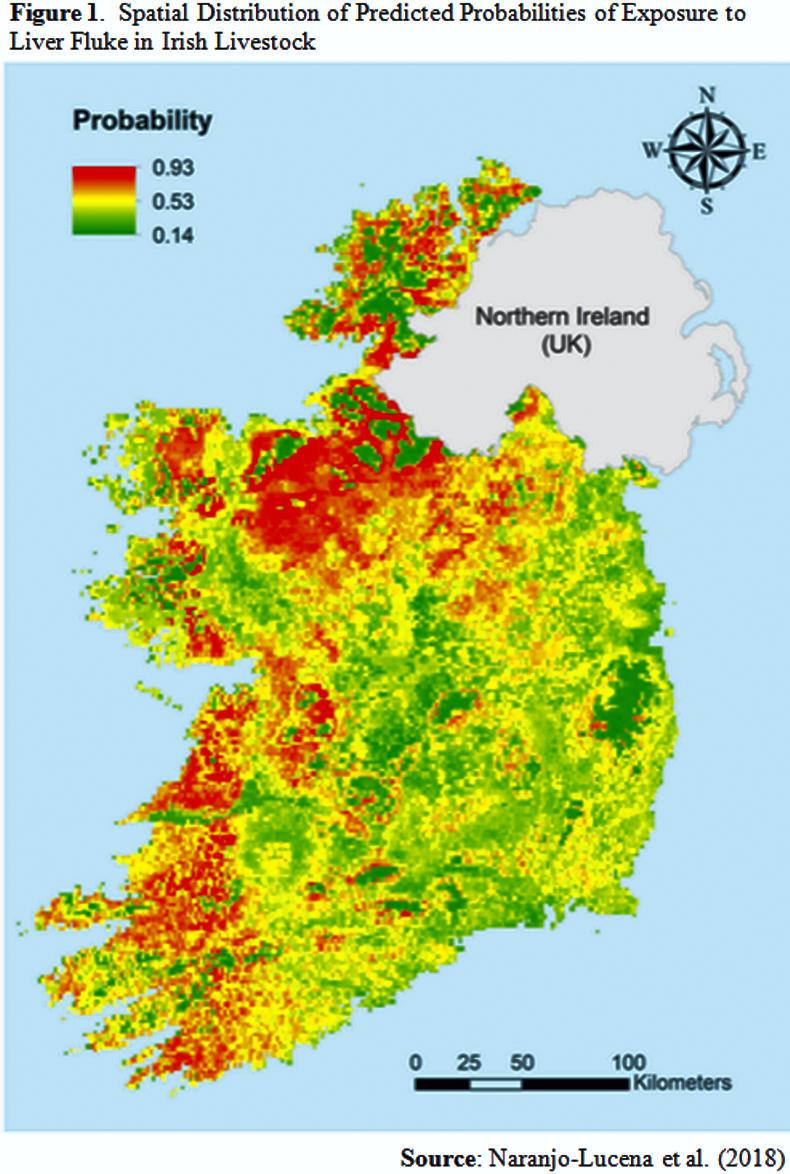
UCD researchers have produced a map modelling the level of exposure different areas of Ireland have to liver fluke.
ADVERTISEMENT
A liver fluke forecast is issued annually by the Department of Agriculture in collaboration with Met Éireann. The predicted risk is based on meteorological data gathered between May and October and the dry conditions have played a large part in this year’s predictions.
Preliminary data collected by regional veterinary labs (RVLs) on lambs born in 2018 indicates the majority of moderately-infected flocks are along the western seaboard. There was also a small number of heavily-infected flocks in the northwest.
Snails
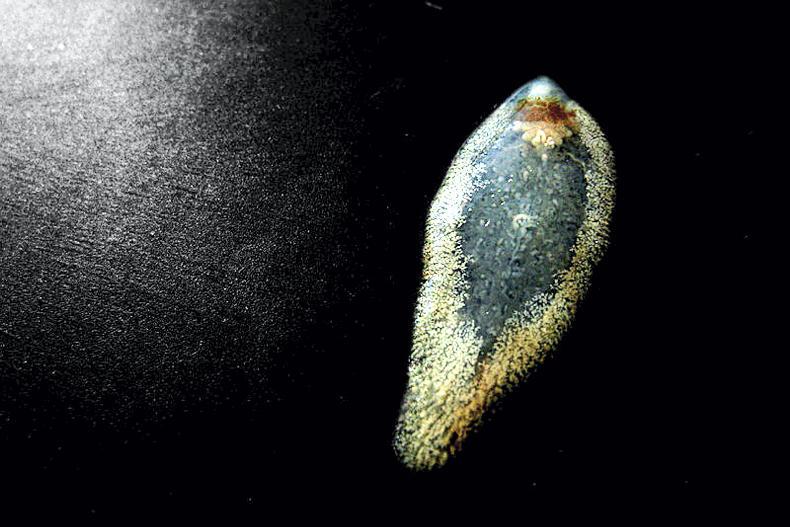
The intermediate host of liver fluke is the mud snail, which tends to favour soil that is slightly acidic and muddy. Therefore, areas of fields with rushes or wet patches tend to be a common location for mud snails.
In cases where there has been a death and the cause was not obvious, farmers are advised to submit the carcass to an RVL for an autopsy.
This content is available to digital subscribers and loyalty code users only. Sign in to your account, use the code or subscribe to get unlimited access.
The reader loyalty code gives you full access to the site from when you enter it until the following Wednesday at 9pm. Find your unique code on the back page of Irish Country Living every week.
CODE ACCEPTED
You have full access to the site until next Wednesday at 9pm.
CODE NOT VALID
Please try again or contact support.
There is predicted to be a moderate risk of liver fluke-related disease this winter for farmers in the north, west, south-west and midlands. For farmers in the east and parts of the south there is a lower disease risk expected.
However, the Department has warned that farmers in lower risk areas should still remain vigilant for signs of disease.
UCD researchers have produced a map modelling the level of exposure different areas of Ireland have to liver fluke.
A liver fluke forecast is issued annually by the Department of Agriculture in collaboration with Met Éireann. The predicted risk is based on meteorological data gathered between May and October and the dry conditions have played a large part in this year’s predictions.
Preliminary data collected by regional veterinary labs (RVLs) on lambs born in 2018 indicates the majority of moderately-infected flocks are along the western seaboard. There was also a small number of heavily-infected flocks in the northwest.
Snails
The intermediate host of liver fluke is the mud snail, which tends to favour soil that is slightly acidic and muddy. Therefore, areas of fields with rushes or wet patches tend to be a common location for mud snails.
In cases where there has been a death and the cause was not obvious, farmers are advised to submit the carcass to an RVL for an autopsy.
If you would like to speak to a member of our team, please call us on 01-4199525.
Link sent to your email address
We have sent an email to your address. Please click on the link in this email to reset your password. If you can't find it in your inbox, please check your spam folder. If you can't find the email, please call us on 01-4199525.
ENTER YOUR LOYALTY CODE:
The reader loyalty code gives you full access to the site from when you enter it until the following Wednesday at 9pm. Find your unique code on the back page of Irish Country Living every week.







SHARING OPTIONS