



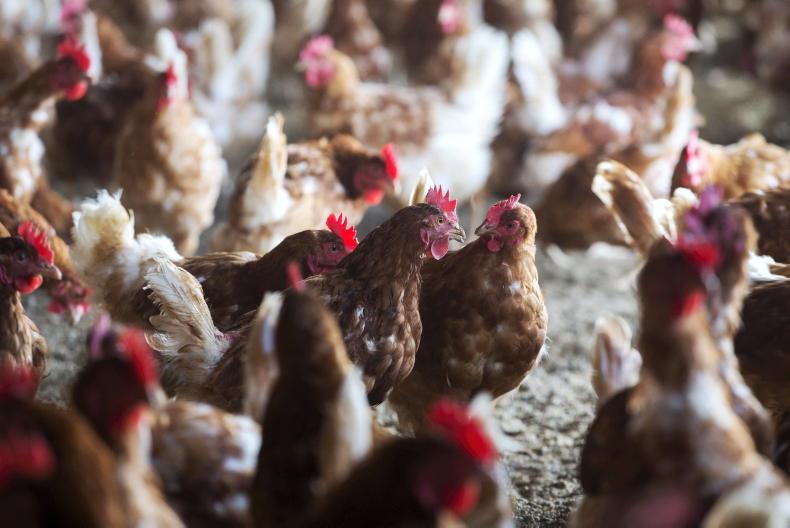
Poultry can suffer from heat stress in the middle of winter and it isn't just a summertime problem, Tyrone-based poultry vet Aonghus Lane told attendees at Teagasc's poultry conference in Monaghan on Tuesday.
This, he explained, is because more than external environmental conditions can play a part.
“The temperature and relative humidity in the broiler house also play a key role,” he said.
“For example, a farmer reduces ventilation because it is so cold out, you start to get wet litter, or you already have wet litter, and you now have high relative humidity. All those coming together are a recipe for heat stress.
“While the temperature outside might not be high, the relative humidity might be high.”
Warning
Lane warned farmers in attendance that heat stress can cost farmers performance at a relatively early stage.
The impact of heat stress on poultry varies depending on the animal, according to the vet, with broilers losing growth and breeders losing hatching eggs. On the more extreme end, heat stress can cause mortality in turkeys.
The vet advised farmers to measure both the temperature and relative humidity together, and to measure them at bird height.
“There is no point measuring it at your shoulder height, it’s important to go down to the level of the birds,” he said.
He told farmers that cool, clean, fast-flowing water is the highest-return intervention for heat stress and emphasised that it is important to have a written plan, tested equipment and trained staff before the heat arrives.


SHARING OPTIONS