


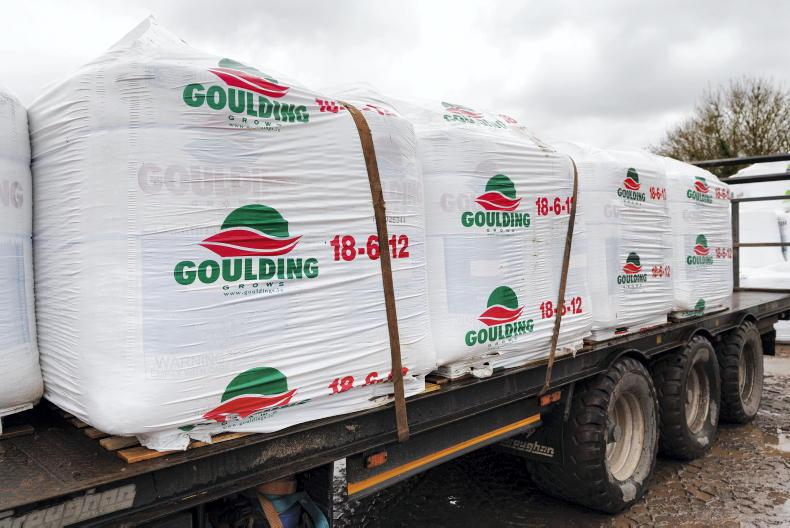
The Irish Co-operative Organisation Society (ICOS) has called for the suspension of the carbon border adjustment mechanism (CBAM) immediately with the provision of a support package for rising fuel and energy prices.
ICOS president Edward Carr has written to Minister for Agriculture Martin Heydon to urge the Government to take immediate steps to ensure security in light of the escalating conflict in the Middle East.
Carr spoke about how the closure of the Strait of Hormuz is threatening both global energy security and equally global food security.
“The Middle East region is a key player in the global fertiliser trade accounting for 30% of exports of all major fertilisers. Over one-third of urea, one-fifth of ammonia and ammoniated phosphate and half of the sulphur produced globally is exported through the Strait of Hormuz. In addition, volatility in global energy prices directly affects the production costs of fertiliser, particularly in Europe.
“We have seen significant pressure on fertiliser availability and cost in recent weeks, with average urea costs increasing by €200 per tonne and other fertilisers by €100-150 per tonne.”
Carr pointed out a warning from the International Fertiliser Association that “if disruptions to energy and fertiliser trade routes persist, the impacts will be felt most strongly in countries that depend on imported fertiliser.”
“Ireland is exposed as a significant importer of fertiliser and due to our seasonal production system and the introduction of the definite phase of the CBAM from January 2026 is having a huge impact on cost and availability,” Carr stated.
“For example, the cost of CBAM on non-EU CAN is approximately €120 per tonne, which is a prohibitive cost.”
Emerging crisis
ICOS has said that the EU’s attempts to offset the effect of CBAM are insufficient, such as reducing most favourable nations duties on imported fertilisers and the temporary suspension of CBAM, under Article 27a, which is currently before the EU legislative procedure and may take many months to complete.
“Due to the emerging crisis, we now believe it is appropriate for the EU to trigger Article 122 of the Treaty on the Functioning of the EU (TEFU) and to immediately suspend the CBAM tax on fertiliser,” Carr stated.
“Excessive input cost inflation experienced since 2022 remains a significant challenge for the agri food sector. Against the backdrop of downward pressure on output prices, further increases in farm level costs are deeply concerning.
“Consequently, we also call on the Irish Government to bring forward a package of supports, similar to the emergency measures introduced in 2022 to help lessen the impact of higher energy and fuel costs caused by the conflict in the Middle East,” Carr concluded.




SHARING OPTIONS