


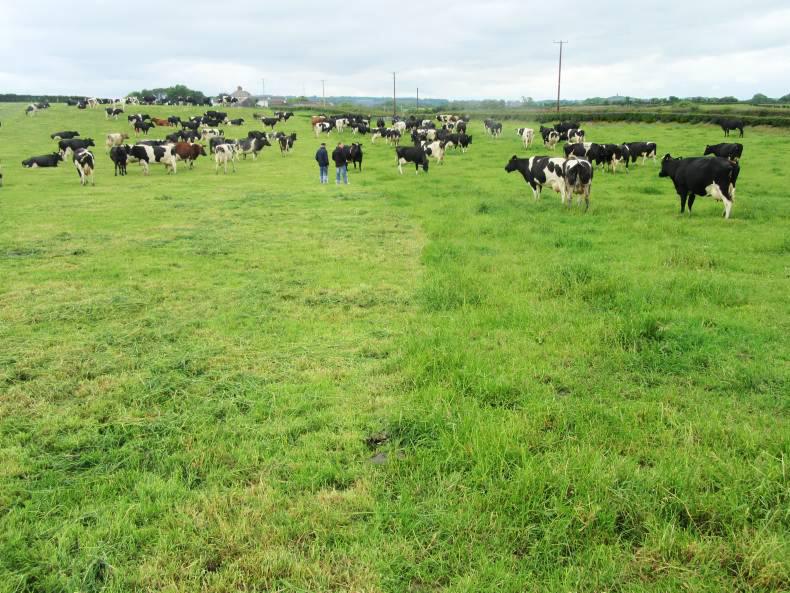
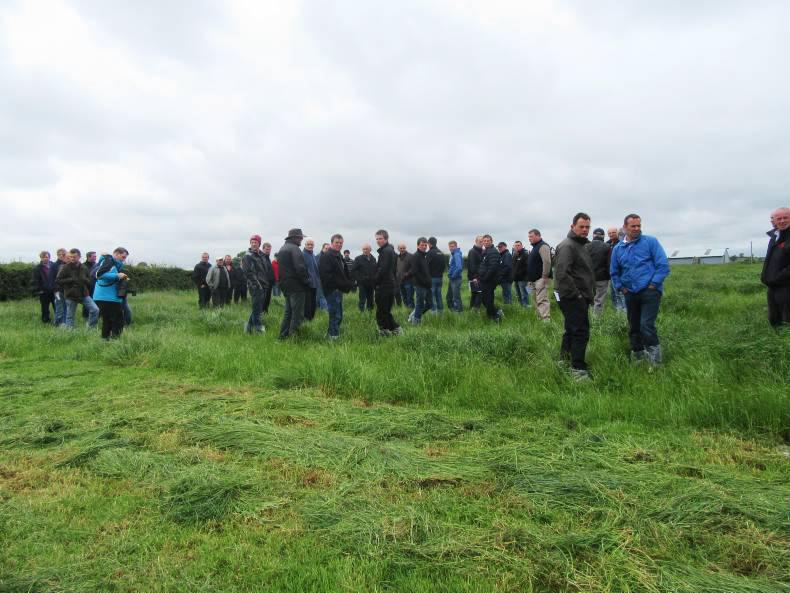
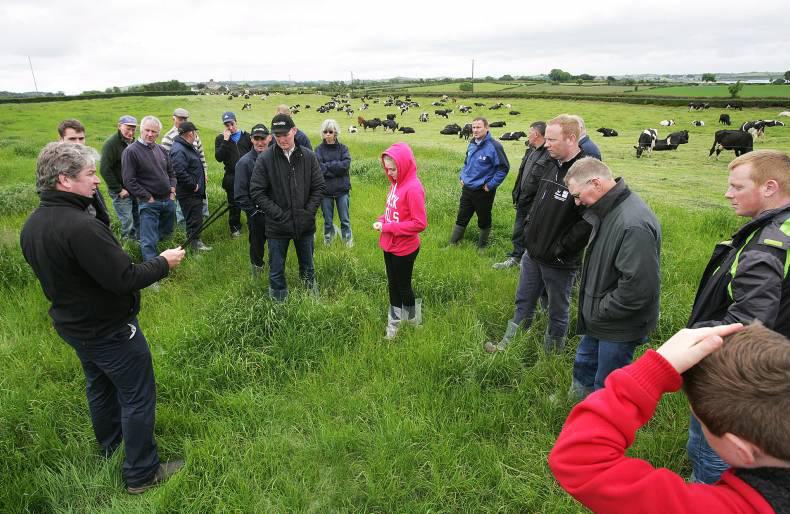
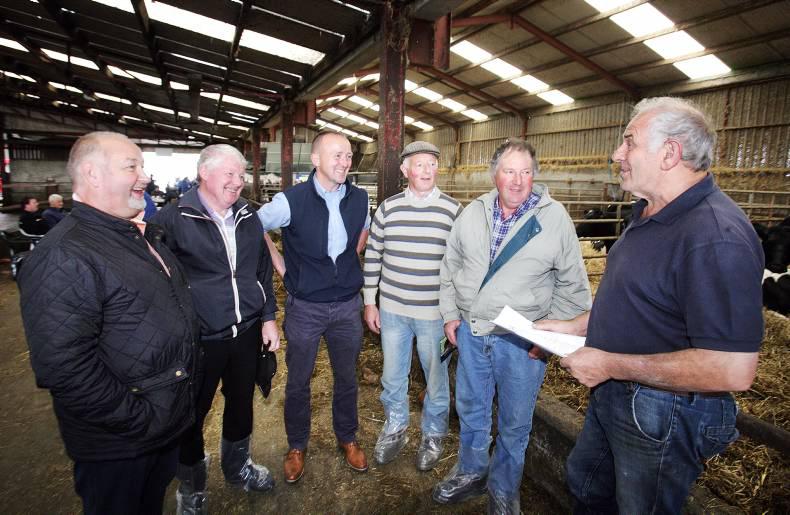
The importance of both selecting the correct genetics to suit individual dairying systems and monitoring fertility in herds was highlighted to visitors at an open day on Cavan Johnston’s farm near Strangford last week.
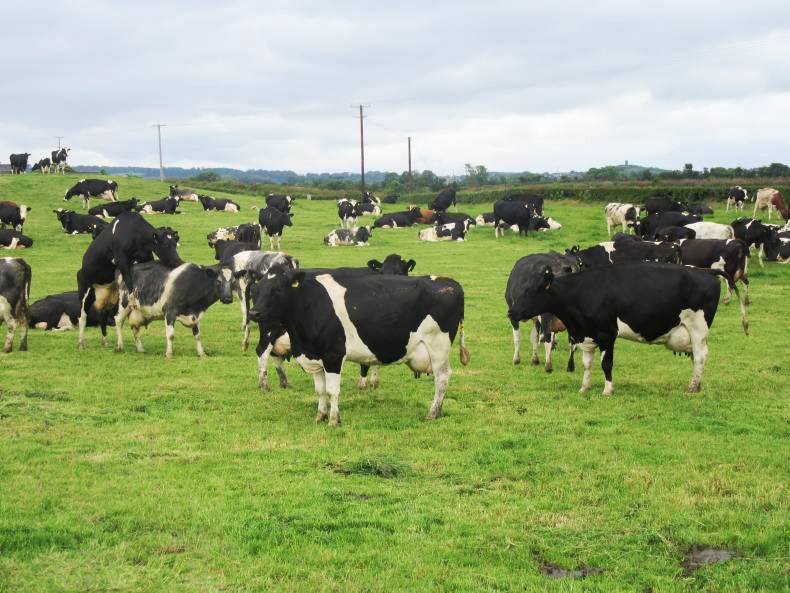
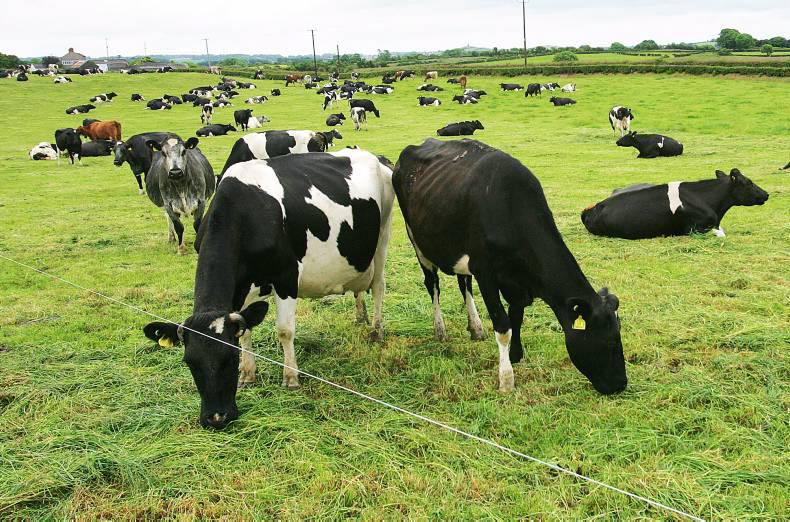
Cavan runs a herd of 160 mostly British Friesian x Holstein bred cows with a rolling average yield of 8,162 litres. Cows calve down from November through to April and are currently yielding 28.7 litres/day at 4.36% butterfat and 3.31% protein. Concentrates are fed to yield through the parlour at 0.22kg/litre, which equates, on average, to 1.8 tonnes per cow.
A major focus for Cavan is producing milk from forage, and in particular from grazed grass. Currently, milk from forage stands at 4,562 litres with an objective set to push this to over 5,000 litres.
Bull selection
Speaking at the event, Andrew Rutter from Genus ABS said that a range of different breeding indices can be used to help select the most appropriate genetics to a dairy farm’s system.
He said that continued pressure on milk prices has seen an increased number of farmers change breeding objectives in the past 12 months. This has meant that more farmers are using different breeding indices and making use of cross breeding in a similar way to Cavan’s herd.
“Before selecting genetics, you have got to look at your system and think about what is the best way to maximise returns from cows. Ask yourself how many months of the year can I grow and graze grass,” Andrew said.
EBI
For extensive grassland systems, he said that the Irish economic breeding index (EBI), which gives an economic value in euros, is most appropriate. Emphasis is placed on fertility and in particular calving interval. The sub index of milk production is weighted towards protein and butterfat and not milk yield.
He said that a measure of a cow’s efficiency can be to produce the same weight of milk solids in a 305-day lactation as her liveweight. “One way of increasing efficiency can be to reduce cow size and EBIs take this into account. For every 50kg increase in liveweight, the cost of maintenance goes up by 0.6p/l,” Andrew said.
He also questioned if milk processors in NI would change the milk pricing system in the future and said that more farmers would have to change breeding objectives in order to produce more solids and less litres, if an A plus B minus C system was adopted.
“It can take anywhere from £1,400 to £2,000 to rear a heifer, so most heifers will barely pay for themselves in their first lactation. Focusing on fertility can be a good way of improving the longevity of cows and reducing total heifer replacement costs,” he added.
The Spring Calving Index (£SCI) is a UK breeding index that gives an economic value in sterling. Andrew said that the index is applicable for spring block calving systems based on grass with supplementary feeding. He said it put less emphasis on the production of milk solids compared with EBI.
The £SCI promotes milk quality with weighting given to somatic cell count and it also has a strong emphasis on fertility, udder health and longevity.
“The £SCI is still reducing cow size to lower maintenance costs and all values are on the same base meaning values can be compared across breeds,” Andrew said.
He said that, in the past 12 months, more farmers in the UK are selecting bulls based on EBI and £SCI bulls, rather than the widely used Profitable Lifetime Index (£PLI).
Change
“£PLI is more typical to most UK dairy systems. It is designed for cows that are housed for a higher percentage of the year and respond to concentrates well in more intensive systems. There is a higher weighting on production and it won’t reduce cow size but will stop cows getting any bigger,” Andrew said. He added that £PLI is based on individual breeds, meaning that figures on bulls cannot be compared across breeds.
Andrew said that more farmers have also introduced crossbreeding into dairy herds, in particular by using British Friesian bulls on Holstein cows. “Around 1% of semen that we used was British Friesian 16 years ago, now it is 12% and growing,” he said.
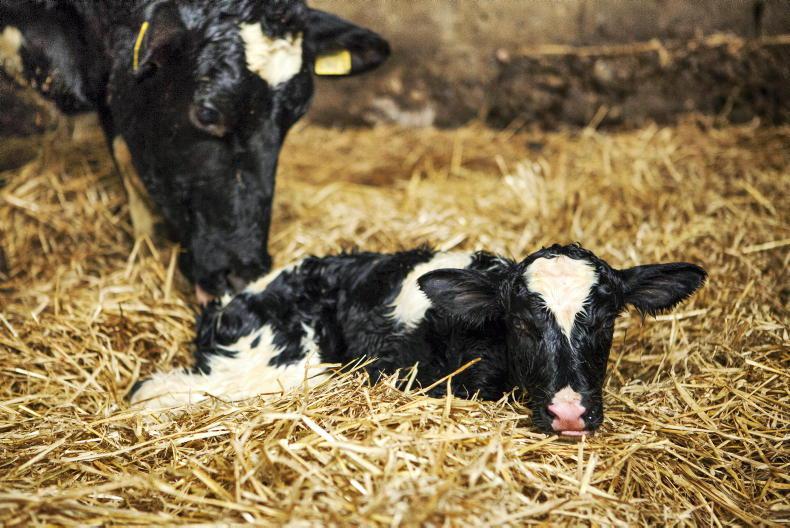
Cavan said that British Friesian x Holstein crossbreeds calves with better conformation, which is important to him because he keeps all bull calves for finishing.
Andrew said that fertility was the main reason behind most farmers deciding to crossbreed with Friesian. He pointed to average figures for individual dairy breeds that showed Friesian had a fertility index of 14.3, meaning a seven-day reduction in calving interval compared to Holstein. He also said that crossbred cows performed better on grass systems, which is increasingly important for farmers.
Detail
In the past 10 years on Cavan’s farm, calving interval has reduced from 430 days to 372 days. Cavan has attributed this mainly to having a greater attention to detail when it comes to breeding.
Huw Lloyd from Genus ABS said that farms with systems that have cows calving for a large proportion of the year can often put breeding as a lower priority than farms with block calving systems.
“Farmers in all year-round calving systems can learn a lot from the emphasis that block calving systems put on heat detection and successful breeding. Good fertility is about the creation of multiple pregnancies in a timely manner,” he said.
Huw talked about “fertility stakeholders” and how factors such as nutrition, environment, management and health all affect the chances of conception. “Egg quality is an important part of good fertility. This can depend on management of the dry and freshly calved cow,” he said.
The role of data in managing fertility and the range of key performance indicators (KPI) available to farmers was also discussed by Huw Lloyd. The pregnancy rate was defined as the number of confirmed pregnancies divided by the total number of cows eligible to become pregnant over a period of time and can be an effective KPI for both block and all-year round calving systems.
Cavan’s herd has a 21-day pregnancy rate of 34%. Lloyd quoted figures which showed that by increasing a 21-day pregnancy rate from 15% to 25%, the percentage of cows still open at 222 days in milk reduces from 27.2% to 10%. Huw said that six week in-calf rate and first conception rate are useful KPIs for block-calving systems, while percentage served by 80 days and percentage in-calf by 100 and 150 days in milk are effective KPIs for monitoring fertility in all year-round calving systems.
Cavan can focus on further improving milk from forage through grazed grass due to the ability to have cows grazing from early February to late November most years with lower rainfall and drier land in east Down compared with most other parts of NI.
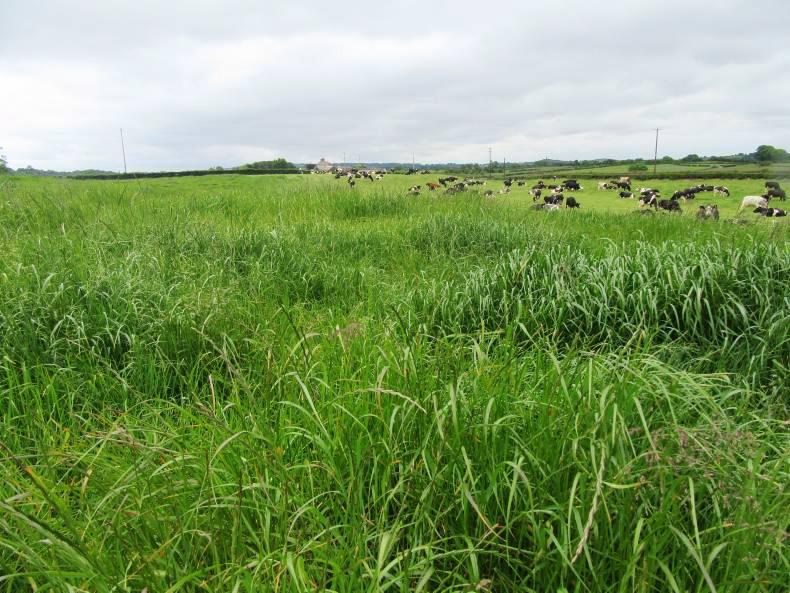
This can present challenges too, however, with Cavan stating that grassland management can be difficult in June, particularly when there has been low rainfall.
Speaking at the open day last week, CAFRE and Dairylink Ireland adviser Conail Keown said that nitrogen spread on the grazing platform in the last week of May has not been taken up by the grass plant and grass has continued to stem very quickly.
Listen to Conail's comments in our podcast below:
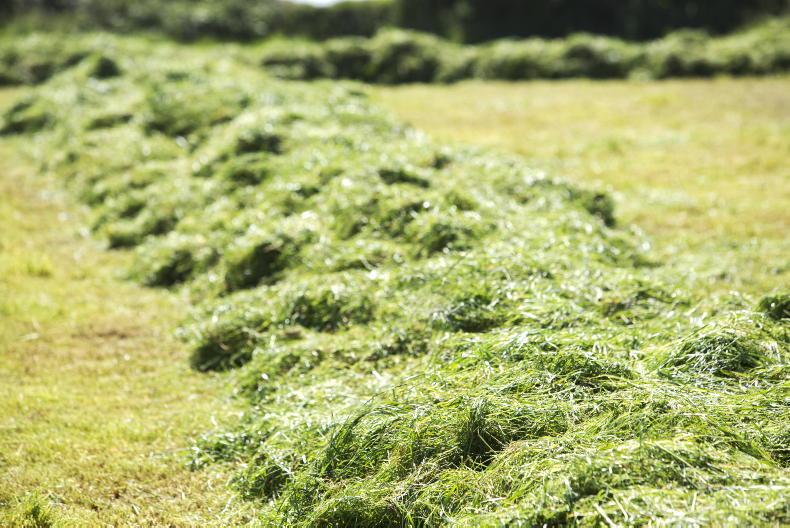
On Thursday, the paddock that the cows were in had been grazed for the first 12-hour grazing with cows leaving a fairly heavy residual cover. The second grazing was pre-mown, but in areas of heavier covers harder grass was still left behind.
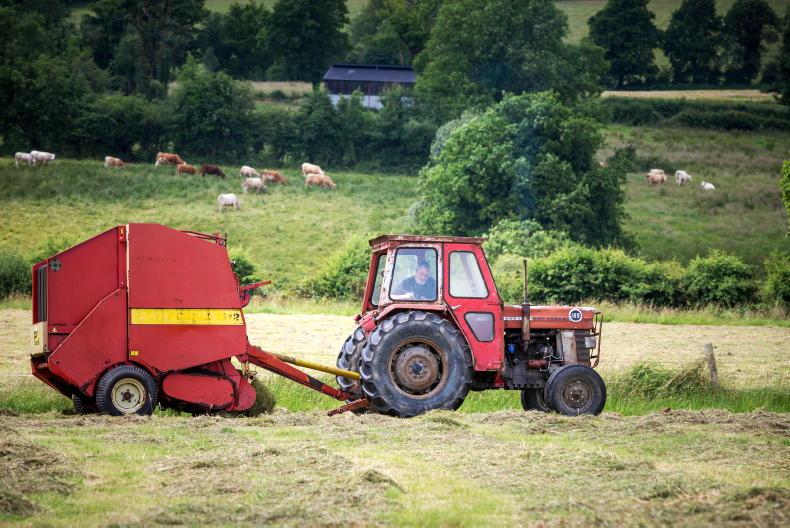
Conail recommended that the rest of the paddock, which has covers of 3,600kg DM/ha, should be taken out for bales. To make up for the deficit in the grazing platform, good quality first-cut regrowth that is close to the yard will be grazed from this week.
Cavan reseeds around five hectares of the 60ha grazing platform each year and usually pre-mows paddocks from early June to increase dry matter intakes.




SHARING OPTIONS