



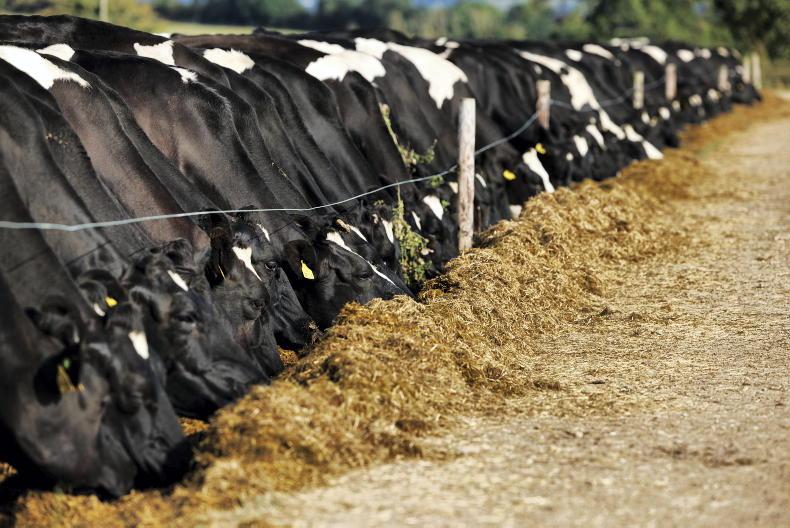
Farmers short on fodder should immediately begin stretching whatever reserves that are dwindling to avoid leaving yards bare before the winter is out and source feed from regions where grass growth remains strong ahead of the housing season.
Rotation lengths should also be lengthened to 30 to 35 days to ensure swards can take advantage of any rain that does fall over the coming weeks, as overly-tight grazing will hit regrowth.
These were among the key areas of consensus to emerge from the first meeting of the national fodder and feed security committee since 2023.
The meeting in Teagasc’s headquarters in Oakpark on Friday was attended by farming organisations, Teagasc, co-ops, agri merchants and other industry groups.
Figures presented show that the drought has knocked the strong beginning to the 2026 grass growing year, leaving grass growth to date at a national level of 0.5t DM/ha shy of the five-year average and around 0.8t DM/ha behind last year, although with parts of the north and west somewhat offsetting the severity of the drop in other parts.
The meeting heard that a significant proportion of farmers in the southeast already hit fodder deficits of between 10% and 20% this week, with each day’s feeding worsening the shortfall.
Southeast tight
More than four in every 10 farmers in the southeast – the most heavily supplementary-fed region surveyed - reported to have heavily fed silage over July and August, one-third buffer fed silage over these months and just 16% did not introduce extra supplementary feed.
One quarter of farmers in the midlands-northeast fed silage out heavily, 39% buffer fed silage and 4% gave cattle extra meal.
Teagasc is advising farmers to seek out straw supplies amid reportedly fast demand for bales, with tillage representatives in the room stating that almost all straw baled this year is of quality suitable for feeding.
Teagasc also warned that farmers should expect and plan for reduced fodder yields in crops such as maize and beet, with the latter crop’s yields anticipated to be around 30% lower than average in some fields and with increased losses looking increasingly likely.
Supplementary questions to the survey asked farmers tight on fodder of their preferred management route of dealing with their shortfall.
Dairy farmers replied 2:1 that would look to cull early, a ratio that flipped for beef farmers, with Teagasc suggesting that this could be explained by the timing of cow culls on dairy farms into the backend.
The committee was keen to communicate to farmers that any slurry tank space that was used up over the past few weeks and months as cattle received supplementary feeding indoors must be spread ahead of the closed period to avoid capacity issues in the late winter.
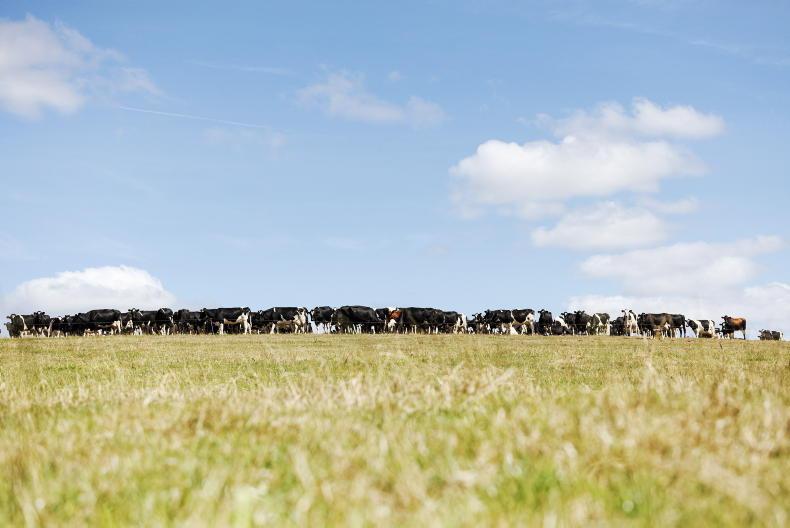
Slurry should be watered down with the currently low levels of grass growth and applied at volumes at or below 2,500 gallons/ac.
The committee heard of stakeholder concern that farmers in the areas experiencing decent grass growth, such as the west and north, may not drive on with saving fodder above typical levels if transport supports are not announced when fertiliser can still be spread and extra cuts saved.
Fodder transport
Speaking before he opened the meeting, Minister for Agriculture Martin Heydon left the door open to the introduction of a fodder transport scheme into the winter months, but stopped short of mobilising any additional drought- or fodder-related funding.
“Historically, support schemes for the transport of fodder would be successful in spring because that is when farmers in the west will have identified what the winter looks like and what their surplus levels are,” the Minister said at Oakpark.
“We need more rain and the next couple of weeks are critical because if we get the moisture levels up in the soil in this part of the country, the opportunity to grow catch crops or fast-growing grasses could help us.”
Minister Heydon said that he is “confident” that fodder supplies in parts that witnessed strong summer grass growth can fill deficits in regions hit hard by drought.
The committee would assess the “elements of the country that can provide support to the elements that need it and what Government might need to do to link those two bridges,” he said.
“Right now, there are decisions farmers can make in the east, the southeast and the south that can buffer their stocks and look at their stocking rates to manage this to a certain extent.”



SHARING OPTIONS