



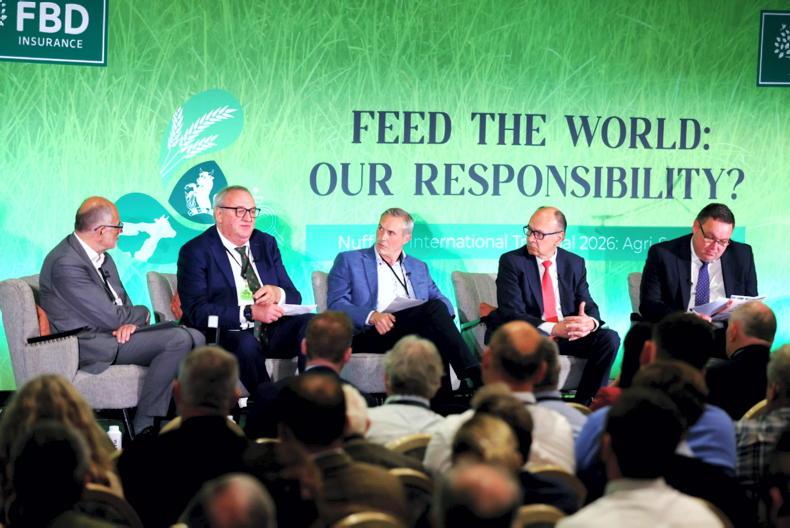
More knowledge rather than more inputs is what is needed in the EU if European farmers are to intensify food production in future, professor Alan Matthews has said.
Speaking at the Nuffield International Agri-Summit in Kildare on Friday, he said: “If we want to intensify production and want to grow more food on limited land, we do need to shift the nature of intensification from more inputs to more knowledge."
Facing the pressures of a shrinking agricultural land base within the EU and asking that land do more for food production in the future was going to require different thinking than in the past, the economist from Trinity College Dublin (TCD) added.
“Looking at food production is too narrow. It would it be sensible to talk about land use.”
Highlighting that not only is land used for food production, it’s also a source of biomass and bioenergy. Non-food or energy production uses of land such as a carbon sink, biodiversity, flood alleviation and recreation also place demands on a finite land base.
"All of these are desirable," said Matthews, but they are in conflict and that is where the political tension arises, he added.
"We have huge pressures on available land. Climate change, especially in southern Europe, is turning previously productive land into land that is more difficult to manage.
"In the past, the answer to this was intensification," he added, and that meant more fertiliser, more feed, more water which in turn gave rise to issues around excess nutrients and emissions.
In future food production will have to more targeted and get more from limited resources, he said.
“Essentially, it’s sustainable intensification or in other words, making better use of more limited resources. That is the challenge for the future.
"That is likely to include measures such as improving genetics and the use of precision agriculture.”



SHARING OPTIONS