


Harvest:
Progress remains intermittent and there is still an amount of winter barley to be harvested, mainly in the northern half of the country. There is a chunk of winter oats harvested and also some early winter wheat. There is also a good chunk of the winter rape cut with most yield reports this year in the 1.8-2.2 t/ac bracket, so doing well. But I see futures prices for rape under pressure once again this week.
The very early winter wheat crops are not really a surprise as they have been very advanced for some time. Some of these are in very early country while others are a result of lighter soil or diseases like take-all. It is helpful to have good drying between the frequent showers.
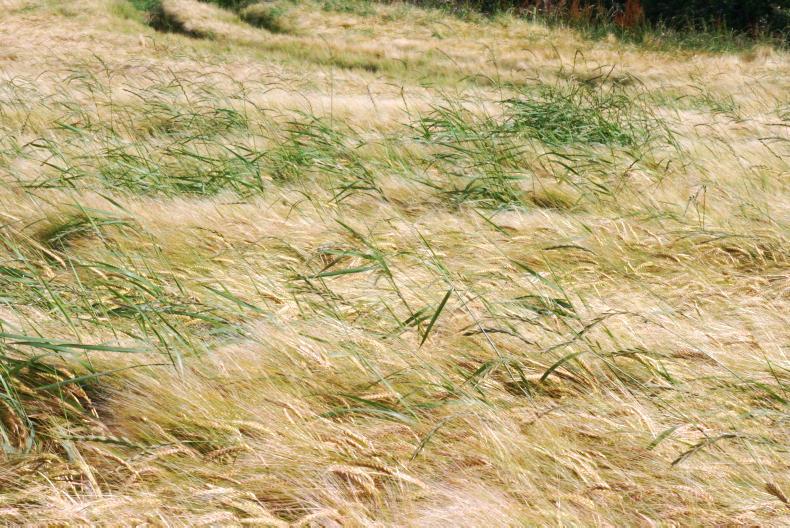
Scutch: There appears to be a lot more scutch around than usual this year and some fields look like they warrant spraying. Pre-harvest spraying remains the best control approach on the crops where this is allowed. Target about 3.0 l/ha of a 360 g/litre product and up the rate if infestation is very bad. Think of this as about 1,000 grams or more of glyphosate per hectare because there are so many different concentrations of active now in the market.
Where scutch warrants spraying but pre-harvest treatment is not allowed, it may be best not to cultivate so as to allow the scutch to re-grow as quickly as possible. A good cover of vegetation is important for spraying. But cultivate as much as possible where there is no scutch to reduce your overall weed and pest burden over time.
Stubbles:
Once stubbles are cleared try and get a shallow cultivation done ASAP to encourage weed seed germination (especially grass weeds). You should also consider planting some form of green cover, especially where the next crop is spring sown. Catch crops, like any other manure, are an investment in the future of your soil productivity.
Keep stubble cultivation shallow to avoid ending up with a mess if conditions are wet. Leave the first run ridged and loose, if you can, to allow the seedbed dry out to kill the eggs of slugs etc. Subsequent rain will always drive weed seed germination. Consider a second shallow run once a green hue appears. This will kill that vegetation and encourage more weed seeds to germinate.
Catch Crops:
Aim to get them planted as quickly as possible post harvest. Vegetative yield is important whether grazing or incorporating. There are many mixtures available from merchants but make sure that it suits your rotation and planting date. If you intend to graze, many farmers believe that part grazing gives the best net advantage. Leaving some of the vegetation maximises animal performance with organic matter and manure for the soil.
Planting Rape: Target winter rape planting between mid and end of August. Target the last week in August for fields treated with high N organic manures like pig or poultry. Aim for seed rates of around 30-40 seeds/m2 for hybrids and 70-80 seeds/m2 for conventional varieties.




SHARING OPTIONS