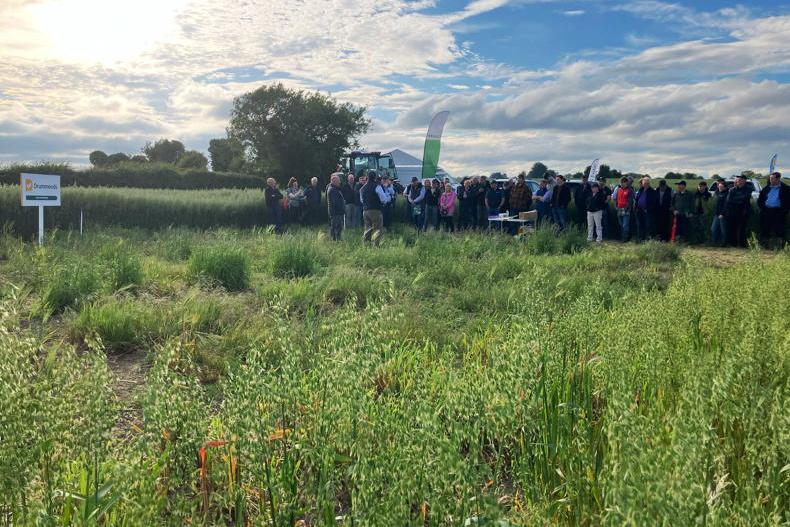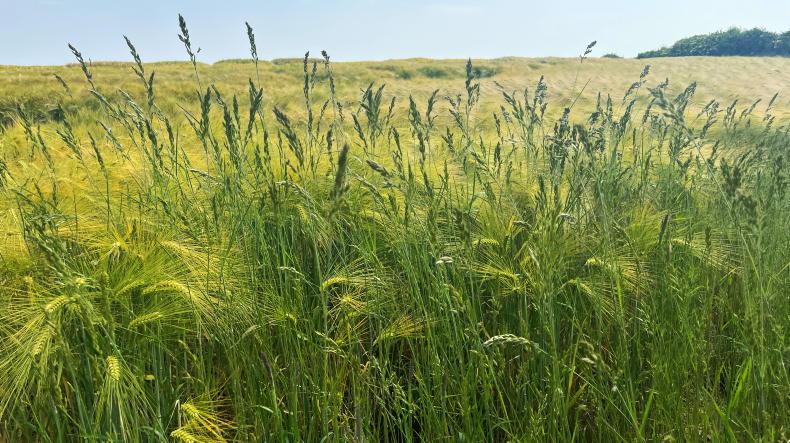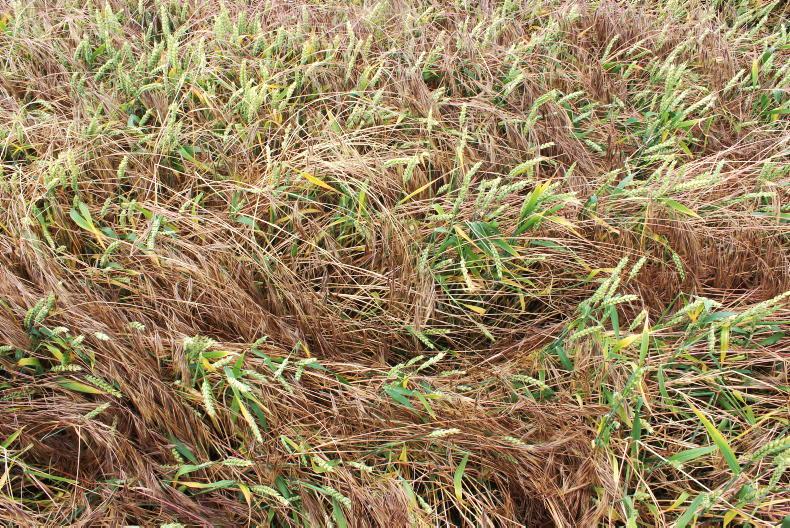
Glyphosate resistance in Italian ryegrass is dotted around England. Currently, about five cases have been confirmed with more being examined and expected to be confirmed. The cases are independent. They’re not linked and they come about due to a number of different factors, from application timing and quality to a reliance on glyphosate and a lack of variation in control.
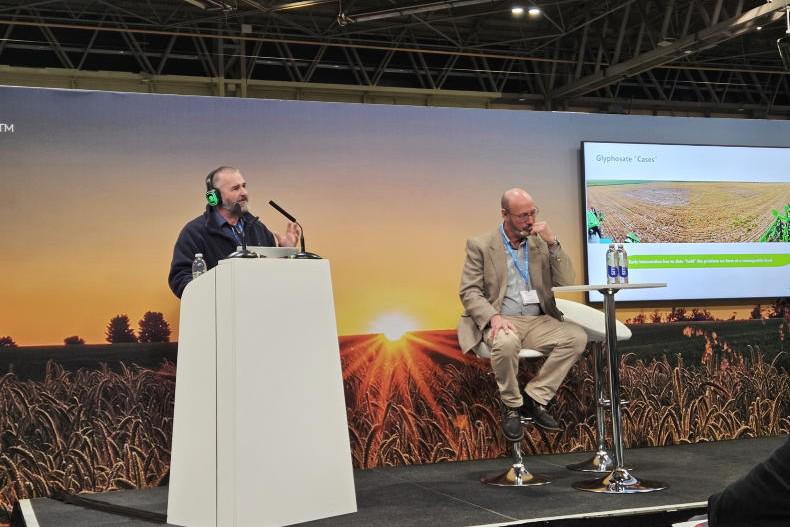
One thing that John Cussans, weed science principal agronomist at ADAS, made clear at his talk at CropTec show in Birmingham last week is that for every case there is a farmer behind it who is dealing with a weed issue, increased costs and curtailed operations on their farm.
John explained some of these factors: “Where there is too much reliance on glyphosate across the whole rotation for all your weed control. You’re reducing the amount of mechanical weeding.
“You’re reducing the amount of cultivation – the number of cultivation timings and how intense that cultivation is. You’re moving towards a low disturbance drill system that’s taking away another mechanical weeding event you used to get with a drill. He said older establishment systems gave nearly 100% control of weeds before sowing.
“Combine this with lots of stubbles where there is no weed control on the stubble, trying to establish a spring crop where you’ve got large, well-established ryegrass plants and you’re trying to use high doses of glyphosate and then you don’t have anymore mechanical weeding before you go into the crop.
“If you think about it, so much of your weed control across the whole rotation is coming from glyphosate and its that over-reliance on glyphosate that’s driving the resistance.
“We’re not saying it’s the use of glyphosate over time or how much is being used. It’s that reliance. That means we’re seeing cases popping up right across the country [UK]. It’s because its not spreading, it’s being selected for in that way.”
John thinks farmers have become complacent with glyphosate and how it is applied. The timing of application, the weather at application and the quality of the water being used to spray the product all impact efficacy.
The weeds researcher said he is not telling people not to use low-disturbance establishment systems or not to leave over-winter stubbles for birds.
These are all important, but he said farmers need to monitor weeds and for example if they see weeds emerging on winter stubbles, use some mechanical weeding to take out that patch.
Not inevitable
Where caution is taken and given that information John wanted to be clear that glyphosate resistance is not inevitable and that is clear from the fact that there is no cluster of resistance cases.
The first case of glyphosate resistance in the UK was in Kent, where there was a lot of ryegrass in the crops and the weed abundance took hold.
The farmer continues to grow arable crops and is managing the issue, but needs a lot of mechanical weeding and early intervention to keep weeds under control, adding work and cost to his system.
What causes resistance?
When looking at the resistance cases it is clear that all the locations where it occurs have a number of factors in common.
There is no one individual thing that stands out as causing the resistance.
Factors that can contribute to glyphosate resistance:
A heavy reliance on glyphosate.Low disturbance establishment systems.Long durations of stubble post-harvest where there is no effective weed control. Weeds get too big to control.Big weeds resulting in well-rooted and tillered ryegrass plants being sprayed with high doses of glyphosate before sowing.Incorrect glyphosate application.John made the point that traditional establishment systems have a mechanical weeder in some form. A power harrow for example will destruct weeds in its path, but minimum-tillage drills do not have this.
He also noted that operator decisions drive results. Applying at the wrong time or under-dosing can result in poor control.
Spraying at the wrong boom height will leave strips of weeds uncontrolled.
In the UK, there are stewardship guidelines to prevent glyphosate resistance build up and to ensure it is being used in the correct manner beside water for example.
The guidelines aim to:
Minimise weed survivors.Maximise efficacy.Use alternative herbicides where possible.Monitor success.A wider adoption of alternatives to glyphosate – in-crop herbicides, mechanical control.Every single field and farm must monitor the success of a glyphosate application.Implement free-resistance testing.Spray water
The type of water that you spray with also needs to be examined when spraying glyphosate.
Hard water can negatively impact the herbicide’s efficacy as it can result in poorer uptake through the leaf.
This is not true of all plant protection products, but does particularly impact glyphosate and some other herbicides.
Hard water should be treated with a conditioner. Growers can get a hard water metre or send water off to the lab for testing.
Rain water is ideal for spraying glyphosate as it is not hard. If you can you should prioritise collected rain water for glyphosate spraying or dilute hard water with rain water.
If water is hard and needs a condition then this conditioner should be added to the water before you add in the glyphosate. You should pre-mix the conditioner with the water and then add in the glyphosate.
John also added that farmers should not be cutting glyphosate rates, particularly if using a generic product.
Comment
Glyphosate is an important product for weed control across tillage farms and livestock farms. Many reduced tillage farms will tell you it is a herbicide that is essential in their tool box.
Those farmers in low-disturbance tillage systems need to be vigilant and perhaps be prepared to cultivate at times when they don’t want to in order to keep the herbicide working.
All farmers need to pay attention to the success of the herbicide and all farmers will probably admit that they could apply it at better times or choose products more carefully for poorer weather.
From what John says, little changes can go a long way when combined together to protect the herbicide. So, apply at the right time, the right rate, with the right water.
You can hear from John Cussans in conversation with the Irish Farmers Journal on The Tillage Podcast by scanning this QR code with the camera on your smartphone.
Glyphosate resistance in Italian ryegrass is dotted around England. Currently, about five cases have been confirmed with more being examined and expected to be confirmed. The cases are independent. They’re not linked and they come about due to a number of different factors, from application timing and quality to a reliance on glyphosate and a lack of variation in control.
One thing that John Cussans, weed science principal agronomist at ADAS, made clear at his talk at CropTec show in Birmingham last week is that for every case there is a farmer behind it who is dealing with a weed issue, increased costs and curtailed operations on their farm.
John explained some of these factors: “Where there is too much reliance on glyphosate across the whole rotation for all your weed control. You’re reducing the amount of mechanical weeding.
“You’re reducing the amount of cultivation – the number of cultivation timings and how intense that cultivation is. You’re moving towards a low disturbance drill system that’s taking away another mechanical weeding event you used to get with a drill. He said older establishment systems gave nearly 100% control of weeds before sowing.
“Combine this with lots of stubbles where there is no weed control on the stubble, trying to establish a spring crop where you’ve got large, well-established ryegrass plants and you’re trying to use high doses of glyphosate and then you don’t have anymore mechanical weeding before you go into the crop.
“If you think about it, so much of your weed control across the whole rotation is coming from glyphosate and its that over-reliance on glyphosate that’s driving the resistance.
“We’re not saying it’s the use of glyphosate over time or how much is being used. It’s that reliance. That means we’re seeing cases popping up right across the country [UK]. It’s because its not spreading, it’s being selected for in that way.”
John thinks farmers have become complacent with glyphosate and how it is applied. The timing of application, the weather at application and the quality of the water being used to spray the product all impact efficacy.
The weeds researcher said he is not telling people not to use low-disturbance establishment systems or not to leave over-winter stubbles for birds.
These are all important, but he said farmers need to monitor weeds and for example if they see weeds emerging on winter stubbles, use some mechanical weeding to take out that patch.
Not inevitable
Where caution is taken and given that information John wanted to be clear that glyphosate resistance is not inevitable and that is clear from the fact that there is no cluster of resistance cases.
The first case of glyphosate resistance in the UK was in Kent, where there was a lot of ryegrass in the crops and the weed abundance took hold.
The farmer continues to grow arable crops and is managing the issue, but needs a lot of mechanical weeding and early intervention to keep weeds under control, adding work and cost to his system.
What causes resistance?
When looking at the resistance cases it is clear that all the locations where it occurs have a number of factors in common.
There is no one individual thing that stands out as causing the resistance.
Factors that can contribute to glyphosate resistance:
A heavy reliance on glyphosate.Low disturbance establishment systems.Long durations of stubble post-harvest where there is no effective weed control. Weeds get too big to control.Big weeds resulting in well-rooted and tillered ryegrass plants being sprayed with high doses of glyphosate before sowing.Incorrect glyphosate application.John made the point that traditional establishment systems have a mechanical weeder in some form. A power harrow for example will destruct weeds in its path, but minimum-tillage drills do not have this.
He also noted that operator decisions drive results. Applying at the wrong time or under-dosing can result in poor control.
Spraying at the wrong boom height will leave strips of weeds uncontrolled.
In the UK, there are stewardship guidelines to prevent glyphosate resistance build up and to ensure it is being used in the correct manner beside water for example.
The guidelines aim to:
Minimise weed survivors.Maximise efficacy.Use alternative herbicides where possible.Monitor success.A wider adoption of alternatives to glyphosate – in-crop herbicides, mechanical control.Every single field and farm must monitor the success of a glyphosate application.Implement free-resistance testing.Spray water
The type of water that you spray with also needs to be examined when spraying glyphosate.
Hard water can negatively impact the herbicide’s efficacy as it can result in poorer uptake through the leaf.
This is not true of all plant protection products, but does particularly impact glyphosate and some other herbicides.
Hard water should be treated with a conditioner. Growers can get a hard water metre or send water off to the lab for testing.
Rain water is ideal for spraying glyphosate as it is not hard. If you can you should prioritise collected rain water for glyphosate spraying or dilute hard water with rain water.
If water is hard and needs a condition then this conditioner should be added to the water before you add in the glyphosate. You should pre-mix the conditioner with the water and then add in the glyphosate.
John also added that farmers should not be cutting glyphosate rates, particularly if using a generic product.
Comment
Glyphosate is an important product for weed control across tillage farms and livestock farms. Many reduced tillage farms will tell you it is a herbicide that is essential in their tool box.
Those farmers in low-disturbance tillage systems need to be vigilant and perhaps be prepared to cultivate at times when they don’t want to in order to keep the herbicide working.
All farmers need to pay attention to the success of the herbicide and all farmers will probably admit that they could apply it at better times or choose products more carefully for poorer weather.
From what John says, little changes can go a long way when combined together to protect the herbicide. So, apply at the right time, the right rate, with the right water.
You can hear from John Cussans in conversation with the Irish Farmers Journal on The Tillage Podcast by scanning this QR code with the camera on your smartphone.
SHARING OPTIONS