



Ewe numbers in Galway have been under the greatest pressure nationally over the last two years falling by over 25,000 head or 8% annually in each of the last two census returns.
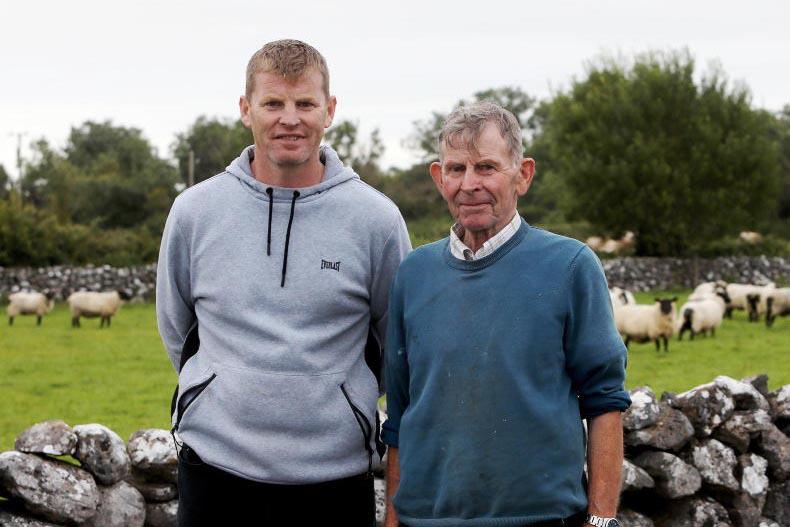
A small number of farmers are thankfully bucking this trend and one young sheep farmer who is committed to growing and achieving higher performance from his sheep flock is Michael Forde from Corrandulla.
Michael is being helped in his objective via the Teagasc BETTER Farm Sheep Programme of which he has been a willing participant for the last two years and in working closely with his Teagasc Business and Technology advisor Keith Fahy.
Farming with assistance from his father Bernie, Michael runs a 180-head mid-season lambing flock alongside a store-to-beef enterprise on 27ha.
Lands are typically comprised of dry limestone-based soils but fragmentation is a challenge with the farm split in to four parcels.
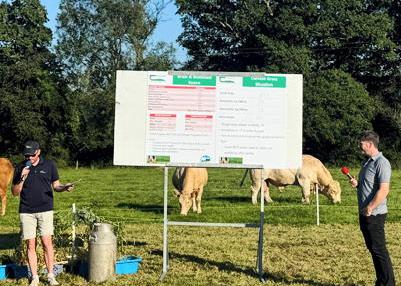
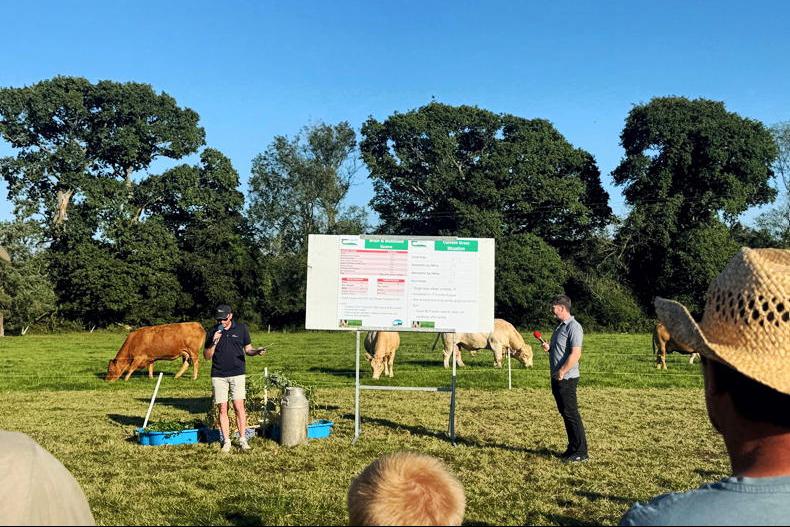
The farm recently hosted a farm walk which offered a full rundown of the farming system, performance in recent years and objectives for the coming years.
Flock numbers have gradually increased over the last four to five years with the construction of a new sheep shed facilitating higher numbers to be run.
There is a firm focus on the farm on improving labour efficiency with Michael working full time off-farm.
Michael explains that numbers are at a level that he is satisfied with.
The farm is stocked at about nine ewes/ha and grass growth is positive at 9.57t dry matter (DM) per ha in 2024, meaning the farm is exceeding the target of growing 1t grass DM for each ewe run.
With stock numbers at their required level and grass growth increasing in line with growth in flock numbers the aim going forward is to push output from each ewe to the optimum level.
Table 1 summarises ewe output for the last two seasons.
The average litter size per ewe joined is running marginally below the target of 1.9 lambs per ewe joined.
This was partly due in the 2023/2024 season to the target percentage of ewes lambed running below the target of 95% of ewes joined lambing.
This figure improved markedly in 2024/2025 by focusing on ewe condition but Keith Fahy explains output per ewe was still limited by a higher than desired percentage of ewes failing to hit target body condition at mating and holding the flock back from reaching its full potential.
Teagasc BETTER Farm programme manager Frank Campion told farmers at the walk that ewe body condition score (BCS) is typically good in the flock but outlined that there is still room for improvement.
He told farmers that the average BCS score post-weaning in 2024 was 2.9 with 39% of ewes falling below a BCS of 3.0.
Ewe condition improved significantly from weaning to mating rising to an average BCS of 3.4.
However, as is the case in many flocks, a good average BCS can often mask small issues with 17% of ewes falling below a condition score of 3.0 at mating in 2024.
Focusing on these ewes and improving condition is the secret to pushing ewe reproductive performance to its optimum level and laying the foundations for ewes to lamb down in good body condition.
This in turn will improve lamb birthweights, enhance ewe milk yield and mothering ability and reduce mortality.
This in turn will help feed in to the farm achieving its target of weaning 1.6 lambs per ewe joined.
The performance of ewes has also been curtailed by ewes suffering from an outbreak of lameness which is detailed on pages 46 and 47.
Frank Campion stressed the importance of taking prompt corrective action to improve ewe BCS.
He presented the data detailed in Table 2 to illustrate his point.
As can be readily seen the earlier that ewes are offered preferential treatment the lower the target daily liveweight gain required and better the chances are of hitting mating targets.
Michael explains that in previous years ewes would be grouped together post-weaning and let off in one group until later in the year when it was too late to alter significant BCS deficits.
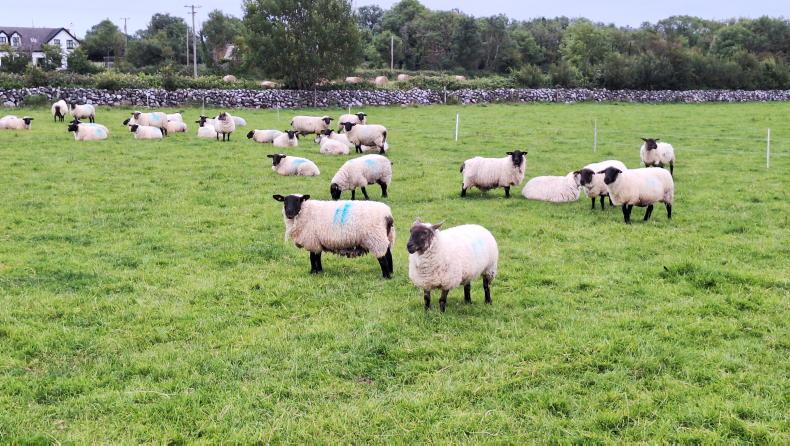
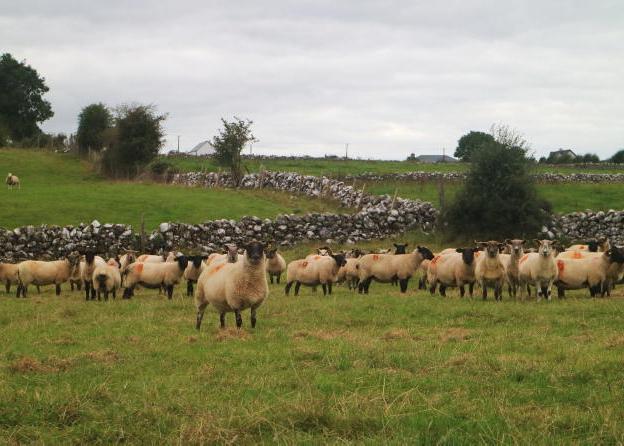
Now ewes falling below target condition graze the best grass available, bar grass allocated to lambs, once dried off sufficiently while ewes in good body condition are used to clean out paddocks with lambs typically moved on to fresh grass at a post-grazing sward height of 5.5cm to 6cm.
Frank adds that an analysis of data collected through lowland participation in the programme shows that ewes hitting target condition at mating achieve a higher litter size, record higher lamb performance and lower lamb mortality along with recording a lower culling rate.
The farm has traditionally operated a system of purchasing Suffolk / Suffolk-cross ewe hoggets in Headford Mart and mating these with Texel rams.
This led to a simple system with all lambs sold. But as touched on above it does come with elevated risks of introducing disease on to the farm.
Michael retained 20 ewe lambs in 2024 which were run dry over the winter but is reluctant to change his system to a closed flock.
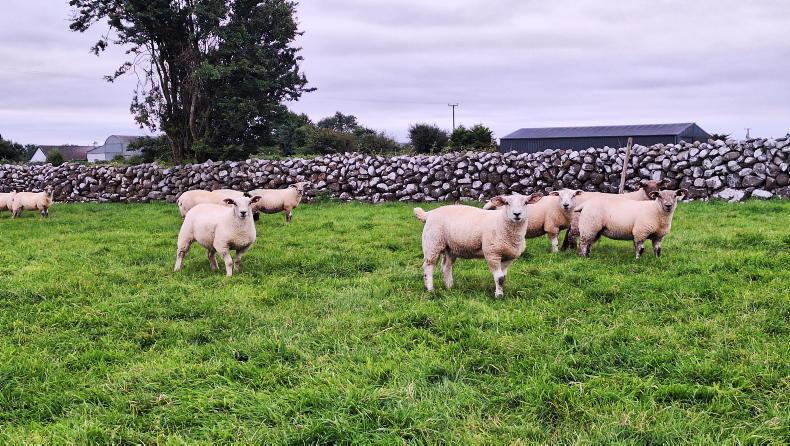
While acknowledging the disease risks, such as importing CODD, and not knowing the background performance, he feels that retaining his own replacements would only really work if lambing them as ewe lambs which is not possible given the labour constraints on the farm.
The focus going forward will be to try and source replacement hoggets from flocks with a known health status along with keeping some replacement ewe lambs to reduce full exposure to market prices.
A robust biosecurity plan is already in place including running ewe hoggets as a separate group until post-lambing.
Purchased replacements are vaccinated for chlamydial or enzootic abortion.
Table 3 details lamb performance from birth to weaning (10 June). Post-weaning lambs were split in to weight brackets to assess the position in terms of putting finishing plans in place.
There was 30% of lambs weighing 35kg plus, 33% weighing between 30kg and 35kg, a further 24% of lambs weighing from 25kg to 30kg and 13% of lambs weighing less than 25kg.
There were 7% of lambs drafted for slaughter at the point of weaning.
Michael operates finishing groups whereby heavier lambs weighing 37kg to 40kg plus are grouped together and offered concentrate supplementation averaging in the region of 0.5kg per head daily.
The volume of concentrates offered to ram lambs increases as the year progresses and thrive from grazed grass comes under pressure.
This finishing system is considerably different to the past where lambs were creep fed. This Michael says resulted in large quantities of concentrates being fed and significant costs accumulating.
There has been major improvements on the farm in terms of improving grazing infrastructure and grass quality. Lamb performance is now on a par to when lambs were offered ad lib meal feeding.
Teagasc sheep specialist Ciaran Lynch told farmers that it is important to monitor lamb performance post-weaning to keep on top of drafting targets.
He used the data detailed in Table 4 to highlight this message. Where post-weaning weight gains are running below target then the date at which lambs will reach slaughter weight will be pushed much later.
This will result in lambs competing with ewes for diminishing grass supplies. Performance at grass is currently running close to optimum levels given continued positive grass growth.
In Michael’s case lamb performance can be monitored as lambs are tagged and performance is recorded.
Performance can still be monitored by selecting a random sample of lambs, weighing them to get a starting weight, and then repeat weighing at regular intervals.



SHARING OPTIONS