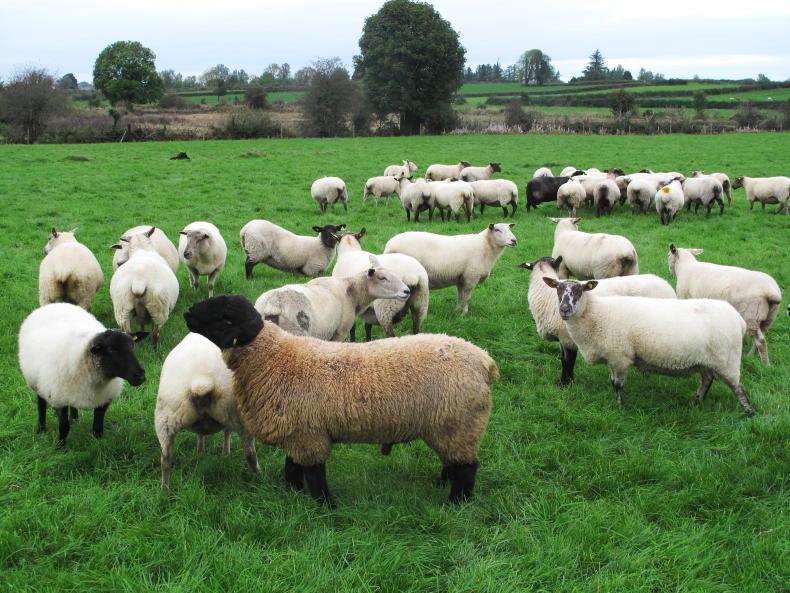
Weaning is only a short distance away in flocks lambing from the start of March. Going on a recommended weaning age of an average of 14 weeks, flocks with an average lambing date of 1 March will be in week 14 of lactation by 7 June. A high percentage of flocks lamb from 10 to 17 March and these flocks have a few weeks extra (14 to 21 June) to put plans in place.
Some farms will consider delaying weaning to get more lambs drafted for sale before weaning. This decision should take into account grass supplies, grass quality and ewe condition. Where grass supply or quality is lacking, lamb performance will suffer, with ewes competing with lambs for the best-quality grass while where ewes are in poor body condition overly delaying weaning will result in a shorter time frame to regain condition. Delaying weaning can work successfully in cases where lambs are allowed to creep graze ahead of ewes, with ewes then used to graze out paddocks.
The aim in the runup to weaning should be to put preparations in place that will deliver a supply of high-quality, leafy grass for lambs post-weaning. This will help limit any setback in performance post-weaning. This will be fairly straightforward in cases where silage aftergrass is coming on stream. Where this is not the case, it is important to prioritise areas for grazing. Topping swards with a high volume of lower-quality material will help while applying a small level of fertiliser (10 to 15 units N) will help maintain grass quality.
Surplus grass should continue to be taken out for baled silage as with growth rates running anywhere from 60-70kg DM/ha to over 100kg DM/ha, quality can go out of control.
Selecting replacements
Initial decisions on selecting potential replacements should also take place before significant numbers of ewe lambs are drafted for sale. It is worth initially selecting a higher number of replacements than required as this will allow for a further draft later when performance and suitability can be reassessed. If known, decisions should also be made on culling poor-performing ewes that have reared lambs well below average in the flock.
Read more
Breeding starts at lambing
Preparing for weaning lambs at Athenry
Sheep management: vaccination and protective equipment
Weaning is only a short distance away in flocks lambing from the start of March. Going on a recommended weaning age of an average of 14 weeks, flocks with an average lambing date of 1 March will be in week 14 of lactation by 7 June. A high percentage of flocks lamb from 10 to 17 March and these flocks have a few weeks extra (14 to 21 June) to put plans in place.
Some farms will consider delaying weaning to get more lambs drafted for sale before weaning. This decision should take into account grass supplies, grass quality and ewe condition. Where grass supply or quality is lacking, lamb performance will suffer, with ewes competing with lambs for the best-quality grass while where ewes are in poor body condition overly delaying weaning will result in a shorter time frame to regain condition. Delaying weaning can work successfully in cases where lambs are allowed to creep graze ahead of ewes, with ewes then used to graze out paddocks.
The aim in the runup to weaning should be to put preparations in place that will deliver a supply of high-quality, leafy grass for lambs post-weaning. This will help limit any setback in performance post-weaning. This will be fairly straightforward in cases where silage aftergrass is coming on stream. Where this is not the case, it is important to prioritise areas for grazing. Topping swards with a high volume of lower-quality material will help while applying a small level of fertiliser (10 to 15 units N) will help maintain grass quality.
Surplus grass should continue to be taken out for baled silage as with growth rates running anywhere from 60-70kg DM/ha to over 100kg DM/ha, quality can go out of control.
Selecting replacements
Initial decisions on selecting potential replacements should also take place before significant numbers of ewe lambs are drafted for sale. It is worth initially selecting a higher number of replacements than required as this will allow for a further draft later when performance and suitability can be reassessed. If known, decisions should also be made on culling poor-performing ewes that have reared lambs well below average in the flock.
Read more
Breeding starts at lambing
Preparing for weaning lambs at Athenry
Sheep management: vaccination and protective equipment
SHARING OPTIONS