A spotlight has been cast on organic farming over the last week for a number of reasons.
The issuing of €33m in Organic Farming Scheme (OFS) payments to 3,200 participants equates to an average payment of over €10,300. This compares to just €12m paid in 2022 and there are still payments to be issued to the remaining 800 participants.
With such potential payment levels available, it is little wonder that reports indicate there is a keen interest in the current tranche of the OFS, which closes for applications on Friday 15 December.
Participants considering last-minute applications need to act fast.
Interest from sheep farmers has been strong, with approximately 1,500 of the 4,000 participants recording their predominant enterprise as sheep farming.
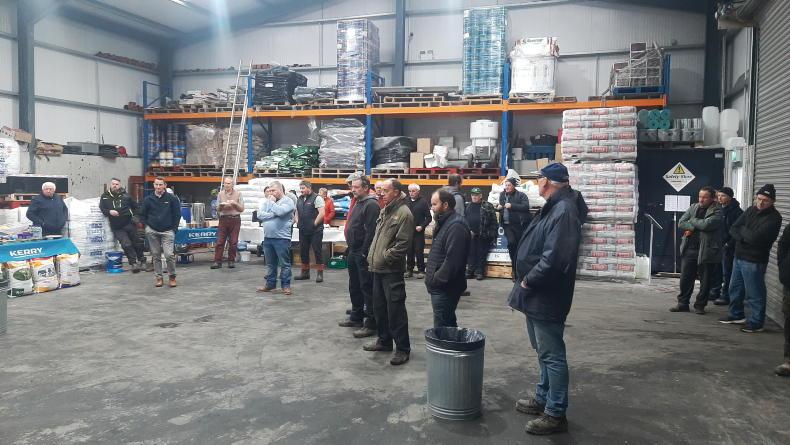
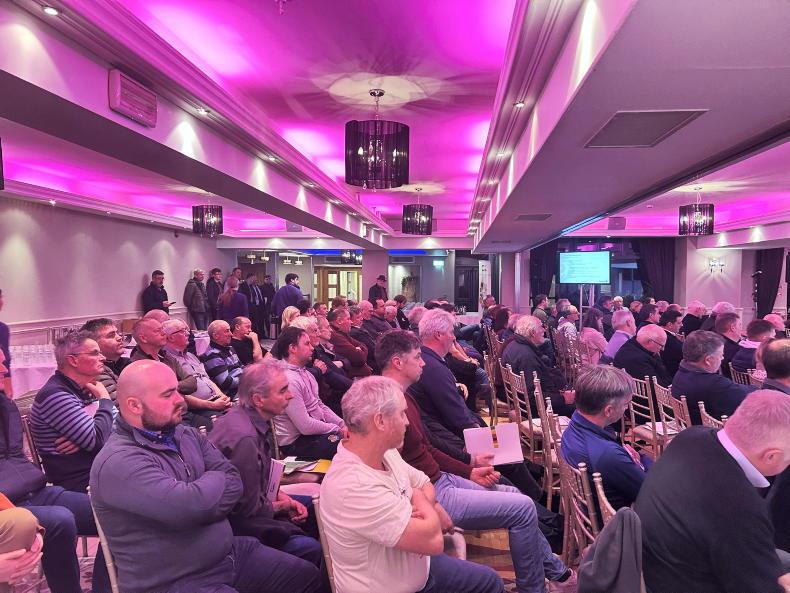
A snapshot of the crowd at the Kerry Agribusiness meeting held in Kenmare last week.
A significant number of the 2,100-plus predominant beef/suckler farms also have a secondary sheep enterprise.
A high percentage of holdings are located along the western half of the country, with reports showing high levels of interest from hill sheep farmers.
Cork has the highest number of participants at over 450 holdings, while Roscommon is expectantly next up with almost 380 farmers participating. Mayo, Galway and Kerry also have in the region of 280 OFS participants in their county.
Inclement weather
The return of torrential rainfall is bringing challenges to the fore at a much earlier stage for all sheep farmers, with housing and supplementary feeding on the cards as grass supplies rapidly deplete.
It is also raising the question of supplementary feeding for many organic farmers much earlier than anticipated.
There were a number of questions raised at a sheep meeting held last week by Kerry Agribusiness in Kenmare, Co Kerry. Some questions queried the possibility of shortages of organic concentrates, while others sought options to reduce feed costs or improve the performance of finishing lambs.
It is not expected that there will be any supply issues with a number of merchants importing/supplying organic feed, coupled with the high cost limiting its use.
Concentrate costs currently range from €750/t to in excess of €880/t, with most feed offered in 25kg bags.
Given the high cost, the first option for supplementing ewes is almost certainly to be silage or hay, where feasible.
The high cost of concentrates means that their use should be directed, if possible, to late pregnancy/early lactation, but if no other options exist and animals are losing condition, then high costs may be a fact of life this winter.
Where forage is being purchased, then it must be from an organic holding. The Department of Agriculture is expected to repeat its survey in the new year regarding feed supplies, with an aim of linking up organic producers in different areas.
Crystalyx has launched Crystalyx Organyx Plus – an approved complementary feeding stuff/lick for organic animals.

Crystalyx Organyx is approved for use by organic farmers.
A quick price survey shows the 22.5kg tub retails from €42.50 to €50. The main ingredient is dehydrated organic molasses and the feed has an ME value of 11MJ/kg DM and a crude protein content of 3%.
It is also an expensive option, but there is a convenience factor that is likely to see interest from farmers outwintering sheep in more challenging terrain.
Lamb performance
Lamb performance has struggled and producers are also faced with decisions to make. It is advisable to take stock of the weight of lambs, assess how far they are from finishing, and do a finishing budget to compare the merit of finishing versus selling live, either organically or conventionally.
The two Irish Country Meats plants are the main outlets for organic lamb, where a 15% organic payment above the base price is typically payable.
Where concentrates are being fed, then 60% of the dry matter of the diet must comprise of roughage.
Adult sheep require 1.5m2 space allowance, with young lambs needing 0.35m2. Non-organic straw can be used for bedding with insufficient supplies of organic straw available.
Health concerns
There is a lot of concern regarding liver fluke disease in outwintered animals. Where there is a demonstrated need, anthelmintics can be sanctioned for use by your vet.
Withdrawal periods will typically need to be doubled, or trebled, depending on product choice.
Strategic grazing of lands will be required to aid the control programme and limit the use of anthelmintics.
A spotlight has been cast on organic farming over the last week for a number of reasons.
The issuing of €33m in Organic Farming Scheme (OFS) payments to 3,200 participants equates to an average payment of over €10,300. This compares to just €12m paid in 2022 and there are still payments to be issued to the remaining 800 participants.
With such potential payment levels available, it is little wonder that reports indicate there is a keen interest in the current tranche of the OFS, which closes for applications on Friday 15 December.
Participants considering last-minute applications need to act fast.
Interest from sheep farmers has been strong, with approximately 1,500 of the 4,000 participants recording their predominant enterprise as sheep farming.
A snapshot of the crowd at the Kerry Agribusiness meeting held in Kenmare last week.
A significant number of the 2,100-plus predominant beef/suckler farms also have a secondary sheep enterprise.
A high percentage of holdings are located along the western half of the country, with reports showing high levels of interest from hill sheep farmers.
Cork has the highest number of participants at over 450 holdings, while Roscommon is expectantly next up with almost 380 farmers participating. Mayo, Galway and Kerry also have in the region of 280 OFS participants in their county.
Inclement weather
The return of torrential rainfall is bringing challenges to the fore at a much earlier stage for all sheep farmers, with housing and supplementary feeding on the cards as grass supplies rapidly deplete.
It is also raising the question of supplementary feeding for many organic farmers much earlier than anticipated.
There were a number of questions raised at a sheep meeting held last week by Kerry Agribusiness in Kenmare, Co Kerry. Some questions queried the possibility of shortages of organic concentrates, while others sought options to reduce feed costs or improve the performance of finishing lambs.
It is not expected that there will be any supply issues with a number of merchants importing/supplying organic feed, coupled with the high cost limiting its use.
Concentrate costs currently range from €750/t to in excess of €880/t, with most feed offered in 25kg bags.
Given the high cost, the first option for supplementing ewes is almost certainly to be silage or hay, where feasible.
The high cost of concentrates means that their use should be directed, if possible, to late pregnancy/early lactation, but if no other options exist and animals are losing condition, then high costs may be a fact of life this winter.
Where forage is being purchased, then it must be from an organic holding. The Department of Agriculture is expected to repeat its survey in the new year regarding feed supplies, with an aim of linking up organic producers in different areas.
Crystalyx has launched Crystalyx Organyx Plus – an approved complementary feeding stuff/lick for organic animals.
Crystalyx Organyx is approved for use by organic farmers.
A quick price survey shows the 22.5kg tub retails from €42.50 to €50. The main ingredient is dehydrated organic molasses and the feed has an ME value of 11MJ/kg DM and a crude protein content of 3%.
It is also an expensive option, but there is a convenience factor that is likely to see interest from farmers outwintering sheep in more challenging terrain.
Lamb performance
Lamb performance has struggled and producers are also faced with decisions to make. It is advisable to take stock of the weight of lambs, assess how far they are from finishing, and do a finishing budget to compare the merit of finishing versus selling live, either organically or conventionally.
The two Irish Country Meats plants are the main outlets for organic lamb, where a 15% organic payment above the base price is typically payable.
Where concentrates are being fed, then 60% of the dry matter of the diet must comprise of roughage.
Adult sheep require 1.5m2 space allowance, with young lambs needing 0.35m2. Non-organic straw can be used for bedding with insufficient supplies of organic straw available.
Health concerns
There is a lot of concern regarding liver fluke disease in outwintered animals. Where there is a demonstrated need, anthelmintics can be sanctioned for use by your vet.
Withdrawal periods will typically need to be doubled, or trebled, depending on product choice.
Strategic grazing of lands will be required to aid the control programme and limit the use of anthelmintics.






SHARING OPTIONS