



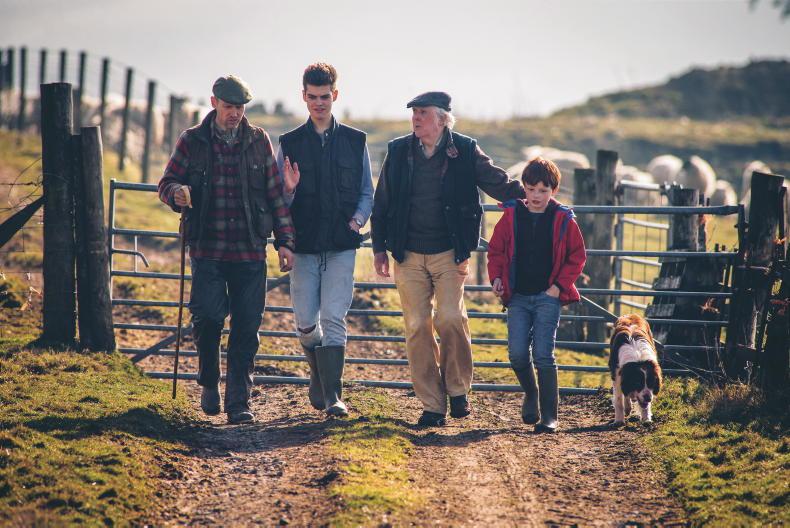
I studied agriculture in college and am now working full-time in an agri related job.
Our family has a small farm and while my parents do most of the work on a daily basis, I help out when needed in the evenings and at weekends. Our agricultural advisor has suggested that I be added to my parent’s herd number, but I am not sure. What are the options? What are the benefits and drawbacks of a Registered Farm Partnership (RFP) or a Succession Farm Partnership or creating a joint herd number?
ANSWER: A joint herd number is a partnership without a written agreement. Consequently, the provisions of the Partnership Act 1890 govern the joint herd number.
A partnership agreement allows the partners to create their own rules rather than the 1890 act regulating the partnership. Generally, people form joint herd numbers by adding the young farmer’s name to the parents’ existing herd number and opening a joint farm bank account.
The benefit of creating a joint herd number is that it allows the Young Trained Farmer to claim Complementary Income Support for Young Farmers (CIS-YF) with an average payment of €160/ha up to a max 50ha, ie up to €8,000 per year for a maximum of five years.
If a partnership is not registered with the Department of Agriculture as a Registered Farm Partnership, it is often described as a tax partnership and should be registered with Revenue.
Registered Farm Partnership
The main benefit of a Registered Farm Partnership (RFP) is that the partnership can qualify for a double TAMS grant while a joint herd number does not.
Currently, the TAMS grant would amount to 40% grant on maximum capital expenditure spend of €90,000 ie €36,000 grant. But by forming an RFP with a Young Trained Farmer who has the Green Cert, the partnership can qualify for a 60% grant on the first €90,000 and 40% on the balance of €160,000 capital expenditure spend.
So, a building costing €160,000 would qualify for a grant of €82,000 if an existing farmer forms a partnership with a young trained farmer. This 60% grant is also extended to female farmers between the ages of 40-66 years in 2023, subject to conditions.
To form an RFP there must be at least two people, one person from category (i) below and one or more person(s) from categories (i) or (ii):
Succession Farm Partnership
As well as forming an RFP, the partners can take an additional step of entering into a Succession Farm Partnership (SFP).
The benefit of this is that it qualifies the partners for a tax credit of up to €5,000 per year over a five-year period, which is split in line with the profit sharing ratio of the partnership agreement. The SFP requires the owner to transfer at least 80% of the assets to the successor between years three and year 10 of entering into the SFP.
Farming company
A young trained farmer can qualify for the CIS-YF payment and 60% TAMS grant within the company provided that they are a director and have a minimum 20% shareholding in the farming company.
They must also have effective management and control over the company. In some instances there can be an RFP between the farming company and an individual to allow the partnership to qualify for the double TAMS grant.
What to consider
Most young trained farmers would operate under an RFP. There is a grant available to cover the cost of forming the RFP of up to 50% on a maximum claim of €1,500. However, you generally need to apply to register the RFP by the first week in February each year to be guaranteed the RFP number by 15 May BISS deadline.
Consequently, if farmers miss this deadline they will generally form a joint herd number initially, and thereafter convert to an RFP to qualify for the double TAMS grant. A young trained farmer has five years from when their name goes on a herd number to maximise their grants, thus the timing is key.
This is especially relevant when you consider that the next round of CAP – which will come in sometime between 2028-2030 – might bring greater incentives for young trained farmers.
Disclaimer: The information in this article is intended as a general guide only. While every care is taken to ensure accuracy of information contained in this article, Aisling Meehan, Agricultural Solicitors does not accept responsibility for errors or omissions howsoever arising. Email aisling@agrisolicitors.ie




SHARING OPTIONS