



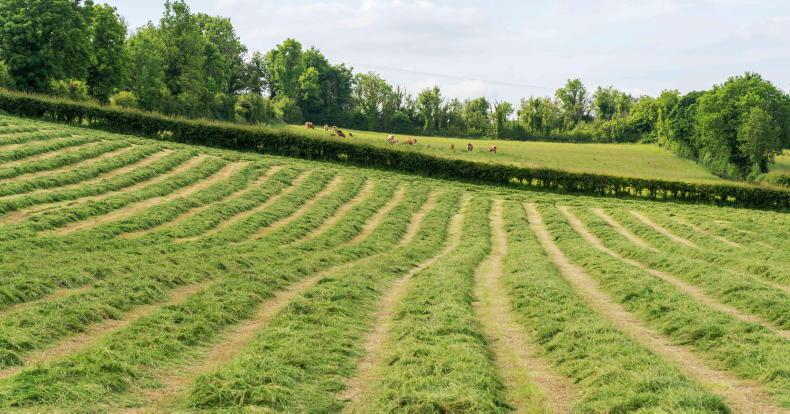
Fodder stocks on drystock and dairy farms look to be on target according to Joe Patton, head of dairy knowledge transfer at Teagasc.Patton detailed the results of the Teagasc fodder survey which was carried out in June to the national fodder and food security committee on Wednesday 19 July.
Winter fodder balance
Overall, dairy and drystock farmers’ winter feed stocks are “on target” if normal autumn weather comes, according to Patton. He noted that there are no system or regional differences in the survey. Dairy farmers have 68% to 75% of silage stocks in across the country.
Drystock farmers are well equipped with fodder reserves with 80% to 83% of silage requirements in stock.
Patton explained that there are approximately 15% of herds with less than 40% of silage stocks made after first cut.
However, Patton explained that these herdowners may purchase silage every year or may be waiting to harvest maize silage for example.
He advised farmers not to look at the average figures and to make sure that they look at their own situation. A cash budget may be needed to purchase silage.
He also noted that non-productive stock could be offloaded on farms low in silage reserves. He encouraged farmers to continue to take out surplus grass.
Patton outlined that with the exception of the dry spell in May and June, grass demand is being exceeded and there are opportunities to take out surplus grass for silage. However, making quality silage is a challenge.
Good bulk
Michael Moroney, representing farm contractors, noted that so far second-cut silage looks to have good bulk, but weather has made it difficult to make silage and make good-quality silage.
The southeast was pointed out as an area of concern by some on the committee. However, the survey did not show a deficit any bigger than other regions.
Maize area has increased in some counties where drought may have hit badly, such as Wexford, which will help with feed reserves.



SHARING OPTIONS