When it comes to farm diversification and food tourism, it’s important to balance ideas and ambitions with practical considerations. What kind of investment will it take? Will you need insurance?
Most importantly, what kind of financial return can you expect? After all, for a business to be sustainable, it has to be financially feasible.
That said, sometimes we overcomplicate things.
If we’re talking food experiences, it might not require as much investment as you might think. Sometimes, your existing infrastructure – your dining room or your favourite field – is all you require, with a little bit of innovation.
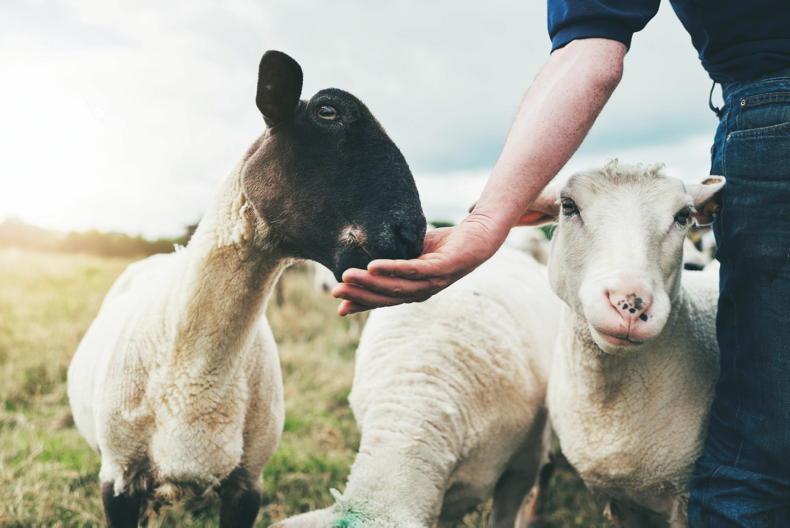
Today’s international visitor is looking for unique and genuine experiences in food, farming and country living. Do you have a sheepdog? They would love to see your dog round up the sheep (maybe while sipping on a local whiskey).
Local history
Locally, you might be well-known for your scones – chances are, a group of visitors would love to sit in a field on a blanket with scones and tea while you chat about local history. Or, you could teach small groups how to make scones in your farmhouse kitchen.
“What is ordinary to you is extraordinary to the visitor,” says sustainable food tourism expert Sharon Noonan. Together with food and drink business management consultant Tadhg O’Donovan and food and tourism strategist Peter Nash, Sharon offers a Taste 4 Success Skillnet-funded Sustainable Food Tourism Experience development programme.
The aim of this eight-week course is to show farmers, food producers and anyone else interested in food tourism the many ways one can provide a meaningful (and profitable) visitor experience.
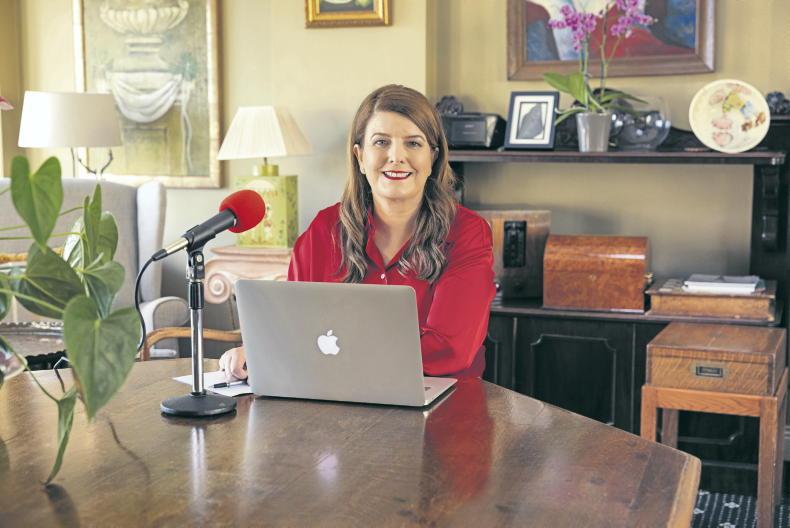
Based in Co Limerick, Sharon’s career centres around marketing, public relations, upskilling and training. She is host to Ireland’s longest-running food podcast, Best Possible Taste, which has been produced since 2013. And in his spare time, her husband operates a small beef farm and breeds Connemara ponies.
Sustainable food tourism expert Sharon Noonan is host to food podcast, Best Possible Taste.
“A few years back, I was asked to help at an event and I had a bit of a lightbulb moment,” she says. “I saw a clear opportunity for food and drink producers living in close proximity to five-star properties to provide bespoke visitor experiences.
"When we’re away on holiday, we love to meet the local people involved in food and drink. I’ve been asked to do at-home dining experiences at my house because visitors to Ireland are usually dying to spend time in a real family home. If there is an opportunity to visit a working farm, that is always an added bonus.
“There are a number of Destination Management Companies [known as DMCs] in Ireland working specifically to find these types of experiences for visitors,” she continues. “We can take our green fields – and the animals in them – for granted, but so many visitors are coming from city environments. To be able to stop and take a deep breath of that lovely, fresh Irish air and feel grounded can make such a difference to their overall visit.”
Authentic experiences
When it comes to food tourism, authenticity is important. Visitors don’t want a whistle-stop tour; they want to become a part of the story. Many have never visited a working farm and, for these individuals, such a visit becomes a highlight.
“People are always conscious about the state of their farm, they feel they need to be out power washing everything, but that’s not a true reflection of a working farm,” Sharon says. “Visitors want authenticity and they want to meet real characters.”
The Sustainable Food Tourism Experience (SFTE) programme was developed in response to challenges facing the tourism and hospitality sector caused by inflation, the climate crisis and post-COVID-19 changes in consumer behaviour. Taste 4 Success Skillnet has been the funding body since its first run in 2023. The subsidised cost of the course is €165 and it is run completely online, over eight weeks. It includes four workshops and a final “pitch”, where attendees present business ideas to an expert panel.
The course also includes three one-on-one sessions with Sharon, Peter and Tadhg.
Sharon says, “There is a great appetite for this course, especially for farmers and food producers. The course is about diversifying and creating another source of income. We said from the start this course is all about economic benefit; it’s about putting a value on what you can offer.”
CEO of Taste 4 Success Skillnet, Bridie Corrigan Matthews, is delighted with the success of the SFTE programme and says it was created for a meaningful purpose: to explore the growing trend of experiential tourism and the critical role that sustainability plays within it.
“In particular, feedback from artisan food growers, on-farm and hospitality businesses identified a significant gap [in this area],” she explains, “hence providing the opportunity to work with food tourism industry experts to help businesses understand the power of their product[s] and how to promote and maximise their brand.
“This programme supports indigenous Irish artisan and food tourism enterprises with upskilling and business development strategies to help them build a sustainable business, and identify new opportunities and practices to help them grow and survive,” she adds.
“The programme relies heavily on peer-to-peer learning, networking and engaging with industry experts to guide businesses to their next level of growth. No other entity or support agency currently offers such a programme.”
The next SFTE programme is planned for the autumn months. Interested parties
can learn more at taste4success.ie
Business profile: Bread with Benefits is a hands-on experience
In Co Meath, just down the road from the fabled Hill of Tara, Chris and Sara Brownlow operate an immersive food experience combining sourdough breadmaking, wellbeing and culture. Sara is a general practitioner, while Chris had a career in agriculture as a potato farmer and within the crisp-making sector. Both have a long-held appreciation for the effects food has on health and wellbeing. Several years ago, Chris decided to stop farming and focus on experiential food.
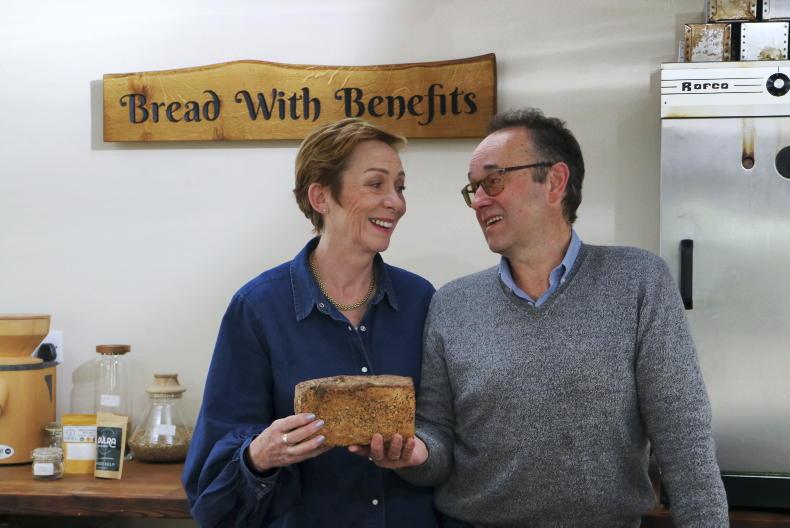
Former potato grower Chris Brownlow operates experiential food tourism business Bread with Benefits with his wife, Sara, on their farm in Co Meath. / Janine Kennedy
Bread with Benefits is a social-gastronomy practice bringing people around the table to gain a deeper understanding of how our history, culture and health are entwined with grain, the soil in which it is grown and the bread we make with it.
Sara and Chris converted the garage on their farm into a welcoming space, complete with a worktop, dough prover and oven. They host a monthly ‘bread day’ – which sees visitors come from the locality, from further outside county lines and international visitors too.
“We launched Bread with Benefits three years ago,” Chris says.
“Guests arrive at around 10am and we get the process started right away – we mix the flour, starter and water and add in some seaweed for flavour and added fibre. Then we sit down, have a cup of tea and a sourdough pancake with fruit compote and have a chat before getting back to the bread. Our method only really takes about 10-15 minutes of active working with the dough, but you can’t really learn breadmaking from a book. It’s a tactile thing. You need to see it and smell it and develop some intuition.”
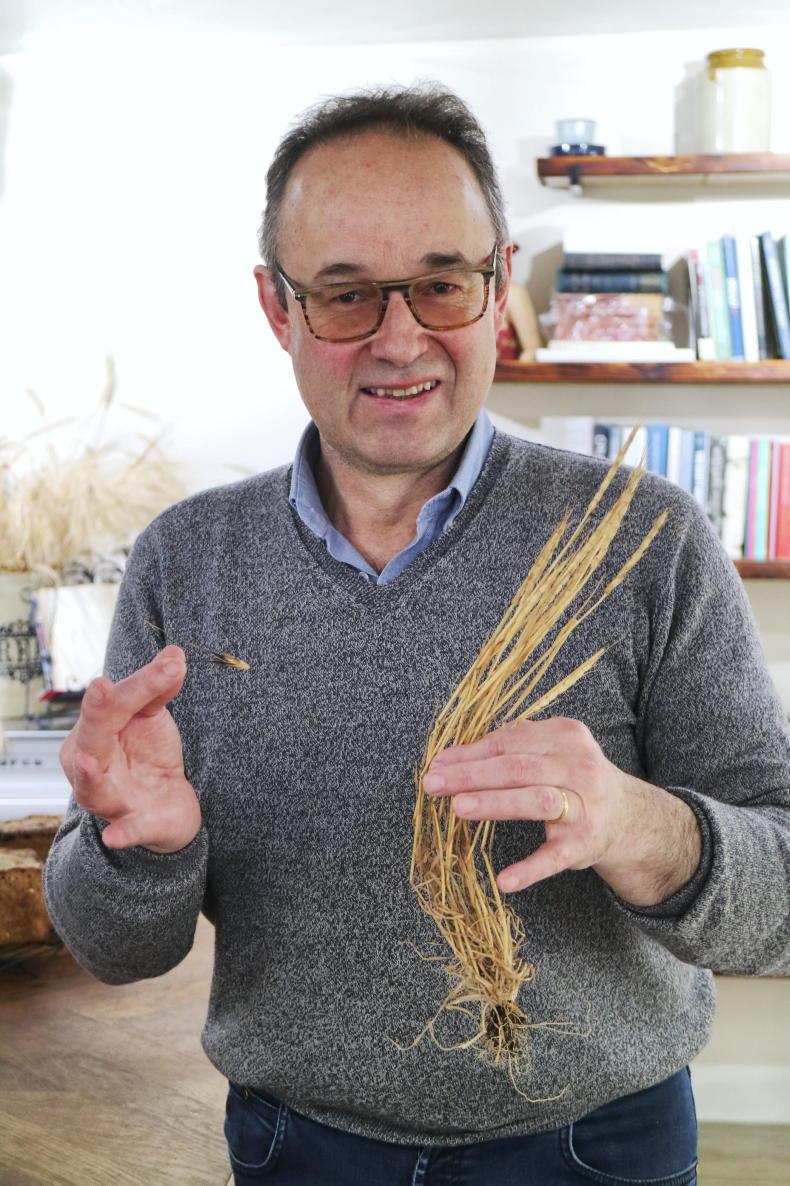
Bread with Benefits takes the guesswork out of sourdough while also educating guests on the health benefits and history of sourdough bread. Here, Chris holds emmer and goat grass, which combined to become cultivated wheat. / Janine Kennedy
Chris has always loved cooking. Ten years ago, he took a six-week course with chef Jp McMahon at Aniar in Galway, which led him to taking another culinary course, this time with chef Paul Flynn at The Tannery in Dungarvan. After that, he committed to a three-month full-time course at the Dublin Cookery School.
“I wasn’t sure what I was going to do with these new skills,” he says. “Then, I went down to Ballymaloe to attend their Business of Food course and found myself in their ‘Bread Shed’. As I handled some sourdough, I had my ‘a-ha’ moment. I knew nothing about sourdough, [so] I went to the Sourdough School in Northampton and over a few years learned so much about the gut health connection. When we launched Bread with Benefits, it was about demystifying sourdough and taking any complexity out of it. We do that by using bread tins – no free-standing loaves that turn into Frisbees. The tin solves all of that and you still get all the benefits of a great sourdough.”
Aside from their regularly scheduled bread days, Chris and Sara bring in experts in health and nutrition and offer bread demos for festivals and events. They regularly host stag or hen dos for those interested in no- or low-alcohol activities.
See breadwithbenefits.ie or follow @bread.with.benefits on Instagram.

Read more
Chef Catherine Fulvio has her hands full on the farm
Irish asparagus: springtime superfood spear at its peak
When it comes to farm diversification and food tourism, it’s important to balance ideas and ambitions with practical considerations. What kind of investment will it take? Will you need insurance?
Most importantly, what kind of financial return can you expect? After all, for a business to be sustainable, it has to be financially feasible.
That said, sometimes we overcomplicate things.
If we’re talking food experiences, it might not require as much investment as you might think. Sometimes, your existing infrastructure – your dining room or your favourite field – is all you require, with a little bit of innovation.
Today’s international visitor is looking for unique and genuine experiences in food, farming and country living. Do you have a sheepdog? They would love to see your dog round up the sheep (maybe while sipping on a local whiskey).
Local history
Locally, you might be well-known for your scones – chances are, a group of visitors would love to sit in a field on a blanket with scones and tea while you chat about local history. Or, you could teach small groups how to make scones in your farmhouse kitchen.
“What is ordinary to you is extraordinary to the visitor,” says sustainable food tourism expert Sharon Noonan. Together with food and drink business management consultant Tadhg O’Donovan and food and tourism strategist Peter Nash, Sharon offers a Taste 4 Success Skillnet-funded Sustainable Food Tourism Experience development programme.
The aim of this eight-week course is to show farmers, food producers and anyone else interested in food tourism the many ways one can provide a meaningful (and profitable) visitor experience.
Based in Co Limerick, Sharon’s career centres around marketing, public relations, upskilling and training. She is host to Ireland’s longest-running food podcast, Best Possible Taste, which has been produced since 2013. And in his spare time, her husband operates a small beef farm and breeds Connemara ponies.

Sustainable food tourism expert Sharon Noonan is host to food podcast, Best Possible Taste.
“A few years back, I was asked to help at an event and I had a bit of a lightbulb moment,” she says. “I saw a clear opportunity for food and drink producers living in close proximity to five-star properties to provide bespoke visitor experiences.
"When we’re away on holiday, we love to meet the local people involved in food and drink. I’ve been asked to do at-home dining experiences at my house because visitors to Ireland are usually dying to spend time in a real family home. If there is an opportunity to visit a working farm, that is always an added bonus.
“There are a number of Destination Management Companies [known as DMCs] in Ireland working specifically to find these types of experiences for visitors,” she continues. “We can take our green fields – and the animals in them – for granted, but so many visitors are coming from city environments. To be able to stop and take a deep breath of that lovely, fresh Irish air and feel grounded can make such a difference to their overall visit.”
Authentic experiences
When it comes to food tourism, authenticity is important. Visitors don’t want a whistle-stop tour; they want to become a part of the story. Many have never visited a working farm and, for these individuals, such a visit becomes a highlight.
“People are always conscious about the state of their farm, they feel they need to be out power washing everything, but that’s not a true reflection of a working farm,” Sharon says. “Visitors want authenticity and they want to meet real characters.”
The Sustainable Food Tourism Experience (SFTE) programme was developed in response to challenges facing the tourism and hospitality sector caused by inflation, the climate crisis and post-COVID-19 changes in consumer behaviour. Taste 4 Success Skillnet has been the funding body since its first run in 2023. The subsidised cost of the course is €165 and it is run completely online, over eight weeks. It includes four workshops and a final “pitch”, where attendees present business ideas to an expert panel.
The course also includes three one-on-one sessions with Sharon, Peter and Tadhg.
Sharon says, “There is a great appetite for this course, especially for farmers and food producers. The course is about diversifying and creating another source of income. We said from the start this course is all about economic benefit; it’s about putting a value on what you can offer.”
CEO of Taste 4 Success Skillnet, Bridie Corrigan Matthews, is delighted with the success of the SFTE programme and says it was created for a meaningful purpose: to explore the growing trend of experiential tourism and the critical role that sustainability plays within it.
“In particular, feedback from artisan food growers, on-farm and hospitality businesses identified a significant gap [in this area],” she explains, “hence providing the opportunity to work with food tourism industry experts to help businesses understand the power of their product[s] and how to promote and maximise their brand.
“This programme supports indigenous Irish artisan and food tourism enterprises with upskilling and business development strategies to help them build a sustainable business, and identify new opportunities and practices to help them grow and survive,” she adds.
“The programme relies heavily on peer-to-peer learning, networking and engaging with industry experts to guide businesses to their next level of growth. No other entity or support agency currently offers such a programme.”
The next SFTE programme is planned for the autumn months. Interested parties
can learn more at taste4success.ie
Business profile: Bread with Benefits is a hands-on experience
In Co Meath, just down the road from the fabled Hill of Tara, Chris and Sara Brownlow operate an immersive food experience combining sourdough breadmaking, wellbeing and culture. Sara is a general practitioner, while Chris had a career in agriculture as a potato farmer and within the crisp-making sector. Both have a long-held appreciation for the effects food has on health and wellbeing. Several years ago, Chris decided to stop farming and focus on experiential food.

Former potato grower Chris Brownlow operates experiential food tourism business Bread with Benefits with his wife, Sara, on their farm in Co Meath. / Janine Kennedy
Bread with Benefits is a social-gastronomy practice bringing people around the table to gain a deeper understanding of how our history, culture and health are entwined with grain, the soil in which it is grown and the bread we make with it.
Sara and Chris converted the garage on their farm into a welcoming space, complete with a worktop, dough prover and oven. They host a monthly ‘bread day’ – which sees visitors come from the locality, from further outside county lines and international visitors too.
“We launched Bread with Benefits three years ago,” Chris says.
“Guests arrive at around 10am and we get the process started right away – we mix the flour, starter and water and add in some seaweed for flavour and added fibre. Then we sit down, have a cup of tea and a sourdough pancake with fruit compote and have a chat before getting back to the bread. Our method only really takes about 10-15 minutes of active working with the dough, but you can’t really learn breadmaking from a book. It’s a tactile thing. You need to see it and smell it and develop some intuition.”

Bread with Benefits takes the guesswork out of sourdough while also educating guests on the health benefits and history of sourdough bread. Here, Chris holds emmer and goat grass, which combined to become cultivated wheat. / Janine Kennedy
Chris has always loved cooking. Ten years ago, he took a six-week course with chef Jp McMahon at Aniar in Galway, which led him to taking another culinary course, this time with chef Paul Flynn at The Tannery in Dungarvan. After that, he committed to a three-month full-time course at the Dublin Cookery School.
“I wasn’t sure what I was going to do with these new skills,” he says. “Then, I went down to Ballymaloe to attend their Business of Food course and found myself in their ‘Bread Shed’. As I handled some sourdough, I had my ‘a-ha’ moment. I knew nothing about sourdough, [so] I went to the Sourdough School in Northampton and over a few years learned so much about the gut health connection. When we launched Bread with Benefits, it was about demystifying sourdough and taking any complexity out of it. We do that by using bread tins – no free-standing loaves that turn into Frisbees. The tin solves all of that and you still get all the benefits of a great sourdough.”
Aside from their regularly scheduled bread days, Chris and Sara bring in experts in health and nutrition and offer bread demos for festivals and events. They regularly host stag or hen dos for those interested in no- or low-alcohol activities.
See breadwithbenefits.ie or follow @bread.with.benefits on Instagram.

Read more
Chef Catherine Fulvio has her hands full on the farm
Irish asparagus: springtime superfood spear at its peak
SHARING OPTIONS