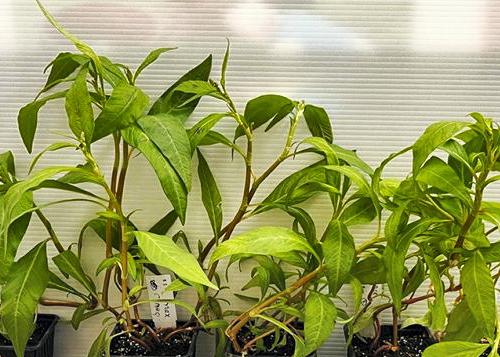
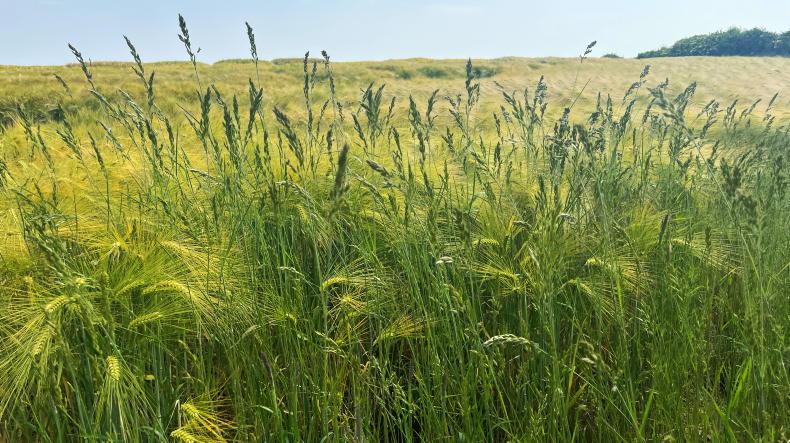
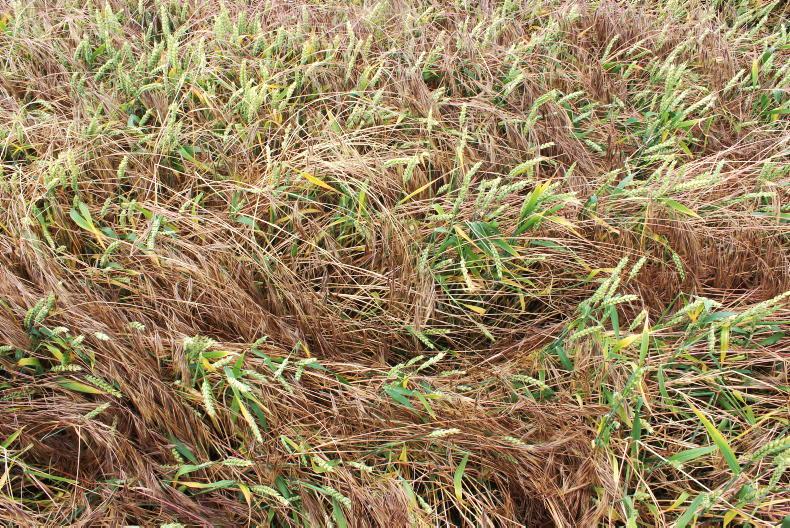
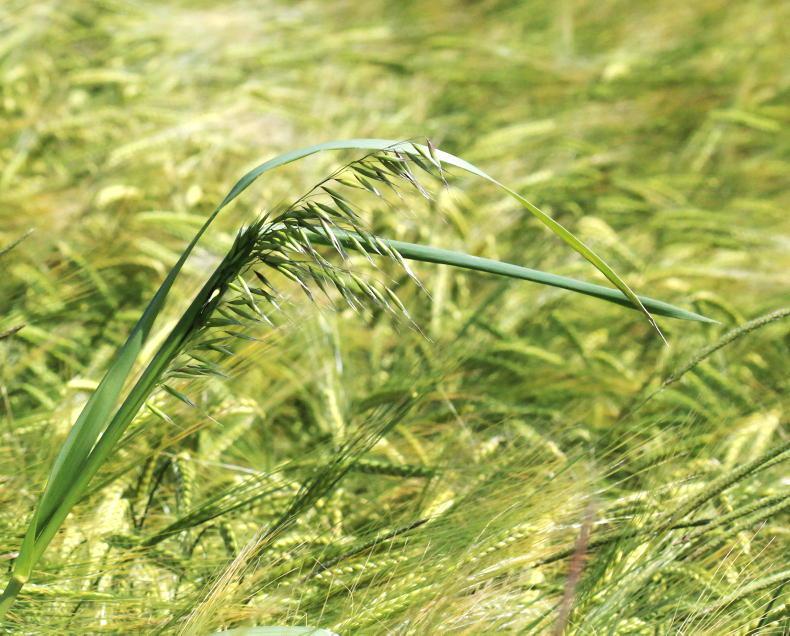
Figure 1: Response of a resistance-suspect pale persicaria population following application of full label rates of the ALS herbicides Cameo Max (60g/ha), Pacifica Plus (500g/ha), Boxer (0.1l/ha) and Broadway Star (265g/ha).
Herbicide control failures in broadleaved weeds are not as serious as those seen in grass weeds, but cases of resistance in broad-leaved species are increasing and are becoming a growing concern for effective weed management.
Confirmation of ALS-resistant pale persicaria
As part of the 2025 Teagasc weed monitoring programme, a field population of pale persicaria (Persicaria lapathifolia L.), suspected of resistance, was grown to the two- to four-leaf stage and treated with four ALS herbicides at recommended label rate. These included two sulfonylurea products - Cameo and Pacifica and two triazolopyrimidine products - Boxer and Broadway. All herbicides were virtually ineffective.
ADVERTISEMENT
DNA analysis identified a Trp-574 mutation, a target-site alteration known to confer broad-spectrum resistance to ALS herbicides. This marks the first confirmed case of ALS resistance in this species. It brings the total number of weed species (grass and broadleaved) confirmed as resistant in tillage crops nationally to 11, which is very concerning.
Status of broadleaved
weed resistance
Monitoring of herbicide resistance in broad-leaved species has been ongoing since 2022. To date, 19 populations have been confirmed as ALS-resistant (Figure 2), including the pale persicaria population from Westmeath confirmed this harvest (see below). Pale persicaria is related to redshank and knotweed.
Chickweed: Six populations collected in Cork, Wicklow, Wexford and Northern Ireland were resistant to both ALS sulfonylurea (eg. Cameo Max, Pacifica) and triazolopyrimidine (eg. Lector, Broadway) herbicides. Previous research from Oak Park has confirmed several cases of ALS resistance in this species.
Poppy: Seven populations from Kildare and Meath were confirmed as ALS-resistant. All populations showed resistance to ALS sulfonylurea herbicides, and two populations also exhibited additional tolerance to ALS triazolopyrimidine herbicides. Some strains additionally displayed reduced sensitivity to hormone-type herbicides.
Common field-speedwell: Two populations from Cork and Northern Ireland were resistant to both ALS sulfonylurea and triazolopyrimidine herbicides.
Corn marigold: Three populations from Cork and Wexford were resistant to ALS sulfonylurea herbicides.
Main points
Carefully select herbicide combinations to target the weed species and populations present in your fields.
Read the labels to apply products at the correct rate and timing for the target weed size to maximise control.
Avoid using ALS herbicides alone due to the risk of resistance development.
Always combine ALS herbicides with a hormone partner, either as a co-formulation (eg Zypar, Starane, Galaxy) or as a tank mix (eg Cameo Max + Hurler).
Use alternative modes of action wherever possible, including pre-emergence or early autumn residual herbicides (eg DFF, Stomp, Flight) and hormone-type products, both newer (eg Pixarro, Dowshield) and older (eg dicamba, mecoprop-p or MCPA), depending upon the target weeds.
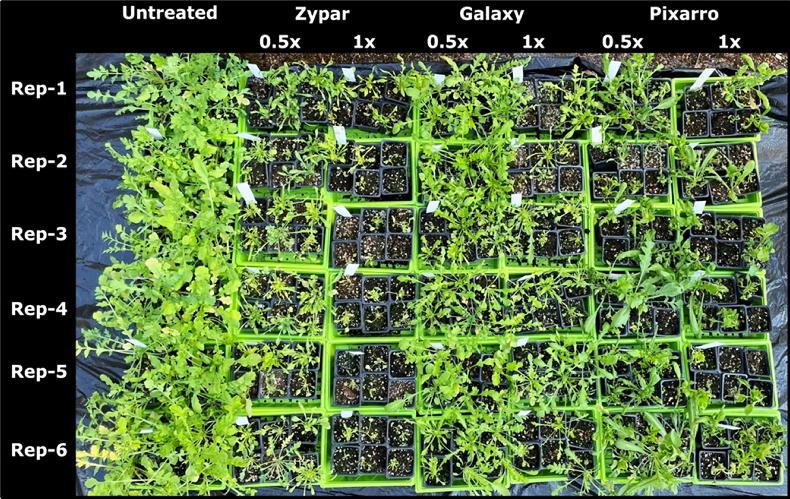
Figure 2: Response of an ALS-resistant poppy population from Kildare following application of half and full label rates of the ALS + hormone herbicides Zypar (1x = 0.75l/ha) and Galaxy (1x = 1l/ha) and the hormone-type Pixarro (1x = 0.5l/ha). Each product was tested in six replicates (Rep).

Register for free to read this story and our free stories.
This content is available to digital subscribers and loyalty code users only. Sign in to your account, use the code or subscribe to get unlimited access.
The reader loyalty code gives you full access to the site from when you enter it until the following Wednesday at 9pm. Find your unique code on the back page of Irish Country Living every week.
CODE ACCEPTED
You have full access to the site until next Wednesday at 9pm.
CODE NOT VALID
Please try again or contact support.
Herbicide control failures in broadleaved weeds are not as serious as those seen in grass weeds, but cases of resistance in broad-leaved species are increasing and are becoming a growing concern for effective weed management.
Confirmation of ALS-resistant pale persicaria
As part of the 2025 Teagasc weed monitoring programme, a field population of pale persicaria (Persicaria lapathifolia L.), suspected of resistance, was grown to the two- to four-leaf stage and treated with four ALS herbicides at recommended label rate. These included two sulfonylurea products - Cameo and Pacifica and two triazolopyrimidine products - Boxer and Broadway. All herbicides were virtually ineffective.
DNA analysis identified a Trp-574 mutation, a target-site alteration known to confer broad-spectrum resistance to ALS herbicides. This marks the first confirmed case of ALS resistance in this species. It brings the total number of weed species (grass and broadleaved) confirmed as resistant in tillage crops nationally to 11, which is very concerning.
Status of broadleaved
weed resistance
Monitoring of herbicide resistance in broad-leaved species has been ongoing since 2022. To date, 19 populations have been confirmed as ALS-resistant (Figure 2), including the pale persicaria population from Westmeath confirmed this harvest (see below). Pale persicaria is related to redshank and knotweed.
Chickweed: Six populations collected in Cork, Wicklow, Wexford and Northern Ireland were resistant to both ALS sulfonylurea (eg. Cameo Max, Pacifica) and triazolopyrimidine (eg. Lector, Broadway) herbicides. Previous research from Oak Park has confirmed several cases of ALS resistance in this species.
Poppy: Seven populations from Kildare and Meath were confirmed as ALS-resistant. All populations showed resistance to ALS sulfonylurea herbicides, and two populations also exhibited additional tolerance to ALS triazolopyrimidine herbicides. Some strains additionally displayed reduced sensitivity to hormone-type herbicides.
Common field-speedwell: Two populations from Cork and Northern Ireland were resistant to both ALS sulfonylurea and triazolopyrimidine herbicides.
Corn marigold: Three populations from Cork and Wexford were resistant to ALS sulfonylurea herbicides.
Main points
Carefully select herbicide combinations to target the weed species and populations present in your fields.
Read the labels to apply products at the correct rate and timing for the target weed size to maximise control.
Avoid using ALS herbicides alone due to the risk of resistance development.
Always combine ALS herbicides with a hormone partner, either as a co-formulation (eg Zypar, Starane, Galaxy) or as a tank mix (eg Cameo Max + Hurler).
Use alternative modes of action wherever possible, including pre-emergence or early autumn residual herbicides (eg DFF, Stomp, Flight) and hormone-type products, both newer (eg Pixarro, Dowshield) and older (eg dicamba, mecoprop-p or MCPA), depending upon the target weeds.
Figure 2: Response of an ALS-resistant poppy population from Kildare following application of half and full label rates of the ALS + hormone herbicides Zypar (1x = 0.75l/ha) and Galaxy (1x = 1l/ha) and the hormone-type Pixarro (1x = 0.5l/ha). Each product was tested in six replicates (Rep).
If you would like to speak to a member of our team, please call us on 01-4199525.
Link sent to your email address
We have sent an email to your address. Please click on the link in this email to reset your password. If you can't find it in your inbox, please check your spam folder. If you can't find the email, please call us on 01-4199525.
ENTER YOUR LOYALTY CODE:
The reader loyalty code gives you full access to the site from when you enter it until the following Wednesday at 9pm. Find your unique code on the back page of Irish Country Living every week.
SHARING OPTIONS