



Christopher Gill
Caledon Estate, Co Tyrone
There has been a nice bit of rain in Tyrone over the past few weeks. Christopher says it has been enough to do them for a while and is kicking growth into gear once again.
Christopher cut his PT315 winter oilseed rape just over two weeks ago. It took a while for the crop to ripen in, but it ended up performing pretty well, averaging 1.9t/ac at 7-8% moisture. One field yielded 2t/ac but the other two were at 1.8t/ac.
Christopher thinks this is due to a notable amount of pod shatter in these two fields. He says they had the potential to do 2t/ac, and it could be down to heavy rain and a quick shower of hail not long before harvest. There were also birds feeding on the crop in the weeks leading up to harvest. All of the oilseed rape straw is being baled as Christopher has a good market for the straw. It is baling up at eight round bales/ac. He does not mind losing the nutrients and organic matter in the straw when he has access to plenty of biosolids on the farm.
It can also help to reduce the slug pressure after oilseed rape.
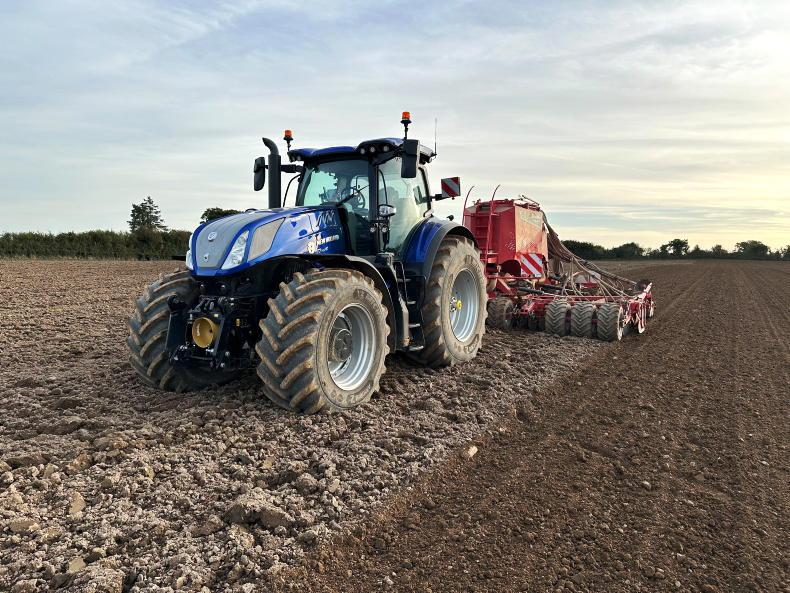
Although it’s only two weeks since harvest, the winter oilseed rape for 2027 is already drilled. Christopher ploughed for the crop on Saturday, and it turned up very well, with a small bit of moisture in the ground.
The same variety is being planted again, PT315. Slug pellets and a pre-emergence herbicide were also applied.
The maize still looks good. It is a good height and has plenty of bulk to it. The covered maize’s cobs are starting to yellow, while the open maize is still filling. Christopher thinks the covered maize will be harvested slightly earlier than usual, but he is unsure with the open maize.
Naul, Co Dublin
There were a few showers of rain in north Dublin last week but Martin says it only kept the dust down for a short amount of time.
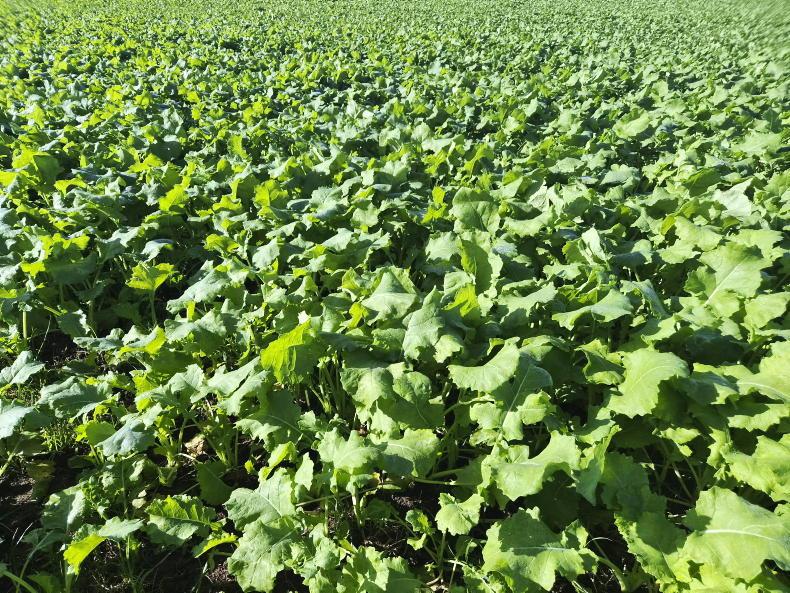
There is some moisture in the ground though, so Martin decided to make a start on planting winter oilseed rape at the weekend. Aurelia and LG Aviron were planted at 2.9 to 3kg/ha. Cattle slurry was applied at 2,500 gallons/ac to some fields before ploughing, while a couple of cleaner fields were just ripped before being sowed.
Martin is unsure of applying a pre-emergence herbicide because of the dry soil, so he is leaning towards waiting and applying Kerb or Astrokerb during the winter.
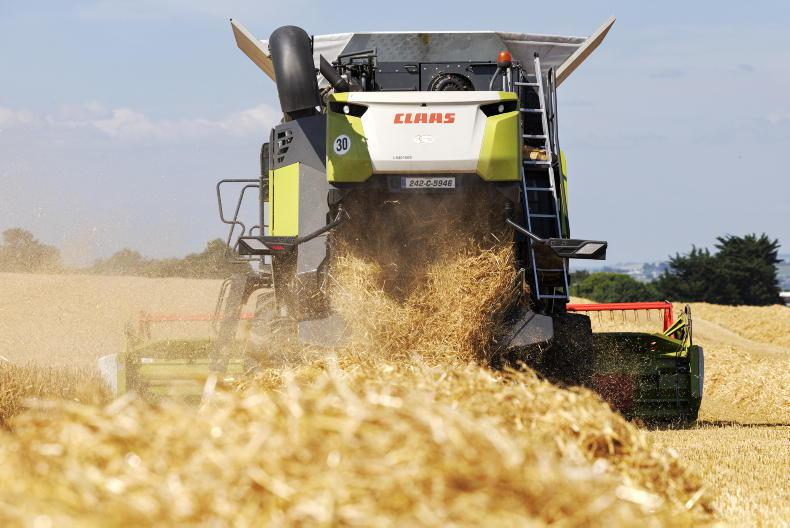
The winter wheat yielded between 3.9 and 4.8t/ac. He says the crop didn’t look exceptional, but the grain weighed very well, at 80 to 82 KPH. The ground is very heavy so it was able to cope with the dry weather, but it still took Martin by surprise.
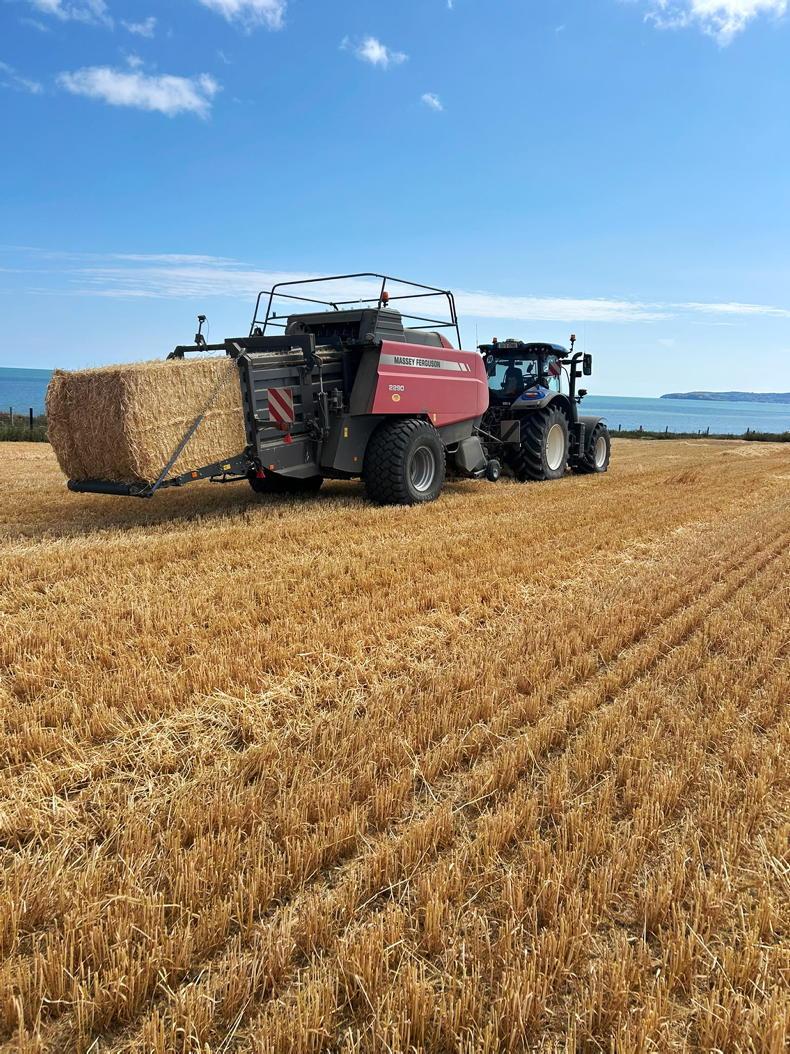
There was lots of straw too, at three to four 8x4x4 square bales/ac. The same was true for the spring barley, yielding four square bales/ac.
The yield of the spring barley was just shy of 4t/ac. Martin says it wouldn’t typically be spring barley land, but the very heavy nature of the soil combined with the large amount of sunshine really suited the crop this year. It yielded far better than the winter barley, but Martin says this is very much an outlier as spring barley can often disappoint.
Finally, the open maize is flying on the farm. Martin says the cobs are developing well and are very uniform across the field. He adds that it was a good year to grow it for the first time between the ideal growing conditions and the strong market for the crop, with some enquiries already being made. However, Martin is a bit concerned for the grain markets as there is little upward movement despite the droughts and forage shortages that are developing right across Europe.Brian Crowley
Ballycotton, Co Cork
Very little rain has fallen in Brian’s area since the beginning of July, and the soil is too dry to plant winter oilseed rape.
The seed is ready to go on the farm, and Brian is hoping that he can make a start in the coming days if the forecasted rain arrives and the ground softens. No cover crops have been planted yet either, so it will be a busy enough time for Brian once there is some moisture in the soil.
The beet would also benefit from rain. Brian says it is flattening out during the day, even when temperatures are not that high. However, it is still perking up at night, and the main leaves are all still green. Brian did not spray the crop as it was under a bit of stress, and it is probably too late now. The harvest is nearly all wrapped up and Brian says it has been a breeze so far. Only half of the beans that are a bit green are still to be cut.
The beans that have been cut did 2.3t/ac at 17% moisture and Brian expects the remainder to perform even better. The winter wheat yielded 4.4t/ac at 15 to 16% moisture.
Brian was happy with how the crop turned out.
The straw was chopped and worked in straight away. The spring oats were planted very late but did very well, yielding 3.4t/ac.
The Laureate spring barley yielded 3t/ac, while the Amity did 3.4t/ac. The spring wheat was at 3.5t/ac.
Brian says he has never seen the like of the amount of straw that was on the spring wheat. He took the field out of the Straw Incorporation Measure, and it yielded nearly nine 8x4x3 square bales/ac.
Reflecting on the harvest, Brian notes that the winter barley was the worst crop by far; everything else performed on par with other years, an impressive feat given the weather experienced over the past few months.


SHARING OPTIONS