



Donald Logue
Muff, Co Donegal
Donald was delighted to have his spring crops harvested and in the shed before the rain started to make things more difficult. Moreover, he actually has the grain all dried and mostly sold already.
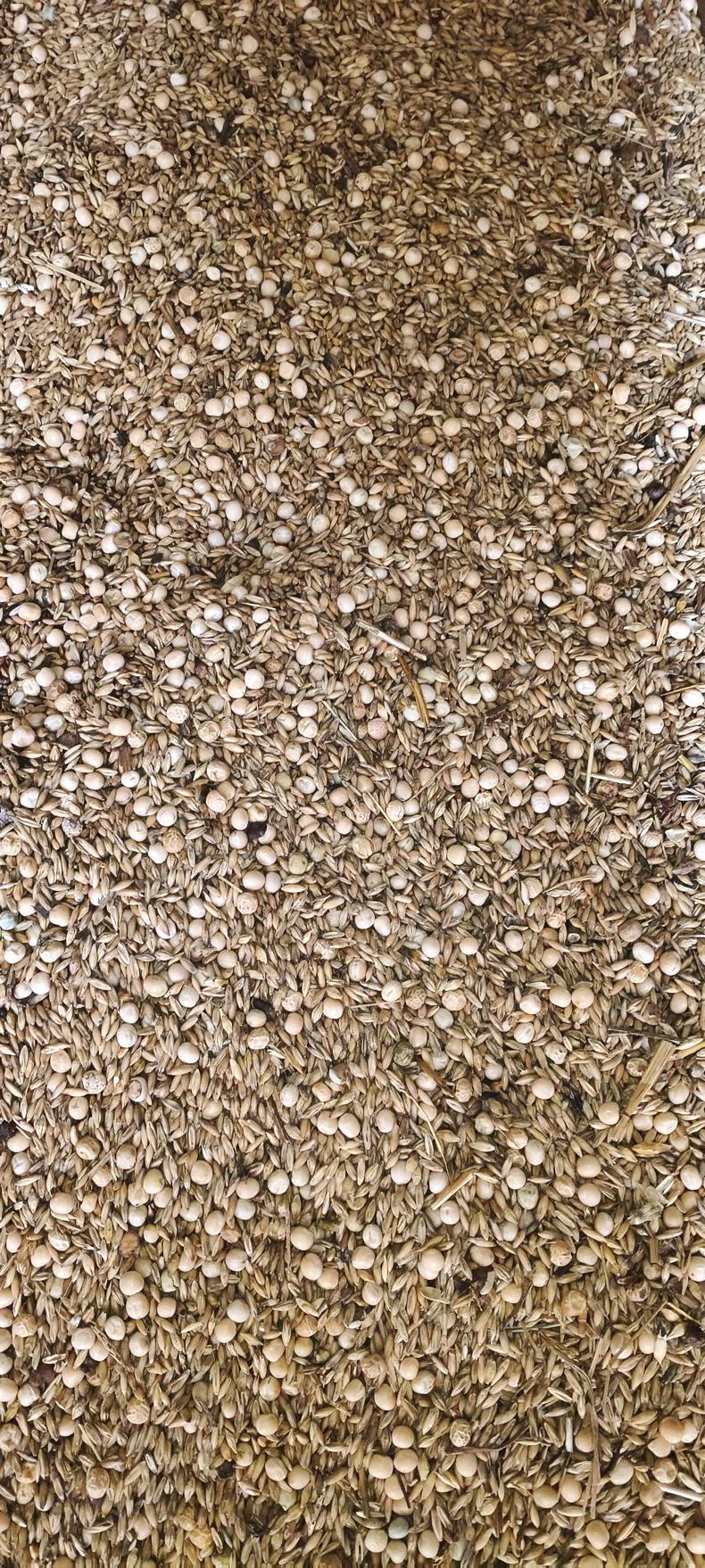
He was happy with how the mixed crop performed overall. He was glad that he had changed the variety of the peas in the mix this year, as they stood very well to harvest. The oats did well in the mix too, even if the grains were slightly smaller than usual.
The spring barley in the mixed crop was variable. The grains were quite large, but while some heads were quite big, others were very small, with only eight or nine grains in them. Donald is unsure as to why this happened, but it was throughout the whole field, not just in patches or poor areas.
The potato harvest has not started yet for Donald. The stalks are just starting to die off naturally. He took the tops off the drills where he is keeping the potatoes for seed. Despite the hot and dry summer, tuber size seems to be reasonable and quite even across the field. Donald says that the few bits of rain that his area received when everywhere else was dry seemed to keep the crop going.
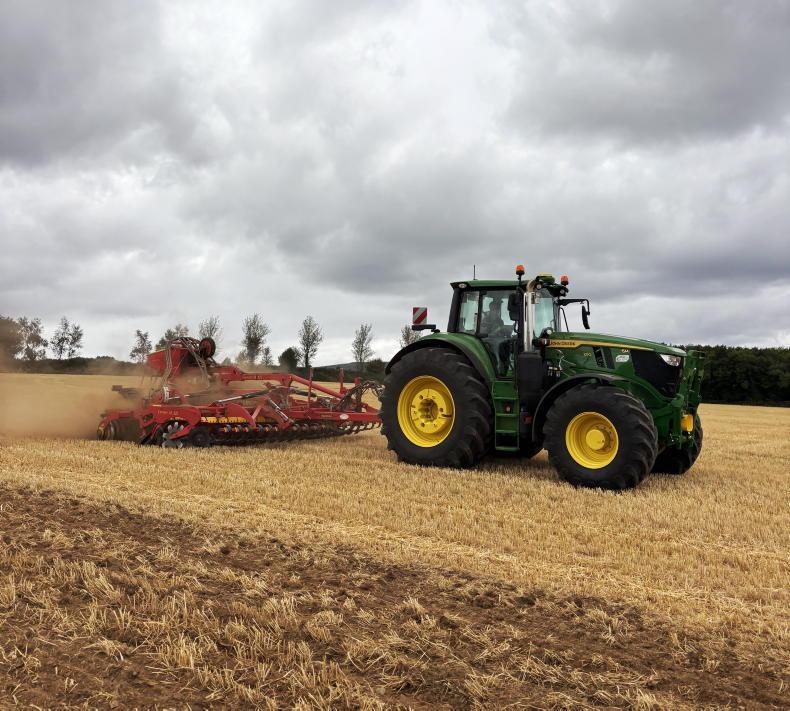
A cover crop was planted where the winter oats were. The stubbles were grubbed twice to a depth of 3” before Donald sowed the seed with his one-pass. He adds that it was very hard to get the one-pass to sow the correct seeding rate with all the different seed sizes in the mix. It was rolled after sowing.
Donald had planned to plant some winter oats again this year, but he has now decided to leave it until the spring. The field they were meant to go in was soil tested and the soil indices came back quite low. Therefore, he plans to spread farmyard manure here and incorporate it, before applying more before ploughing in the spring.
Michael Martin
Rathnure, Co Wexford
The harvest is finally over for the Martins, with the last of the spring beans cut last week. Michael told us the final 40ac of beans yielding 3t/ac and the beans that ripened sooner, sitting on slightly drier soils, came in at around 2.5t/ac.
Michael comments that it’s another reminder of why, in recent years, the focus has shifted to sowing beans on heavier, clay-type ground on the farm. With reduced rainfall in the summer months becoming the norm, Michael says beans simply don’t perform when the soil dries out.
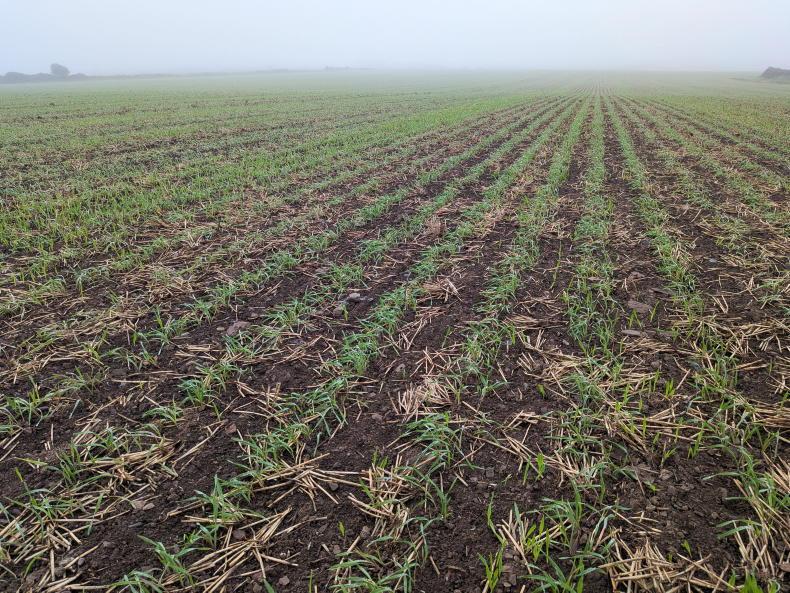
The winter oilseed rape was planted and it has established well. Michael says the warm, damp conditions of the past week have driven growth in the crop.
Plenty of cover crops went in on the farm this year as part of the ACRES scheme, with the farm also participating in the Farming for Water EIP scheme.
The mix used was common vetch, phacelia and crimson clover. It is straightforward but effective, according to Michael, helping to hoover up nutrients left in the soil and fix some nitrogen over the winter months.
Some of these cover crops were sown into rock-hard ground back in mid-August and were slow out of the blocks, but Michael commented that he always expected this.
They are now growing away nicely with softer conditions, but are unlikely to match last year’s performance.
Looking ahead, the maize will be harvested in the coming week or so. Michael says it’s a good, solid crop, but no world records will be broken on yield. He adds that it’ll do the job nicely, considering it was grown without plastic.
The fodder beet, meanwhile, has come on very well in recent weeks, clearly enjoying the return of the rain.
All in all, Michael says it was a decent harvest across the board. Now, he says, it’s just a matter of hoping the grain price does its part.
Nicholas Ryan
Clonmel, Co Tipperary
It was a busy start to September for Nicholas, as he tried to get winter oilseed rape and cover crops planted once some moisture returned to the soil.
The winter oilseed rape was sown in the first few days of September. The chosen variety was LG Armada and it was planted at 2.75kg/ha. Nicholas applied 3,000 gallons/ac of pig slurry before the ground was ploughed. He hopes this will push the crop on and help to reduce the crop’s nitrogen requirement in the spring.
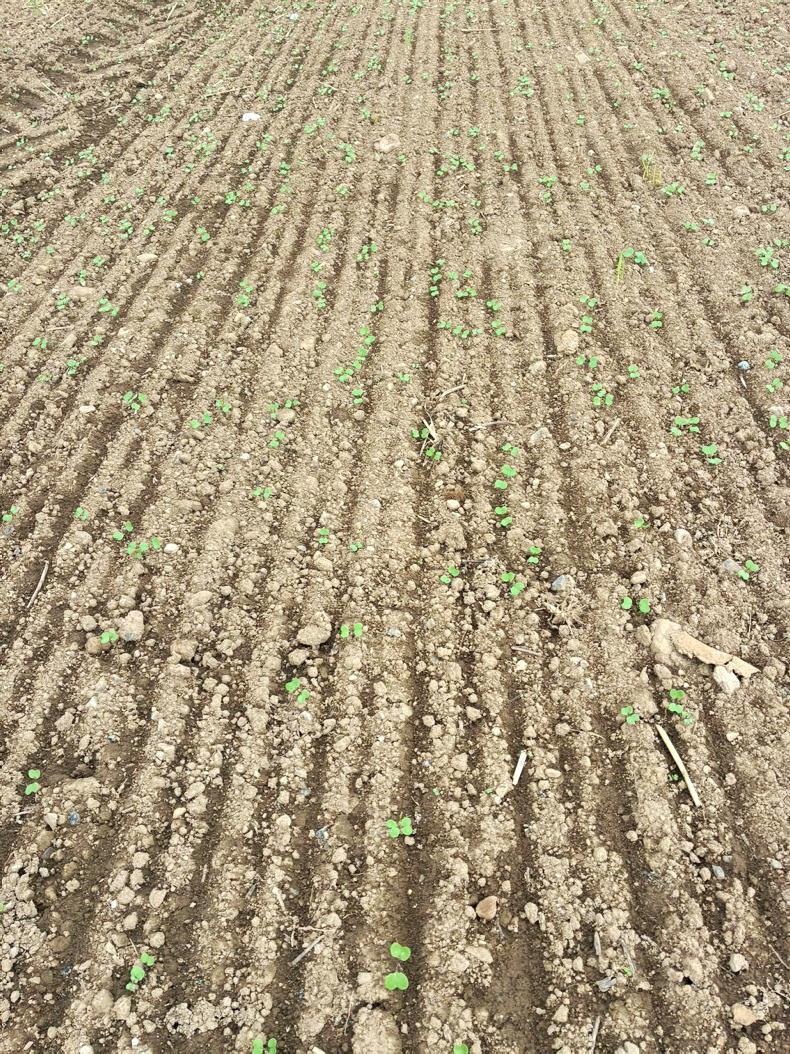
The crop was sowed in great conditions and rolled afterwards. It is now emerging and Nicholas is keeping a sharp eye on it for slugs. There is less winter oilseed rape on the farm this year, but this is just due to the crop rotation in place on the farm.
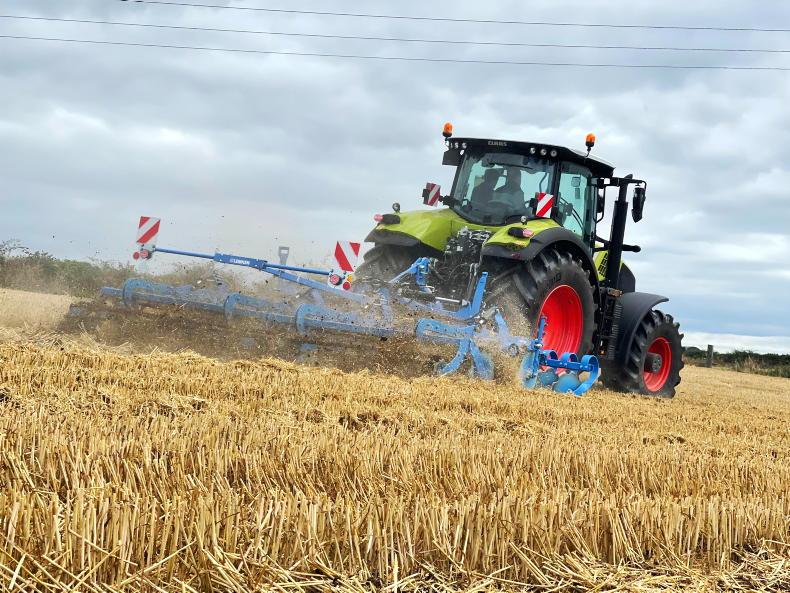
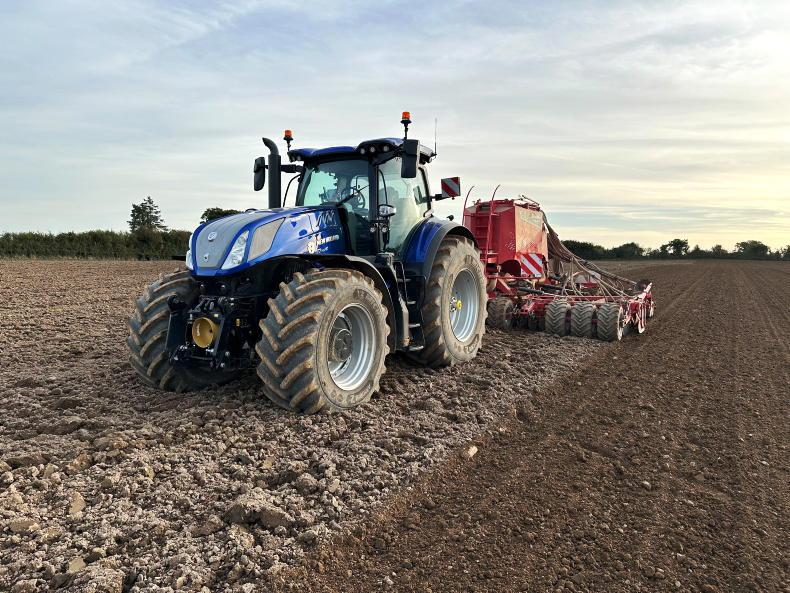
Nicholas planted some cover crops just before he got to the oilseed rape. He disced the fields first, before spreading the cover crop seed with a fertiliser spreader and rolling the seeds in afterwards. The mixture contained vetch, clover and phacelia.
Nicholas expects to start planting his winter rye in the coming days. It will be his third year growing the crop and it has gone very well so far. He says the crop has lower input costs than winter wheat, while still providing a great yield.
It also helps to spread the workload in the autumn, as it can go in that bit earlier, usually while soil conditions are still good. The rye has pretty much replaced winter barley in Nicholas’ rotation and he won’t grow any winter barley this year.
There will be winter wheat and winter oats on the farm again this year. Nicholas hopes it can stay dry well into October, so these can be planted with very little hassle.



SHARING OPTIONS