I still recall standing in a machinery shed in the US Midwest over 20 years ago and looking at a new CASE Axial Flow looking in the doorway.
The owner commented that he “could not justify the capacity of that machine, but he could afford it”.
I recalled that comment when the ‘From the Tramlines’ farm walk hosts, Martin and Cepta Hoste, stated that they had considerably excess combine capacity but that they were using it to get through harvest with minimal casual labour.
Speaking at the event, Martin told Stephen Robb that he began min-till establishment in the early 1990s for speed of planting, fuel savings and lack of labour.
Much of their land has not been ploughed for over 20 years and, while there were some problems along the way, the land is now in much better physical condition.
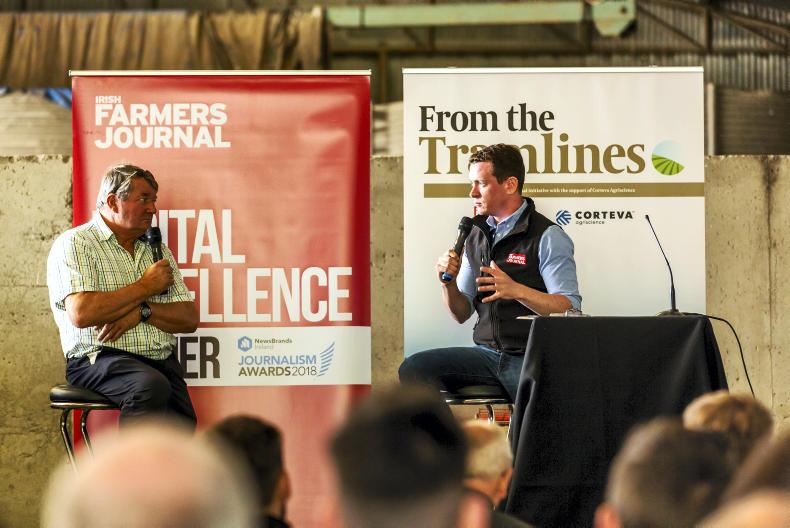
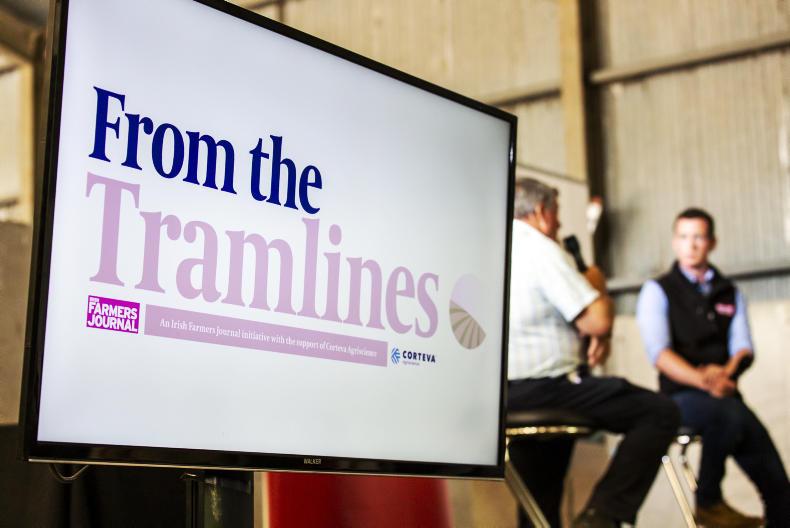
Stephen Robb and host farmer Martin Hoste. \ Philip Doyle
His system involves shallow cultivation for stale seedbeds with a seedbed depth of around 11cm for cereals and close to 14cm for beans.
Martin said that it is essential to “look after the soil and it will look after you”.
The soil type is mainly heavy and compaction prevention is a continuous challenge.
To this end, the combine is fitted with tracks and a second-hand Challenger is now used for cultivation. At harvest, trailers are mainly filled on farm roadways.
Asked about a possible move over to direct drilling or no-till, Martin said that he is willing to give it a try but he is not sure that it would work on that land.
Encouraging farmers
to lock in
Rory Deverell is a market analyst with FC Stone. He opened his address by stating that price is an issue in all markets but that many people use the transparency of the market to help them market grain at different times in the year.
Rory stated that prices traditionally drop to their lowest at harvest time and that this was a bad time for growers to be exposed when selling green.
Looking at price trends over many years, Rory stated that harvest is the worst time for prices because of the oversupply situation relating to harvest storage pressure.
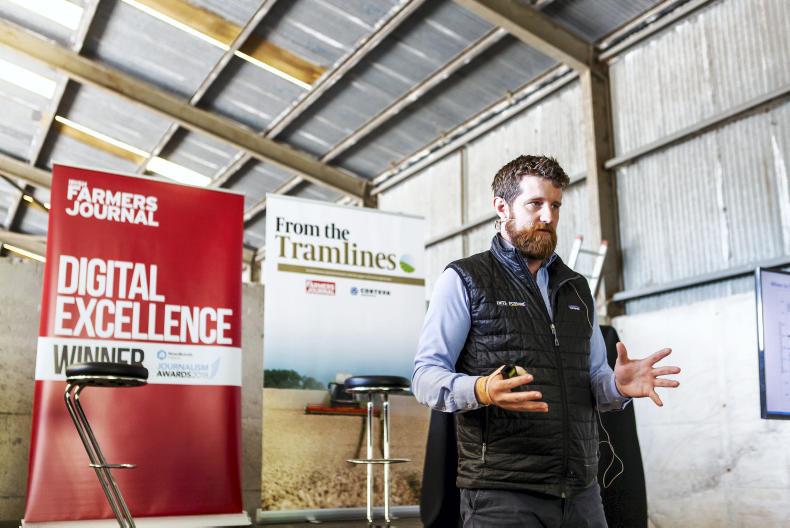
Rory Deverell of FC Stone. \ Philip Doyle
The same analysis showed that the November to February period generally shows prices above the trend line.
Early summer can also give above-trend prices as this period is often dominated by scares relating to growing conditions or, as was the case this year, difficulties with planting.
Many growers have a poor understanding of the market and have been unwilling to sell forward.
Many had a bad experience of forward selling in 2012 when both yield and quality were not met due to poor grain fill.
In general growers do not want to look back at a forward sale to discover the price has since risen.
However, in the majority of cases the opposite is the case, particularly when coming off a strong market.
For such people, Rory advises that growers take a floor price deal to lock in a minimum price for a portion of their crop.
This means paying a premium at a point in time through your merchant to lock in a minimum price – if the price rises the grower gets the higher price when selling, minus the cost of the premium.
From a farm perspective, Rory advised that a grower considers locking in about 20% of farm output in winter, a further 10% in spring and a further 20% in the summer before harvest
It is really a form of insurance to lock in a minimum price. If the price falls the grower may sell for less but the deal pays the balance of the reduction to the grower.
This type of arrangement must be done through a merchant or co-op and is well worth considering.
From a farm perspective, Rory advised that a grower considers locking in about 20% of farm output in winter, a further 10% in spring and a further 20% in the summer before harvest. This amounts to 50% which is realistically the maximum that anyone should sell forward in case yields disappoint.
Irish Grain Assurance Scheme
Tom Kelly of CropSure, the company employed to operate the Irish Grain Assurance Scheme (IGAS), told those gathered that the scheme is owned by the Cereals Association of Ireland, which is an amalgam of the Irish Grain and Feed Association, the IFA, the Department of Agriculture and Teagasc.
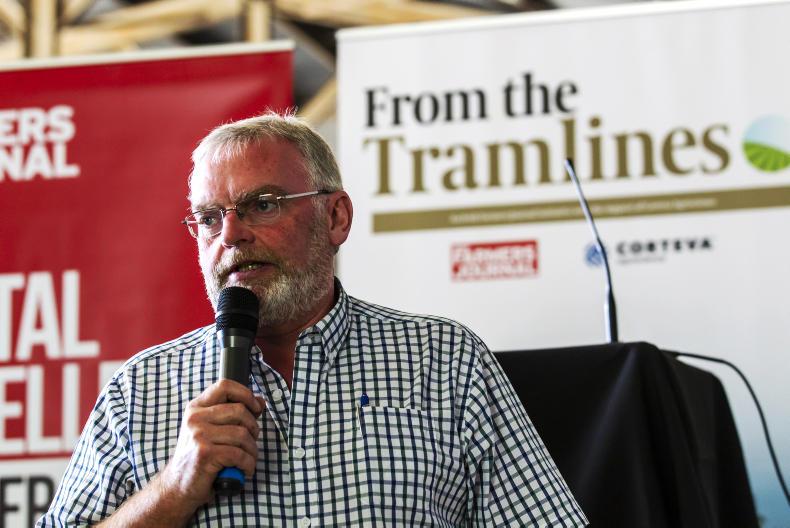
Tom Kelly of CropSure. \ Philip Doyle
The scheme was initiated back in 2002 to help provide confidence, traceability and branding for Irish grain as the big buyers were looking for quality control.
Tom said that in 2018 around 5,000 of the estimated 6,500 growing units were participating in the scheme with greater than 90% volume compliance. The scheme covers:
Growers who sell green at harvest,Growers who dry, store and sell laterMerchants. All have different requirements.
As such schemes go, Tom said that the IGAS is simple in its design and represents the fact that the grain sector is part of the food industry.
The scheme recently received silver status from the Standards Authority of Ireland for the new sustainability requirement. This was needed by the food and drinks sectors and it now means that the IGAS is now accepted by Bord Bia.
The challenge now is to get our livestock sector and scheme assurers to demand this traceability for the products they produce.
The landscape around crop protection products has changed a lot and this change will continue. Gordon Rennick of the pesticides registration and control division of the Department of Agriculture gave a brief summary of the many actives lost from the Irish market with particular reference to those lost in the past five years.
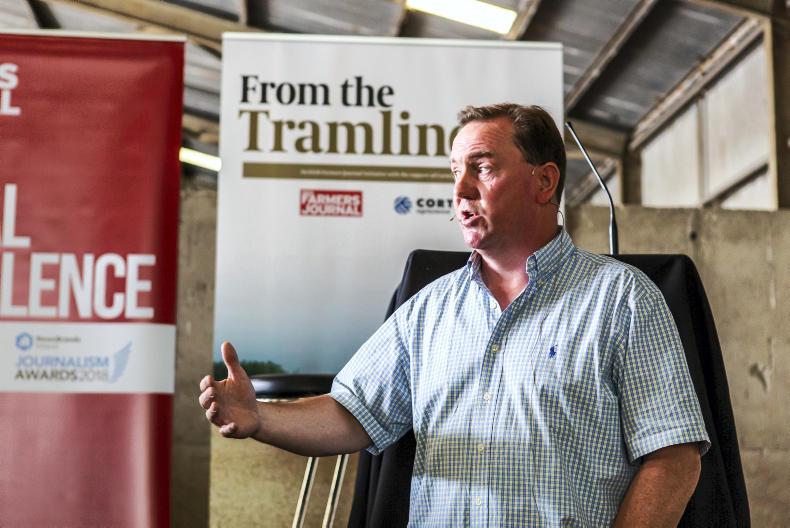
Gorden Rennick of the Department of Agriculture. \ Philip Doyle
These include chlorothalonil, diquat, CIPC, dimethoate, IPU, ioxynil, linuron, picoxystrobin, propiconazole, quinoxyfen, Aramo, Redigo Deter, triasulfuron and desmedipham.
We can add to these other actives such as fenpropimorph which has been withdrawn for commercial reasons.
So the scene is changing and control products based on biological components now account for the majority of new re-registrations.
Gordon said that the loss of actives arising from the new pesticide registration legislation is proving to be even greater than had been anticipated.
Speaking about the new actives in the pipeline, Gordon said that there are many but most are biological in nature and do not yet seem to be useful for field use
Among the actives now being assessed for reregistration are thiacloprid, cyproconazole, epoxiconazole, fluquinconazole, mancozeb, metconazole, prochloraz, tebuconazole, the phenoxy acid herbicides, the FOP and DIM graminacides, bromoxynil, benthiavalicarb, flumioxazine and bifenazate.
Speaking about the new actives in the pipeline, Gordon said that there are many but most are biological in nature and do not yet seem to be useful for field use – most are niche products for use on protected crops.
While there are some conventional chemical actives in the pipeline, Gordon said that these are finding the going increasingly tough because of new pollinator requirements and higher ecological quality standards for water.
While R&D cost and registration uncertainty are among the reasons for the decreasing supply of new actives, the increasing influence of public opinion and the impact of social media are among the greatest drivers of recent changes. These pressures are likely to continue unless the world moves to a period of inadequate food supply.
New products from Corteva
Supporters of ‘From the Tramlines’ coverage, Corteva, outlined some of the main new products that the company is likely to bring to the market in the coming years.
Corteva is the new name for the company which saw the coming together of DuPont, Dow Agrisciences and Pioneer.
This process forced the loss of a number of actives, which led to the loss of nearly one-third of market share.
Corteva’s national field technical manager, Liz Glynn, outlined three products of immediate relevance – Belkar, Zorvec and Inatreq Active.

Liz Glynn from Corteva. \ Philip Doyle
Belkar is a new oilseed rape herbicide for post-emergence autumn use. It is strong on difficult weeds such as cleavers, poppy, fumitory, etc. It contains Arylex Active plus Picloram at 10g/l and 48g/l, respectively. It can be used from 1 September to 31 December at 0.5 l/ha.
Zorvec is a new blight fungicide which brings a new mode of action.
It is effective against leaf and stem blight with preventative, curative and anti-sporulant activity. It must be used with a partner product and it protects new growth.
Inatreq Active is a new fungicide from a new group, the picolamides. Its new mode of action is a quinine inside inhibitor (QiI).
So it has a different target site to other existing fungicides, with no known cross-resistance. It also comes with a new patented formulation, i-Q4, which was designed specifically for this new active.
Read more
From the Tramlines harvest walk takes place today
Tramlines harvest walk takes place this Thursday
I still recall standing in a machinery shed in the US Midwest over 20 years ago and looking at a new CASE Axial Flow looking in the doorway.
The owner commented that he “could not justify the capacity of that machine, but he could afford it”.
I recalled that comment when the ‘From the Tramlines’ farm walk hosts, Martin and Cepta Hoste, stated that they had considerably excess combine capacity but that they were using it to get through harvest with minimal casual labour.
Speaking at the event, Martin told Stephen Robb that he began min-till establishment in the early 1990s for speed of planting, fuel savings and lack of labour.
Much of their land has not been ploughed for over 20 years and, while there were some problems along the way, the land is now in much better physical condition.
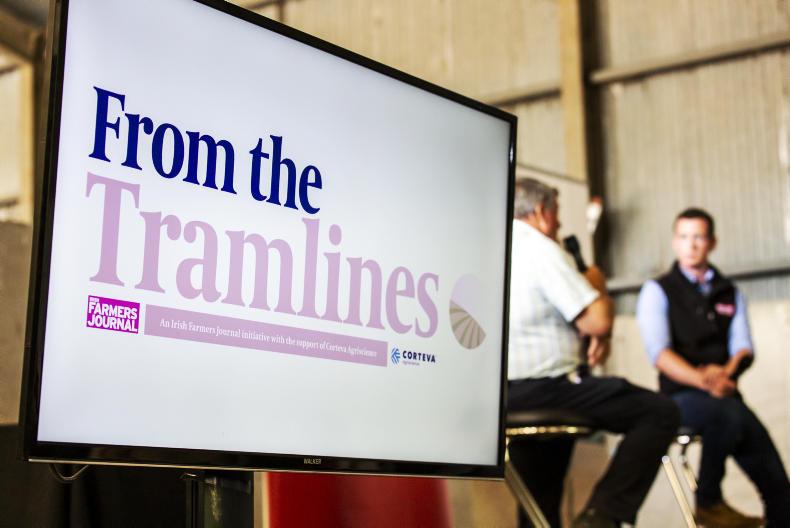
Stephen Robb and host farmer Martin Hoste. \ Philip Doyle
His system involves shallow cultivation for stale seedbeds with a seedbed depth of around 11cm for cereals and close to 14cm for beans.
Martin said that it is essential to “look after the soil and it will look after you”.
The soil type is mainly heavy and compaction prevention is a continuous challenge.
To this end, the combine is fitted with tracks and a second-hand Challenger is now used for cultivation. At harvest, trailers are mainly filled on farm roadways.
Asked about a possible move over to direct drilling or no-till, Martin said that he is willing to give it a try but he is not sure that it would work on that land.
Encouraging farmers
to lock in
Rory Deverell is a market analyst with FC Stone. He opened his address by stating that price is an issue in all markets but that many people use the transparency of the market to help them market grain at different times in the year.
Rory stated that prices traditionally drop to their lowest at harvest time and that this was a bad time for growers to be exposed when selling green.
Looking at price trends over many years, Rory stated that harvest is the worst time for prices because of the oversupply situation relating to harvest storage pressure.
Rory Deverell of FC Stone. \ Philip Doyle
The same analysis showed that the November to February period generally shows prices above the trend line.
Early summer can also give above-trend prices as this period is often dominated by scares relating to growing conditions or, as was the case this year, difficulties with planting.
Many growers have a poor understanding of the market and have been unwilling to sell forward.
Many had a bad experience of forward selling in 2012 when both yield and quality were not met due to poor grain fill.
In general growers do not want to look back at a forward sale to discover the price has since risen.
However, in the majority of cases the opposite is the case, particularly when coming off a strong market.
For such people, Rory advises that growers take a floor price deal to lock in a minimum price for a portion of their crop.
This means paying a premium at a point in time through your merchant to lock in a minimum price – if the price rises the grower gets the higher price when selling, minus the cost of the premium.
From a farm perspective, Rory advised that a grower considers locking in about 20% of farm output in winter, a further 10% in spring and a further 20% in the summer before harvest
It is really a form of insurance to lock in a minimum price. If the price falls the grower may sell for less but the deal pays the balance of the reduction to the grower.
This type of arrangement must be done through a merchant or co-op and is well worth considering.
From a farm perspective, Rory advised that a grower considers locking in about 20% of farm output in winter, a further 10% in spring and a further 20% in the summer before harvest. This amounts to 50% which is realistically the maximum that anyone should sell forward in case yields disappoint.
Irish Grain Assurance Scheme
Tom Kelly of CropSure, the company employed to operate the Irish Grain Assurance Scheme (IGAS), told those gathered that the scheme is owned by the Cereals Association of Ireland, which is an amalgam of the Irish Grain and Feed Association, the IFA, the Department of Agriculture and Teagasc.
Tom Kelly of CropSure. \ Philip Doyle
The scheme was initiated back in 2002 to help provide confidence, traceability and branding for Irish grain as the big buyers were looking for quality control.
Tom said that in 2018 around 5,000 of the estimated 6,500 growing units were participating in the scheme with greater than 90% volume compliance. The scheme covers:
Growers who sell green at harvest,Growers who dry, store and sell laterMerchants. All have different requirements.
As such schemes go, Tom said that the IGAS is simple in its design and represents the fact that the grain sector is part of the food industry.
The scheme recently received silver status from the Standards Authority of Ireland for the new sustainability requirement. This was needed by the food and drinks sectors and it now means that the IGAS is now accepted by Bord Bia.
The challenge now is to get our livestock sector and scheme assurers to demand this traceability for the products they produce.
The landscape around crop protection products has changed a lot and this change will continue. Gordon Rennick of the pesticides registration and control division of the Department of Agriculture gave a brief summary of the many actives lost from the Irish market with particular reference to those lost in the past five years.
Gorden Rennick of the Department of Agriculture. \ Philip Doyle
These include chlorothalonil, diquat, CIPC, dimethoate, IPU, ioxynil, linuron, picoxystrobin, propiconazole, quinoxyfen, Aramo, Redigo Deter, triasulfuron and desmedipham.
We can add to these other actives such as fenpropimorph which has been withdrawn for commercial reasons.
So the scene is changing and control products based on biological components now account for the majority of new re-registrations.
Gordon said that the loss of actives arising from the new pesticide registration legislation is proving to be even greater than had been anticipated.
Speaking about the new actives in the pipeline, Gordon said that there are many but most are biological in nature and do not yet seem to be useful for field use
Among the actives now being assessed for reregistration are thiacloprid, cyproconazole, epoxiconazole, fluquinconazole, mancozeb, metconazole, prochloraz, tebuconazole, the phenoxy acid herbicides, the FOP and DIM graminacides, bromoxynil, benthiavalicarb, flumioxazine and bifenazate.
Speaking about the new actives in the pipeline, Gordon said that there are many but most are biological in nature and do not yet seem to be useful for field use – most are niche products for use on protected crops.
While there are some conventional chemical actives in the pipeline, Gordon said that these are finding the going increasingly tough because of new pollinator requirements and higher ecological quality standards for water.
While R&D cost and registration uncertainty are among the reasons for the decreasing supply of new actives, the increasing influence of public opinion and the impact of social media are among the greatest drivers of recent changes. These pressures are likely to continue unless the world moves to a period of inadequate food supply.
New products from Corteva
Supporters of ‘From the Tramlines’ coverage, Corteva, outlined some of the main new products that the company is likely to bring to the market in the coming years.
Corteva is the new name for the company which saw the coming together of DuPont, Dow Agrisciences and Pioneer.
This process forced the loss of a number of actives, which led to the loss of nearly one-third of market share.
Corteva’s national field technical manager, Liz Glynn, outlined three products of immediate relevance – Belkar, Zorvec and Inatreq Active.
Liz Glynn from Corteva. \ Philip Doyle
Belkar is a new oilseed rape herbicide for post-emergence autumn use. It is strong on difficult weeds such as cleavers, poppy, fumitory, etc. It contains Arylex Active plus Picloram at 10g/l and 48g/l, respectively. It can be used from 1 September to 31 December at 0.5 l/ha.
Zorvec is a new blight fungicide which brings a new mode of action.
It is effective against leaf and stem blight with preventative, curative and anti-sporulant activity. It must be used with a partner product and it protects new growth.
Inatreq Active is a new fungicide from a new group, the picolamides. Its new mode of action is a quinine inside inhibitor (QiI).
So it has a different target site to other existing fungicides, with no known cross-resistance. It also comes with a new patented formulation, i-Q4, which was designed specifically for this new active.
Read more
From the Tramlines harvest walk takes place today
Tramlines harvest walk takes place this Thursday






SHARING OPTIONS