



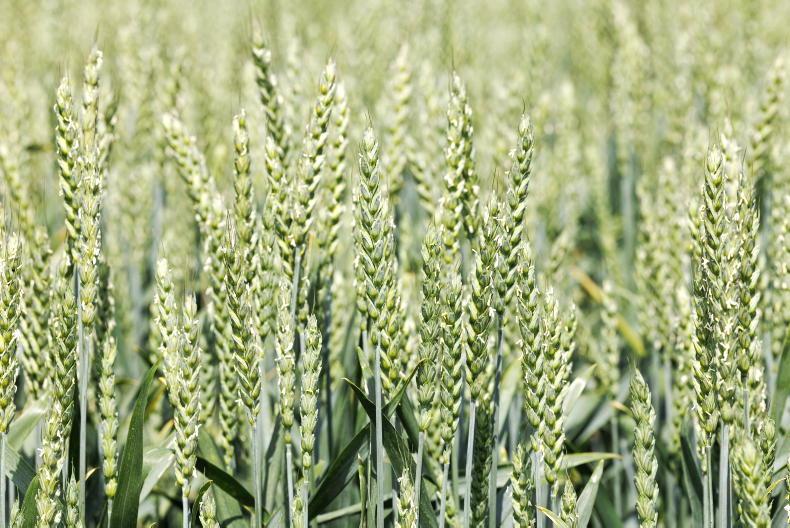
Plant breeding usually targets outright yield or traits such as disease resistance or grain quality.
However, Australian researchers from the University of Queensland have started to think about crop breeding differently by considering the entire crop rotation during the breeding process.
The research focuses on selecting crop varieties based upon what effects they have on the following crop, which are known as a crop’s legacy effects.
A legacy effect could be caused through a change in soil nutrients, structure, water retention or microbial communities.
The researchers say that this is an “untapped genetic dimension” that offers new breeding targets.
Residual nitrogen
These legacy effects are often seen by Irish tillage growers too. Residual nitrogen will be left behind in the soil after a legume crop, any build up of the take-all fungus will decline after a break crop and beans are seen as a great soil conditioner too.
In fact, the researchers cite the residual nitrogen left behind by legume crops as a starting point for this type of breeding. Of course, extra care would then be needed to avoid leaching this nitrogen once the legume has been harvested.
The researchers recognise that incorporating this into conventional crop breeding programmes would require “a genuine reorientation” of these breeding programmes. The way in which the value of a variety is measured would need to change and, therefore, the selection process too.
However, the researchers remain optimistic.
“The varieties of the future will be judged not only by what they yield, but also by what they leave behind,” according to the researchers.
“Every crop leaves a legacy and the opportunity to breed for that legacy has never been greater.”


SHARING OPTIONS