



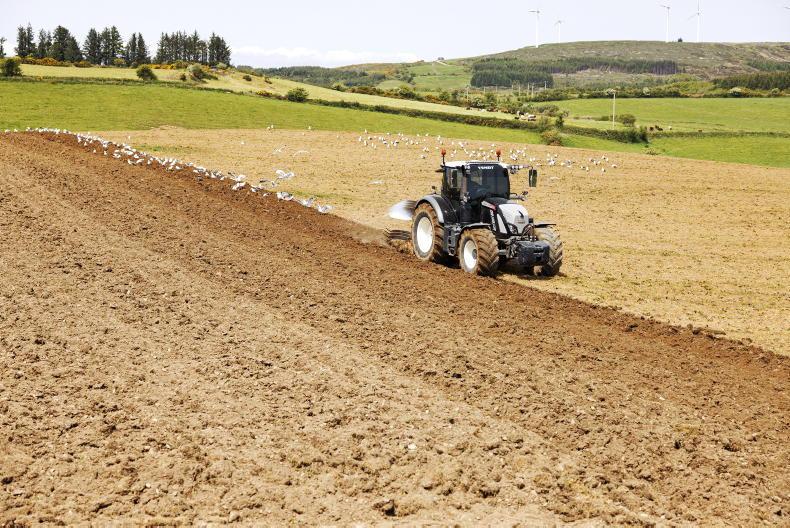
Soil scientist Neil Fuller has said that farmers can still increase soil carbon levels while ploughing. Acknowledging that ploughing releases carbon, he said: “I think there is a real advantage to the plough in certain situations.”
Increasing soil carbon is directly linked to increasing soil organic matter which provides nutrients for the soil and helps to improve soil structure and water holding capacity.
He said that ploughing on soils in Ireland probably releases 2t/ha to 3t/ha of carbon in the first two to three months after ploughing, compared to a direct-drill system, which he estimated releases about 0.5t/ha or less. However, by planting a vigorous crop like oilseed rape which will take back in carbon quickly it can help to offset these losses.
He also added that where a cover crop is planted and remains on the soil surface, instead of being incorporated back, a large majority of the carbon from that cover crop will go back into the atmosphere.
If you incorporate in that cover crop you keep some of the carbon and you allow air into the soil as well.
He added that a “plough-based system can do just as much good if we manage it well”, noting that there are obviously fuel savings from reduced tillage systems.
However, Neil stated: “On a 60ha tillage farm in Ireland, it’s hard to justify investing in machinery.”
Adding that if the plough works in your system you can carry out straw incorporation and plant cover crops to offset some of the emissions.
He noted that there are other things that you can do like plant oilseed rape and plant clover with it to provide nitrogen, encourage earthworms, water holding capacity, help with nutrient recycling and fixing carbon.
“We need to change what we’re doing. We need to change in the right direction,” he said.
Neil concluded that there is “good in both systems” and that it’s not right to pick one or the other, adding that the traditional farming practices have helped to keep Irish soils in good condition compared to so many other countries in Europe.



SHARING OPTIONS