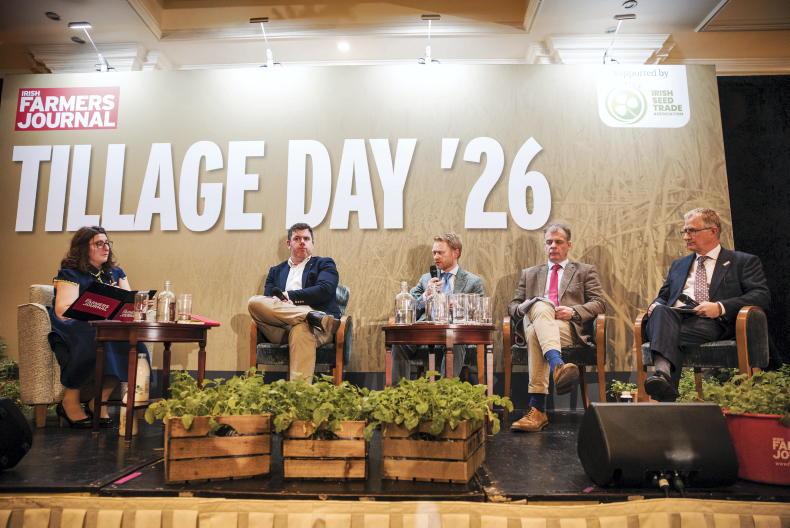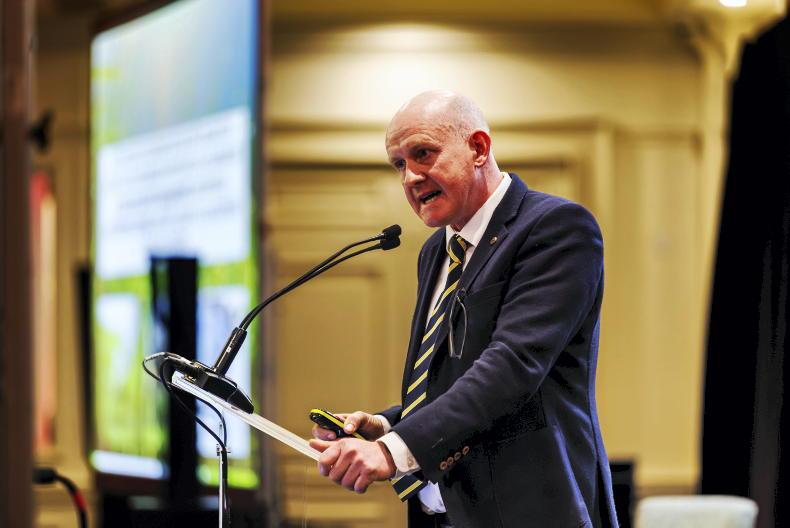
One of the main findings from Professor Finbar Mulligan’s research presented at Tillage Day was that by feeding 150kg of extra concentrates per cow above the national average, cows could produce 33% more milk solids.
Those concentrates have been fed in the form of Irish barley, beans and oats on UCD Lyons Estate. Looking at these figures in a different way, another six 25kg meal bags of Irish barley, oats and beans could increase milk output.
“Look at what we’re doing, 150kg of extra feed for 33% higher than the national average level of output. We are not using feed inefficiently. I would be very critical and have stood on many farms and criticised them for using feed inefficiently,” Finbar commented.
Finbar outlined that the UCD Lyons system has delivered better profitability in seven of the last 11 years, with 13% less cows per hectare and 9% more milk solids per hectare than a very efficient low output system. He added that more milk from less cows may help take the pressure off the dairy sector for methane emissions and nitrate issues. A wider study could investigate the impact nationally.
UCD is growing an average of 12.5t/ha of grass each year, is maintaining fertility performance and the cows’ diets consisted only of grass, grass silage and approximately 1.5t of nuts/cuts. Grass silage was fed in drought periods and he acknowledges that this is expensive and talked about the need to look at other home-grown forage.
Finbar concluded that the use of Irish cereals and beans resulted in similar animal performance to the use of imported feed ingredients. However, the carbon footprint of the milk produced was reduced by using Irish ingredients.
Provisional data shows that the carbon footprint of the product from cows fed a 12% nut made from native ingredients was 0.81kg CO2eq/kg FPCM (fat and protein corrected milk), while the cows on the 12% nut produced from imported ingredients was 0.98kg CO2eq/kg FPCM.
Very importantly, he explained that financial outcomes were similar (within 10%) to a very efficient low-output grazing system, as stated earlier.
David Kennedy, head of dairy and tillage at Bord Bia, acknowledged that it does not talk about the 5-10% of non-grass ingredients in marketing campaigns.
The focus is on grass, but the grain can reduce the carbon footprint which would be acknowledged in marketing.
He noted: “We’re working right now with the industry to develop that infrastructure that stands up to international scrutiny that says that a higher percentage of Irish grain is used in the ration fed to Irish cattle and livestock. That’s having a positive impact on the carbon that gives those international customers – whether they’re a drinks company, an international retailer, a big food-service manufacturer, whoever it might be – a reason to prioritise sourcing from this island other than elsewhere.”