



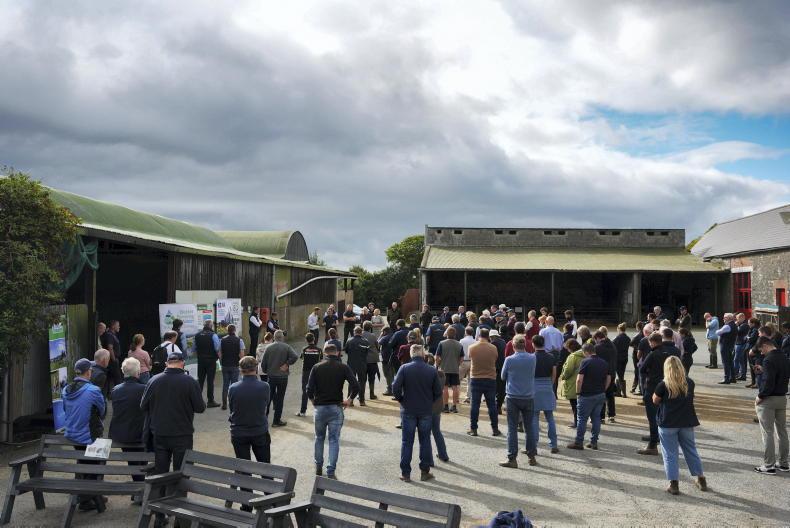
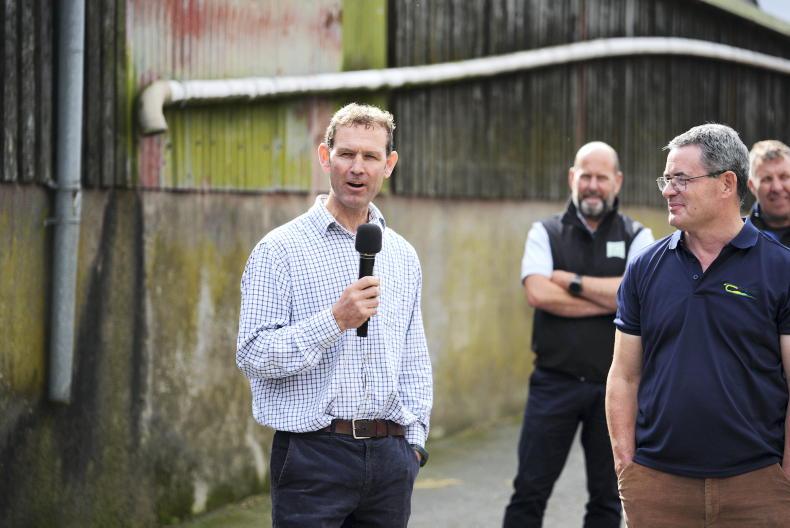
The benefits of mixing livestock and tillage were on full display at a joint Kepak Teagasc farm walk as part of the Better Farming for Water campaign during Soil Health Week on Newgrange Farm in Co Meath. Host farmer, David Redhouse explained that the farm wraps right around the Newgrange monument, runs down to the river Boyne and extends to 340ac.
Because of the historical site, David cannot plough a portion of his farm and this is kept in grass. One third of the ground is in tillage, with the remainder in grass for the beef and sheep enterprises on the farm.
The crop rotation in place on the farm consists of a red clover and grass sward for four or five years, followed by winter wheat, winter barley, spring barley and beans, before going back to wheat. The red clover sward allows David to cut back on his artificial nitrogen fertiliser on the following crop of wheat by about 30 units/ac. There is also very little nitrogen spread on the red clover, maybe a bit in the spring to get it going, but typically it only receives farmyard manure.
There is a good supply of farmyard manure on the farm and it forms the backbone of David’s strategy to improve soil health. All of the livestock on the farm are straw bedded, so only a very small number of straw bales are actually sold off the farm.
The farmyard manure, alongside other practices on the farm, has led David to having a soil index of four for phosphorous (P) on 50% of the farm.
David noted that his initial reaction to these soil test results was to worry about not being able to apply any P to these fields. However, he has found that that there’s nothing to worry about, the high soil index can provide all the P that is required.
Cover crops
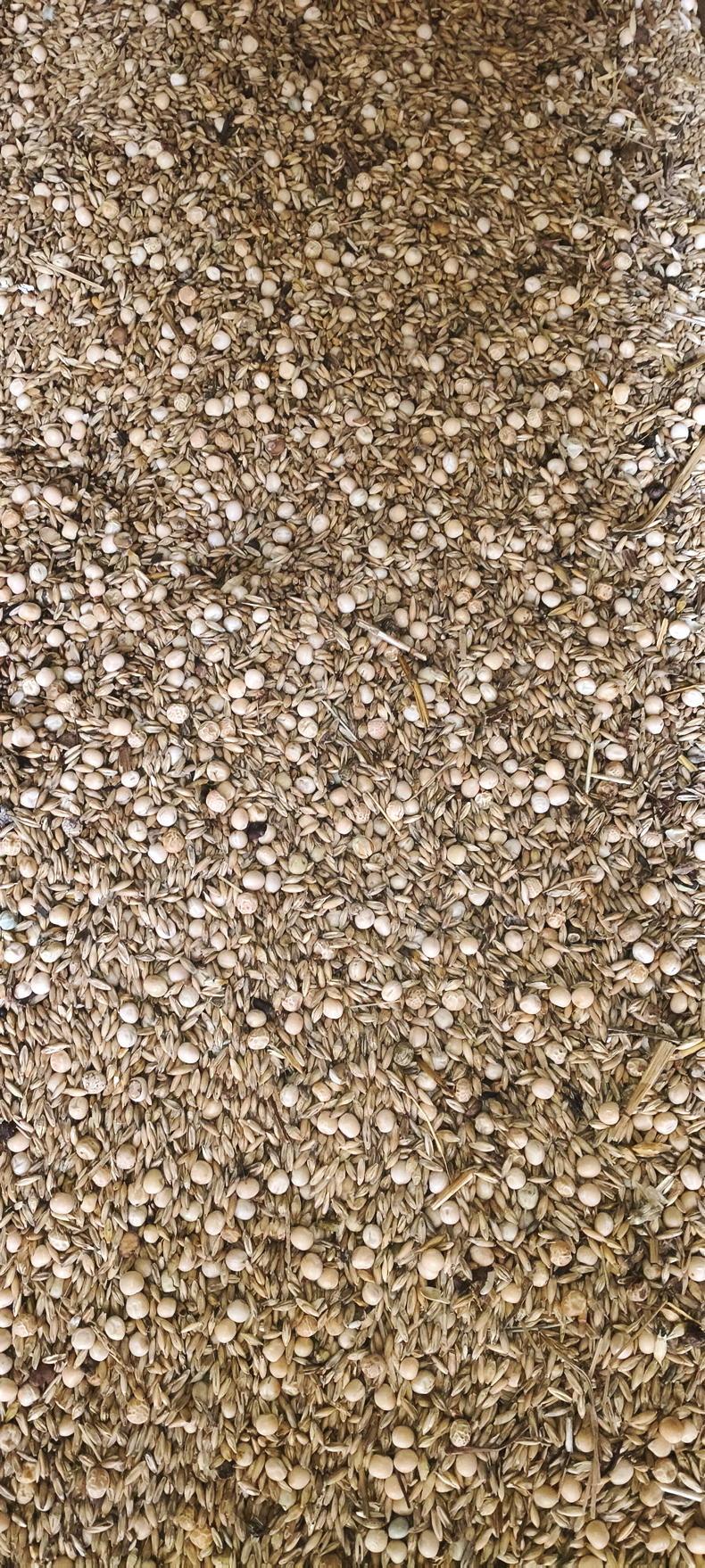
The slot in the crop rotation between winter barley and spring barley provides the perfect opportunity for David to get a cover crop in. He tries to sow it as quickly as possible after the fields are cleared of straw, to maximise the value he gets from the crop.
“It fits in very well with the sheep,” he said. “It provides a bank of feed over the winter months.”
It also allows David to close up some of his grass fields and ensure he has enough grass for lambing in March.
David also mentioned that the soaking up of nutrients by the cover crops is essential, because of the farm’s proximity to the River Boyne.
“I think the soil is healthier, it’s easier ploughed, it’s clean as well after grazing it off – all of the weed seeds have germinated. It works really well, I wouldn’t not do it, even if I had to disc it in. There are big benefits from it,” he said.





SHARING OPTIONS