Ireland was the first country in the world to publish a National Men’s Health Policy in 2009. This made us something of a pioneer in the policy field of men’s health.
More than 15 years later, new research by The Men’s Health Forum in Ireland in partnership with Movember does something of a men’s health stocktake. Published this week, ‘The Real Face of Men’s Health Report’ takes us behind the curtains on male health outcomes, revealing that men in Ireland are not only dying too young but are also spending a significant portion of their lives in poor health.
One of the most striking figures from the analysis is that two in five (40.2%) men die prematurely – before the age of 75 – and the vast majority of these deaths are preventable.
The five leading causes of premature death amongst males in 2022 were: cancers; diseases of the circulatory system; external causes of injury and poisoning (which includes accidents and suicide); diseases of the respiratory system; and diseases of the digestive system.
The research shows that men have less healthy lifestyles compared to their female counterparts and are more likely to engage in ‘risky’ behaviours – including alcohol and drug use.
Men are more likely than women to start drinking earlier and more heavily, and they also smoke at higher rates than women. In 2024, men reported poorer dietary habits than women and also showed significantly higher rates of overweight and obesity compared to women, with 63% of males affected versus 50% of females.
Mental health, as well as physical health, remains a critical concern among men. Themes of loneliness, addiction and suicide reverberate in the report, which states that, Irish men account for four in every five suicides (79%), and over nine in ten GPs (97%) encountered men presenting with suicide or suicidal ideation in the past year.
Expert view
Report co-author, Dr Noel Richardson, who is men’s health policy advisor with the HSE and director of the National Centre for Men’s Health at South East Technological University in Ireland, says there is a huge need for men to become more engaged in their health and to access services.
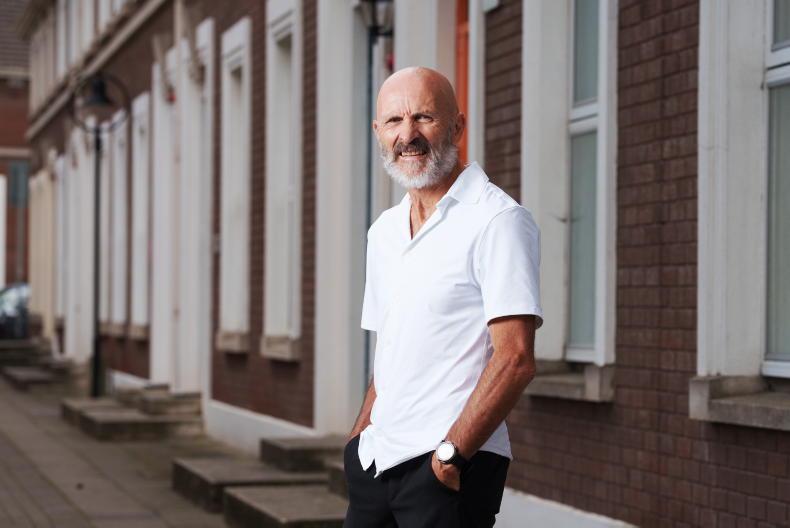
Dr Noel Richardson of the National Centre for Men's Health at South East Technological University is co-author of the report.
Having grown up on a farm in Ahane, Co Limerick, Dr Richardson’s interest in improving male health outcomes, in part, stems from the attitudes and behaviours he witnessed at a young age.
“There was a deafening silence around men’s health in those days. Farmers just threw themselves into their work. They were stoic. They were strong. The farm and work was everything. Their health and self-care took very much a back seat. And nobody questioned this.
“I was curious about the lack of questioning around men’s premature mortality,” he explains. “My dad died at 71, my uncle died at 53. Nobody really questioned why that was going on.
“The sense of being found as ‘weak’ or not being able to ‘handle’ your emotions” is something that Dr Richardson says is still prevalent today among the farming community; and stigma around seeking help is understood as the biggest barrier to men accessing support for their mental and physical health. The report succinctly describes this as “silent barriers to care”.
“We need to get men talking about their mental health, to normalise conversations about mental health and not to being afraid to ask for help so that if someone is feeling down or upset, they see that as a perfectly normal and legitimate way of being a man.”
Engaging in services
Despite the risks that many men face with regards to their health, they are less aware and less likely to avail of preventative health services.
Screening ratings remain particularly low among men; according to the report, only 24% men took part in BowelScreen (a screening programme for colorectal cancer) in 2022 and 2023. This compares with 30% of women. Promoting earlier detection and screening could help improve male health outcomes, especially when many premature deaths stem from conditions that are preventable, had there been early intervention.
Monaghan farmer Edward Treanor is largely positive about the role of farming organisations like the IFA, which are bringing men’s health into the fold. He says that men’s health is “slowly becoming more of a topic” in the farming world. Edward is milking 200 cows at the family dairy farm in Clones. He is the third generation on the farm, taking over the reins from his father, Tom.
“I was in the local mart recently in Clones,” Edward recalls, “where there was a queue of younger and older people getting their blood pressure and cholesterol checked.
“We were chatting about it, and there were a few joking, saying ‘I’m heading in for the NCT’. But it does give farmers that wee bit of incentive or push towards doing it.
“Sometimes [life], it is very busy, and you just put it on the ‘to do’ list to ring the doctor but one day leads onto the next and it just doesn’t happen. And even when you do go to the doctors, you’re nearly sitting in the waiting room for a couple of hours, and sometimes it can be hard to remove yourself from the farm for a long time period.”
This year has taught Edward and the rest of the Treanor family a lot about the importance of health, with his father Tom suffering a stroke in February.

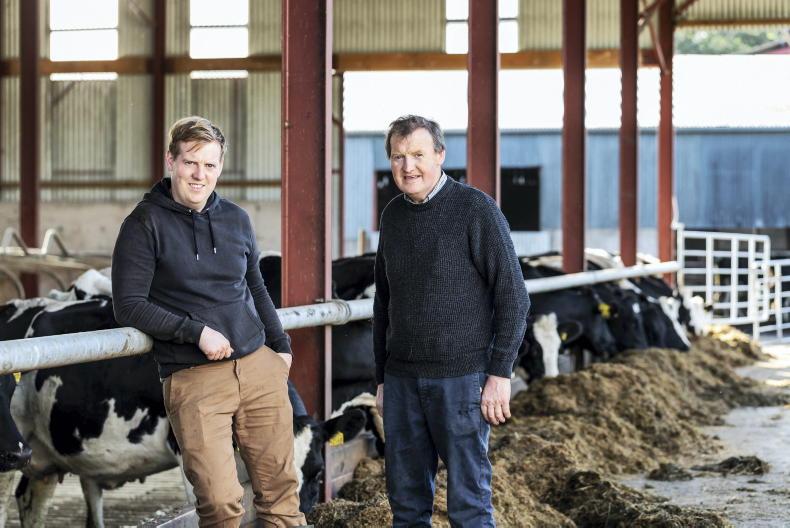
Edward Treanor from Clones, Co Monaghan. \ Philip Doyle
“Basically, he was fine,” explains Edward. “That evening, Daddy went into the house and he said to one of my sisters that he’d be in for dinner in half an hour as he was going to feed the cattle. Less than five minutes later, he rang me and just said: ‘Edward, I’m in trouble.’ And he dropped to the ground.
“A lot of my father’s stroke would have been down to stress and maybe overthinking,” says Edward. “There are many things farmers can’t control. And these things are a burden on us.
“Most people know what wage they’re going to get at the end of the month. I don’t. What other sector is like that? That’s obviously a natural stress.
“The ambulance came and he was taken away that night,” he continues. “The rest of the family could go off into the house, and maybe take sick leave the next day from work. But that night, I had to walk across the yard to make sure all the animals were okay and the next morning, the cows still needed to be milked.
“The whole thing had to go on as if absolutely nothing happened. And that is the harsh reality of farming. The business still has to operate. I still had to make sure that all cows were fed and milked and looked after.”
More could be done
Tom has now recovered, after spending five months in hospital. “It’s a good news story and we’re very lucky,” says Edward.
But he feels the Government could do much more to relieve farmers of the stress and anxiety that contributes to poor mental health.
“I do think the Government doesn’t help us enough. They are consistently moving the goal posts, no matter what the situation is. Are they out there for the wellbeing of farmers? It doesn’t feel like it on the ground.” he says.
National polling commissioned for ‘The Real Face of Men’s Health Report’ suggests that Edward is not out of step with the rest of the population.
Over three in every four people (76%) express concern about the state of men’s health, according to the report. This suggests that action on men’s health is an issue that unifies the Irish electorate, one which cuts across partisan lines.
Two in every three of those surveyed also believe that Government does not focus enough on the issues affecting men.
All of this connects back to the central question of what it is to be a man in 2025. With the rise of ‘masculinity influencers’ and the impact of dramas like Adolescence, the identity of men has sat at the heart of many cultural conversations in Ireland this year.
The report advocates for a healthcare system that understands and responds to the needs of men; one that, as Dr Richardson explains, is: “creative about how health services are delivered and invests in that relationship with men.
“I think that that can make a huge difference to getting men on board and getting them much more engaged in their health.”
Ireland was the first country in the world to publish a National Men’s Health Policy in 2009. This made us something of a pioneer in the policy field of men’s health.
More than 15 years later, new research by The Men’s Health Forum in Ireland in partnership with Movember does something of a men’s health stocktake. Published this week, ‘The Real Face of Men’s Health Report’ takes us behind the curtains on male health outcomes, revealing that men in Ireland are not only dying too young but are also spending a significant portion of their lives in poor health.
One of the most striking figures from the analysis is that two in five (40.2%) men die prematurely – before the age of 75 – and the vast majority of these deaths are preventable.
The five leading causes of premature death amongst males in 2022 were: cancers; diseases of the circulatory system; external causes of injury and poisoning (which includes accidents and suicide); diseases of the respiratory system; and diseases of the digestive system.
The research shows that men have less healthy lifestyles compared to their female counterparts and are more likely to engage in ‘risky’ behaviours – including alcohol and drug use.
Men are more likely than women to start drinking earlier and more heavily, and they also smoke at higher rates than women. In 2024, men reported poorer dietary habits than women and also showed significantly higher rates of overweight and obesity compared to women, with 63% of males affected versus 50% of females.
Mental health, as well as physical health, remains a critical concern among men. Themes of loneliness, addiction and suicide reverberate in the report, which states that, Irish men account for four in every five suicides (79%), and over nine in ten GPs (97%) encountered men presenting with suicide or suicidal ideation in the past year.
Expert view
Report co-author, Dr Noel Richardson, who is men’s health policy advisor with the HSE and director of the National Centre for Men’s Health at South East Technological University in Ireland, says there is a huge need for men to become more engaged in their health and to access services.
Dr Noel Richardson of the National Centre for Men's Health at South East Technological University is co-author of the report.
Having grown up on a farm in Ahane, Co Limerick, Dr Richardson’s interest in improving male health outcomes, in part, stems from the attitudes and behaviours he witnessed at a young age.
“There was a deafening silence around men’s health in those days. Farmers just threw themselves into their work. They were stoic. They were strong. The farm and work was everything. Their health and self-care took very much a back seat. And nobody questioned this.
“I was curious about the lack of questioning around men’s premature mortality,” he explains. “My dad died at 71, my uncle died at 53. Nobody really questioned why that was going on.
“The sense of being found as ‘weak’ or not being able to ‘handle’ your emotions” is something that Dr Richardson says is still prevalent today among the farming community; and stigma around seeking help is understood as the biggest barrier to men accessing support for their mental and physical health. The report succinctly describes this as “silent barriers to care”.
“We need to get men talking about their mental health, to normalise conversations about mental health and not to being afraid to ask for help so that if someone is feeling down or upset, they see that as a perfectly normal and legitimate way of being a man.”
Engaging in services
Despite the risks that many men face with regards to their health, they are less aware and less likely to avail of preventative health services.
Screening ratings remain particularly low among men; according to the report, only 24% men took part in BowelScreen (a screening programme for colorectal cancer) in 2022 and 2023. This compares with 30% of women. Promoting earlier detection and screening could help improve male health outcomes, especially when many premature deaths stem from conditions that are preventable, had there been early intervention.
Monaghan farmer Edward Treanor is largely positive about the role of farming organisations like the IFA, which are bringing men’s health into the fold. He says that men’s health is “slowly becoming more of a topic” in the farming world. Edward is milking 200 cows at the family dairy farm in Clones. He is the third generation on the farm, taking over the reins from his father, Tom.
“I was in the local mart recently in Clones,” Edward recalls, “where there was a queue of younger and older people getting their blood pressure and cholesterol checked.
“We were chatting about it, and there were a few joking, saying ‘I’m heading in for the NCT’. But it does give farmers that wee bit of incentive or push towards doing it.
“Sometimes [life], it is very busy, and you just put it on the ‘to do’ list to ring the doctor but one day leads onto the next and it just doesn’t happen. And even when you do go to the doctors, you’re nearly sitting in the waiting room for a couple of hours, and sometimes it can be hard to remove yourself from the farm for a long time period.”
This year has taught Edward and the rest of the Treanor family a lot about the importance of health, with his father Tom suffering a stroke in February.
Edward Treanor from Clones, Co Monaghan. \ Philip Doyle
“Basically, he was fine,” explains Edward. “That evening, Daddy went into the house and he said to one of my sisters that he’d be in for dinner in half an hour as he was going to feed the cattle. Less than five minutes later, he rang me and just said: ‘Edward, I’m in trouble.’ And he dropped to the ground.
“A lot of my father’s stroke would have been down to stress and maybe overthinking,” says Edward. “There are many things farmers can’t control. And these things are a burden on us.
“Most people know what wage they’re going to get at the end of the month. I don’t. What other sector is like that? That’s obviously a natural stress.
“The ambulance came and he was taken away that night,” he continues. “The rest of the family could go off into the house, and maybe take sick leave the next day from work. But that night, I had to walk across the yard to make sure all the animals were okay and the next morning, the cows still needed to be milked.
“The whole thing had to go on as if absolutely nothing happened. And that is the harsh reality of farming. The business still has to operate. I still had to make sure that all cows were fed and milked and looked after.”
More could be done
Tom has now recovered, after spending five months in hospital. “It’s a good news story and we’re very lucky,” says Edward.
But he feels the Government could do much more to relieve farmers of the stress and anxiety that contributes to poor mental health.
“I do think the Government doesn’t help us enough. They are consistently moving the goal posts, no matter what the situation is. Are they out there for the wellbeing of farmers? It doesn’t feel like it on the ground.” he says.
National polling commissioned for ‘The Real Face of Men’s Health Report’ suggests that Edward is not out of step with the rest of the population.
Over three in every four people (76%) express concern about the state of men’s health, according to the report. This suggests that action on men’s health is an issue that unifies the Irish electorate, one which cuts across partisan lines.
Two in every three of those surveyed also believe that Government does not focus enough on the issues affecting men.
All of this connects back to the central question of what it is to be a man in 2025. With the rise of ‘masculinity influencers’ and the impact of dramas like Adolescence, the identity of men has sat at the heart of many cultural conversations in Ireland this year.
The report advocates for a healthcare system that understands and responds to the needs of men; one that, as Dr Richardson explains, is: “creative about how health services are delivered and invests in that relationship with men.
“I think that that can make a huge difference to getting men on board and getting them much more engaged in their health.”







SHARING OPTIONS