During January, Animal Health Ireland in partnership with Teagasc and supported by the Dairy Processors and Volac, ran the CalfCare Roadshow around the country where the following key messages were promoted.
Feeding the young calf
During the first weeks of life, the calf is entirely dependent on milk as a source of nutrition as young calves are pseudo-monogastric animals, meaning that they have little to no rumen development or function in early life.
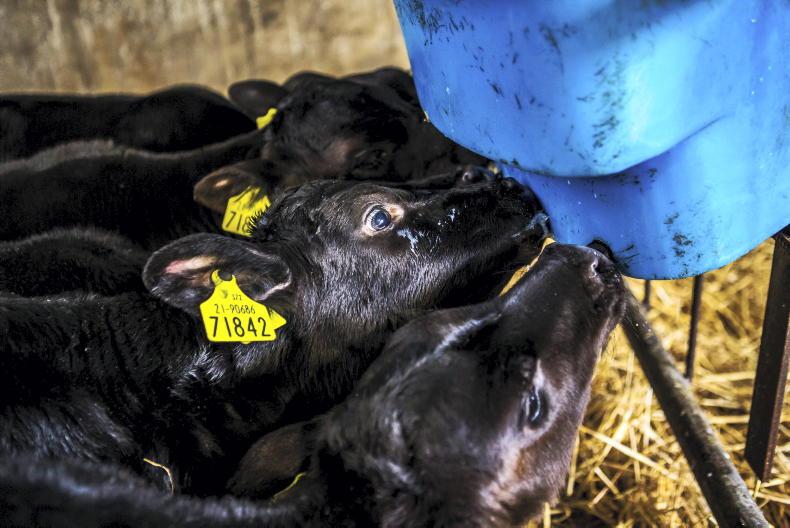
Traditional milk feeding systems for dairy calves were based on daily feeding rates of 10% of body weight (~4l/day) but were shown to underfeed the calf. It is now recommended to feed calves a minimum of 15% of their birth weight (6 litres/day for a 40 kg calf – 3l twice day).
If moving calves to once-a-day feeding it should not be done before absolute minimum of four weeks of age. Measuring growth rates is a good indicator of performance and the target average daily gain for calves is 0.7-0.8kg.
Proper rumen development
Appropriate pre-weaning nutritional management facilitates adequate rumen development, which in turn enables a calf transition successfully to a non-milk diet at weaning. Pre-weaning nutrition affects calves’ growth rates, health and ability to deal with stress and adverse weather conditions. A careful balance between achieving adequate growth rates and promoting rumen development is necessary in order to get the calf weaned successfully.
When a calf is born, the rumen is very small and undeveloped. It does not contribute to digestion at all at this stage. The intake of calf starter concentrate is the single most important factor in rumen development. For this reason, it is important that calves have access to clean, palatable starter concentrates as soon as possible, even though they will only eat small amounts in the first three weeks of life. Providing a small amount fresh every day reduces wastage, encourages calves to eat and allows you to monitor intakes.
Regardless of the milk feeding system, calves need ad-lib access to clean, fresh drinking water to facilitate digestion of the concentrate in the rumen. Milk and milk replacer bypass the rumen, so cannot be relied upon to facilitate digestion. Access to good-quality forage also helps rumen development but not at the expense of starter intake.
Space, ventilation and drainage
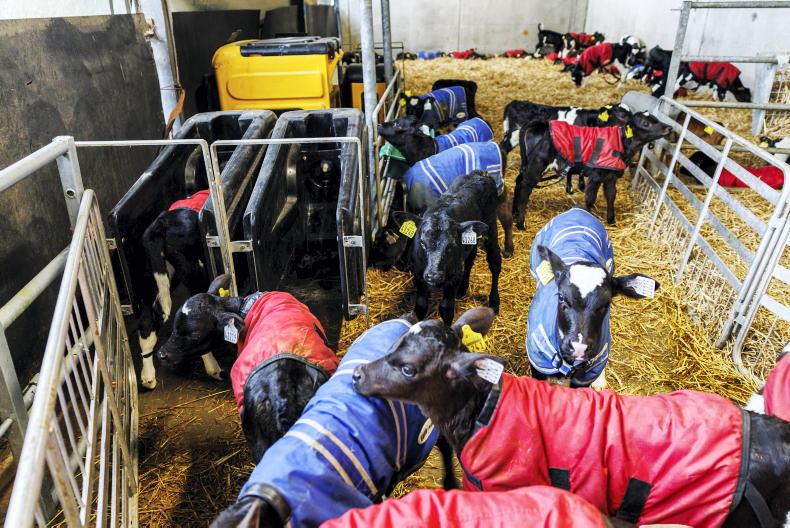
For every calf house there is a magic number – that is the number of calves that it can house without affecting their health and performance. It will depend on the floor area of the house, ventilation and drainage systems in the house. Better performance and less disease are associated when a 100kg calf has 2-2.5m2 floor space. If an excessive number of calves are kept in a house, the risk of spreading disease is increased. Adequate ventilation, but without draughts, is key but can prove challenging to achieve in very large calf sheds as young calves get cold.
Using Yorkshire boarding as side sheeting on sheds is preferable to space boarding or vented sheeting. Deep beds of straw are an effective way of protecting the young calf from the cold and there should be enough to allow them to nest when lying down. Moisture in the shed must be controlled for two reasons because it increases survival and spread of bugs and decreases the temperature in the calf house. Good drainage will help keep sheds as dry as possible.
Identify and treat sick calves early
The approach to treatment and control of scour is largely the same regardless of the cause. When a calf has scour it is important to remove them from the group, if practical, to prevent spread of infection. Rehydration is the most important part of treating scour. The fluids that are lost due to the scour must be replaced to prevent the calf becoming dehydrated. At the first signs of scour, additional good-quality oral electrolytes mixed up in the correct volume of water should be given, separately from milk feeds, eg at lunch time and late in the evening.
Scouring calves should still receive normal amounts of milk, if they are willing to drink it as it will not worsen the scour and will help the calf from wasting away. Depending on the cause of scour there are some extra specific treatments that are necessary under veterinary advice.
Preventing pneumonia by managing animals correctly (good-quality colostrum, proper diet, appropriate housing) is preferable to treating outbreaks. Early diagnosis is crucial to maximise the chance of successful treatment.
Vaccination is a very helpful way to improve immunity to certain diseases and in the fight against antimicrobial resistance. Every farm should have its own vaccination programme, designed and adapted by your vet for your farm.
Animal health tips for February
Measure colostrum quality using a Brix refractometer to ensure calves get the best start to life as they are born without any immune system and rely on the antibodies in colostrum for protection. Hygienically collect and store colostrum as dirt reduces absorption of the antibodies.Don’t forget to book your first milk recording to determine how your dry period went in terms of cases cured and new infections that may have been picked up. This can be determined by doing a milk recording within 60 days of calving.Clipping cows’ tails as they calve helps keep their udders clean and reduces the risk of mastitis. Clipping a small number each day makes it less daunting.Review your maiden heifers to make sure their body weight is on target for breeding and if vaccinating, most vaccines will need two doses, three to four weeks apart, meaning the first dose needs to be given before the end of February to have her fully protected before the breeding season.
During January, Animal Health Ireland in partnership with Teagasc and supported by the Dairy Processors and Volac, ran the CalfCare Roadshow around the country where the following key messages were promoted.
Feeding the young calf
During the first weeks of life, the calf is entirely dependent on milk as a source of nutrition as young calves are pseudo-monogastric animals, meaning that they have little to no rumen development or function in early life.
Traditional milk feeding systems for dairy calves were based on daily feeding rates of 10% of body weight (~4l/day) but were shown to underfeed the calf. It is now recommended to feed calves a minimum of 15% of their birth weight (6 litres/day for a 40 kg calf – 3l twice day).
If moving calves to once-a-day feeding it should not be done before absolute minimum of four weeks of age. Measuring growth rates is a good indicator of performance and the target average daily gain for calves is 0.7-0.8kg.
Proper rumen development
Appropriate pre-weaning nutritional management facilitates adequate rumen development, which in turn enables a calf transition successfully to a non-milk diet at weaning. Pre-weaning nutrition affects calves’ growth rates, health and ability to deal with stress and adverse weather conditions. A careful balance between achieving adequate growth rates and promoting rumen development is necessary in order to get the calf weaned successfully.
When a calf is born, the rumen is very small and undeveloped. It does not contribute to digestion at all at this stage. The intake of calf starter concentrate is the single most important factor in rumen development. For this reason, it is important that calves have access to clean, palatable starter concentrates as soon as possible, even though they will only eat small amounts in the first three weeks of life. Providing a small amount fresh every day reduces wastage, encourages calves to eat and allows you to monitor intakes.
Regardless of the milk feeding system, calves need ad-lib access to clean, fresh drinking water to facilitate digestion of the concentrate in the rumen. Milk and milk replacer bypass the rumen, so cannot be relied upon to facilitate digestion. Access to good-quality forage also helps rumen development but not at the expense of starter intake.
Space, ventilation and drainage
For every calf house there is a magic number – that is the number of calves that it can house without affecting their health and performance. It will depend on the floor area of the house, ventilation and drainage systems in the house. Better performance and less disease are associated when a 100kg calf has 2-2.5m2 floor space. If an excessive number of calves are kept in a house, the risk of spreading disease is increased. Adequate ventilation, but without draughts, is key but can prove challenging to achieve in very large calf sheds as young calves get cold.
Using Yorkshire boarding as side sheeting on sheds is preferable to space boarding or vented sheeting. Deep beds of straw are an effective way of protecting the young calf from the cold and there should be enough to allow them to nest when lying down. Moisture in the shed must be controlled for two reasons because it increases survival and spread of bugs and decreases the temperature in the calf house. Good drainage will help keep sheds as dry as possible.
Identify and treat sick calves early
The approach to treatment and control of scour is largely the same regardless of the cause. When a calf has scour it is important to remove them from the group, if practical, to prevent spread of infection. Rehydration is the most important part of treating scour. The fluids that are lost due to the scour must be replaced to prevent the calf becoming dehydrated. At the first signs of scour, additional good-quality oral electrolytes mixed up in the correct volume of water should be given, separately from milk feeds, eg at lunch time and late in the evening.
Scouring calves should still receive normal amounts of milk, if they are willing to drink it as it will not worsen the scour and will help the calf from wasting away. Depending on the cause of scour there are some extra specific treatments that are necessary under veterinary advice.
Preventing pneumonia by managing animals correctly (good-quality colostrum, proper diet, appropriate housing) is preferable to treating outbreaks. Early diagnosis is crucial to maximise the chance of successful treatment.
Vaccination is a very helpful way to improve immunity to certain diseases and in the fight against antimicrobial resistance. Every farm should have its own vaccination programme, designed and adapted by your vet for your farm.
Animal health tips for February
Measure colostrum quality using a Brix refractometer to ensure calves get the best start to life as they are born without any immune system and rely on the antibodies in colostrum for protection. Hygienically collect and store colostrum as dirt reduces absorption of the antibodies.Don’t forget to book your first milk recording to determine how your dry period went in terms of cases cured and new infections that may have been picked up. This can be determined by doing a milk recording within 60 days of calving.Clipping cows’ tails as they calve helps keep their udders clean and reduces the risk of mastitis. Clipping a small number each day makes it less daunting.Review your maiden heifers to make sure their body weight is on target for breeding and if vaccinating, most vaccines will need two doses, three to four weeks apart, meaning the first dose needs to be given before the end of February to have her fully protected before the breeding season.
SHARING OPTIONS