


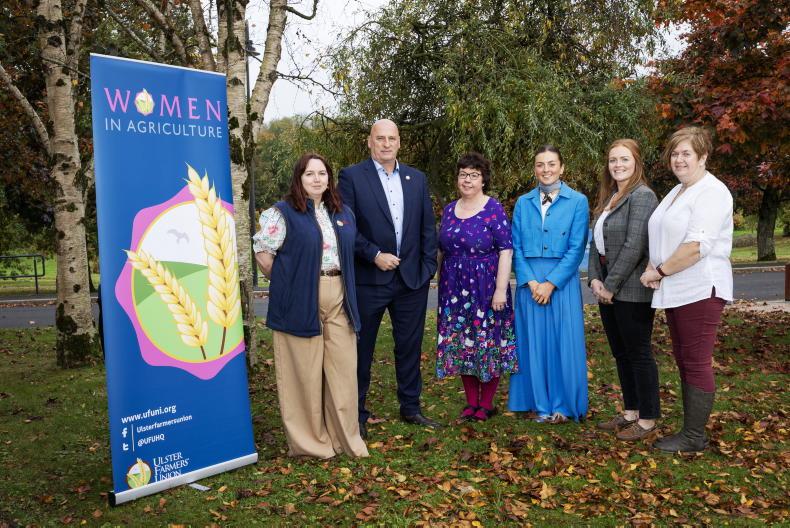
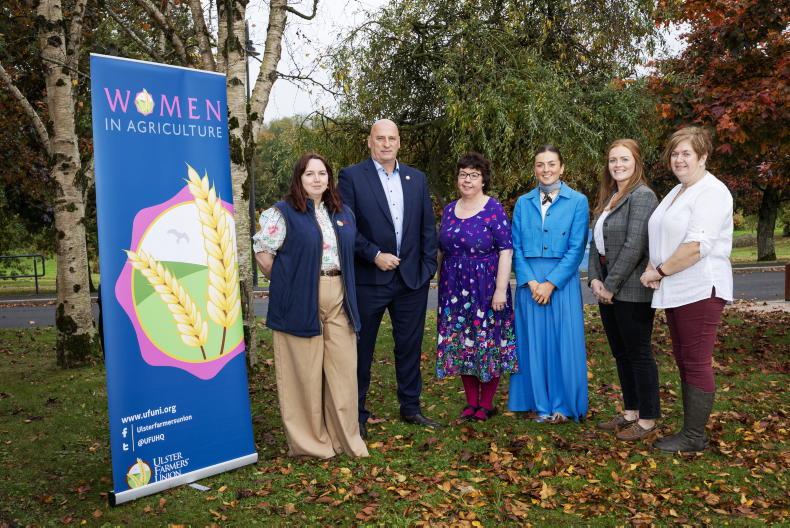
Investing in labour-saving technology and succession planning was very much on the mind of delegates attending the Ulster Farmers’ Union (UFU) Women in Agriculture (WIA) conference held last Thursday at CAFRE’s Loughry Campus, Cookstown.
One of the headline speakers, Nicola Wordie from Aberdeenshire, Scotland, shared her succession journey into the family farm, the role of technology in improving flock performance, and her pride in being a female farmer.
Being dyslexic, traditional academic learning was a challenge for Nicola, who found practical, hands-on learning more effective.
Raising two pigs for slaughter at the age of 11 taught her the emotional weight and pride of producing food for her family — an experience her mother said would either make or break the farmer in her.
Technology
Managing a diverse 1,400ac farm alongside her dad requires a lot of hard work and dedication, especially during peak seasons like lambing.
The transition to indoor lambing and a flock with a high scanning rate of 218% resulted in a significant number of triplets, requiring meticulous lamb management.
To meet this challenge, the farm purchased an automatic milk feeding machine several years ago.
Nicola said that losing her mother 18 months ago was a significant personal and professional challenge as she played a vital role in administrative tasks. Nicola has since taken on these responsibilities and transitioned to digital software (Herdwatch), which allows for real-time record-keeping.
She has also invested for the future by purchasing a fully automated sheep handling system, which allows for complete management of the flock by Nicola alongside her three dogs.
“It’s taken a lot of physical stress and pressure off when handling the sheep. We can hit targets much better, check how the lambs are growing and also deal with any health issues much quicker,” she explained.
Leadership, innovation and resilience at Millbank
Emily McGowan runs Millbank farm outside Killinchy in Co Down alongside her dad Adrian.
The business now includes a farm shop in Saintfield, flower picking and recently expanded into on-farm events.
“We decided to go to the people instead of making them come to our farm,” Emily said. The retail business has expanded by taking over a neighbouring premises, enabling the installation of a walk-in fridge and increasing stock capacity, sourcing from both their own farm and other local producers.
While studying at Harper Adams, Emily discovered the importance of systems, staffing, and stock management through a work placement, which helped shape the setup of the farm shop, which opened in June 2019.
By combining her dad’s strengths in growing produce with her own in marketing and business, they’ve maximised their individual skills. The shop now employs 16 staff (full-time and part-time) and has grown into a seven-figure business.
“The shop has helped the farm, but the farm has also helped the shop. They both complement each other very well and both wouldn’t be where they are now without each other.” Emily said
Resilience
Emily believes that opportunities keep coming if you say yes, regardless of your field.
She advocates for multiple income streams to build resilience and notes being female within the industry hasn’t negatively impacted her progress.
“Local produce is key to NI’s economy, but it’s always a challenge to get people through your door because we’re perceived as a more expensive option,” she said.


SHARING OPTIONS