Teagasc are hosting a series of four winter milk events on farms across the country this week and day two of the programme brought farmers to Ballyconnell in county Cavan, to hear how Gerard Donohoe and Conor McCaffrey are maximising margins on their farm.
Gerard and his nephew Conor are farming in partnership since 2023 on the farm and they are currently milking 250 cows on a 76.3ha milking platform, with a total farm area of 151ha.
The herd is split calving with two-thirds of the animal’s spring-calving and the other one-third autumn-calving. They have an EBI of €123 and are on target to produce an average of 630kg of milk solids/cow for 2025 with two tonnes of concentrates fed per animal.
Since joining the partnership in 2023 Conor has been striving to improve grass production and utilisation on the farm.
“I’m still only learning the detail of grass measuring and management but the discussion groups been a big help in that. I think we’re definitely starting to reap the benefits of it now on the farm” Conor said.
In 2025 the farm utilised 10 tonnes DM/ha, with the future target for the farm being over 12 tonnes DM/ha, something Conor is confident they’ll be able to achieve.
Fertility
The autumn-calvers start on the 29 October and calving runs for less than eight weeks with all cows finished up by Christmas. This tight calving pattern is a big focus for the pair as they look to continue reducing their calving interval.
The current interval in the herd is 378 days, a good figure by split-herd standards however, Conor and Gerard are determined to get closer to 365 days.
“A tighter calving pattern and shorter calving interval in split herds maximises the amount of time cows spend at grass. Grass is our cheapest feed and the best way of driving peak milk production.
To achieve this, the fertility of the herd needs to be a priority. Fertile animals will last longer in the herd which in turn means more mature lactations per animal and higher annual production” said Michael Monahan, dairy adviser with Lakeland.
Conor and Gerard have been using sexed semen for a number of years now to breed replacements from their best animals.
They select their bull teams together and the cows that will receive sexed semen straws are identified weeks in advance. The bulls are chosen based on a high milk and fertility sub-index. Milk PTA is not a big factor in the selection.
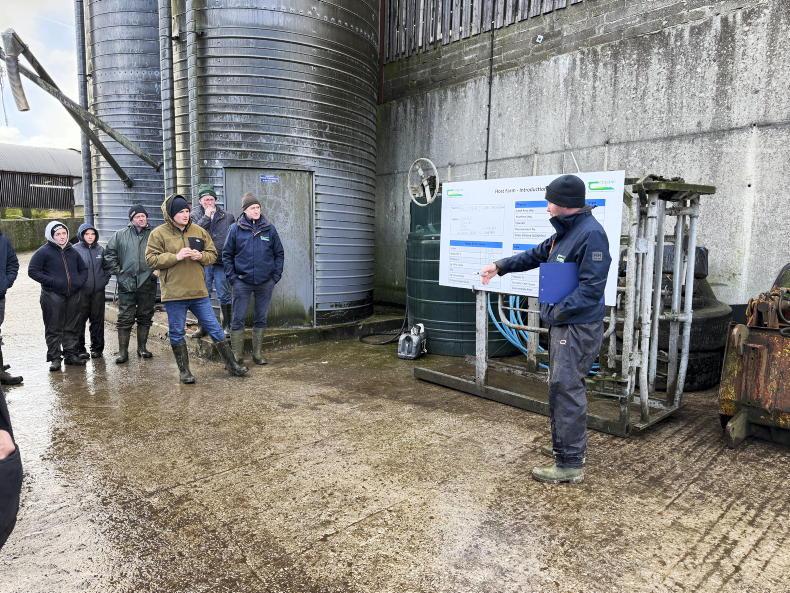
James O' Donoghue, Teagasc (right) and Conor McCaffrey (left) gives the farm background to the crowd at the event.
When it comes to selecting animals for serving with sexed semen, heifers and young cows with high EBI’s are the priority. Milk recording data also has a role.
There are no longer any slip cows in the system. Previously a good cow who didn’t go in calf would be allowed to slip from the autumn herd into the spring herd to give her a second chance at breeding but this has been cut out to remove infertile animals.
Silage
Making good quality silage is a non-negotiable for Gerard and Conor. Quality silage will boost production and help to achieve energy balance particularly in the winter milk cows, as they are building towards peak intake and production while being indoors.
Cutting date and nutrient application are two major factors in producing a quality feed according to Mike Dineen, nutrition researcher with Teagasc.
“Excellent quality silage is essential for performance in winter milk producing herds. It’s very difficult to outfeed poor silage with concentrates.
A silage test plays an important role in this, so the farmer knows where they stand. Ideally, we need a high DMD feed, 70 DMD is the minimum and an NDF (neutral detergent fibre) value below 45 if possible. The lower the NDF, the higher the cow’s intake will be, leading to higher production” Mike said.
First-cut silage, made in early May with sufficient levels of nutrient applied is an excellent feed and will allow farmers to produce more milk from forage was the message.
Gerard and Conor aim to make their first cut around 14 May. The sward receives slurry in February and nitrogen is applied in March, when the soil temperature is up.
When feeding cows in the winter, they ensure that there is always feed at the feed face and that it’s within reaching distance at all times.
They would like to have more feed space in the shed, so the plan is to invest in a new cubicle shed in 2026.
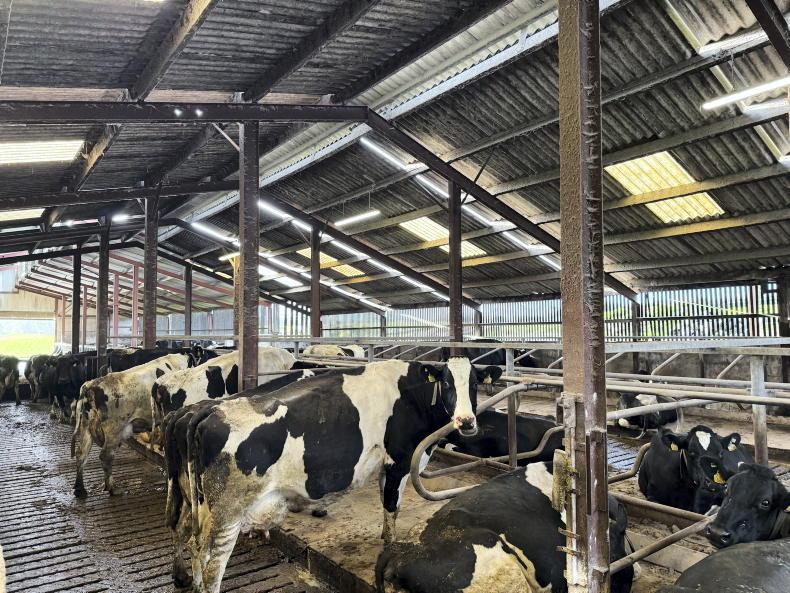
The cows are on track to produce 630kg of milk solids/cow from two tonnes of concentrate fed per animal in 2025.
Profit Monitor
The final stop of the walk was discussing the importance of making informed financial decisions. Completing a profit monitor, forms the starting point for this according to Owen McPartland of Teagasc.
With milk price on the decline Owen spoke on the importance of getting the 2025 profit monitor completed and then doing a cashflow budget for 2026.
Doing so will highlight where the biggest costs are being incurred on the farm and it will allow the farmer to benchmark off others, either within their discussion group or nationally.
“Of the winter-milk farms that completed profit monitors in 2024, the difference in net-margin between the Hi-Margin farms and Lo-Margin farms was €1541/cow. On a 100-cow farm that’s €154,000 of a difference.
Hi-Margin farms are producing 75kg more milk solids, with 300kg less concentrate fed.
These farms are stocked lower but utilising more forage per hectare with lower variable and fixed costs. Forage utilised is the key driver of profitability above all else” Owen said.
Conor completed his first profit monitor last year and said he found it very beneficial for monitoring costs and comparing with the local discussion group. He believes it’s something he’ll be doing every year going forward.
Teagasc are hosting a series of four winter milk events on farms across the country this week and day two of the programme brought farmers to Ballyconnell in county Cavan, to hear how Gerard Donohoe and Conor McCaffrey are maximising margins on their farm.
Gerard and his nephew Conor are farming in partnership since 2023 on the farm and they are currently milking 250 cows on a 76.3ha milking platform, with a total farm area of 151ha.
The herd is split calving with two-thirds of the animal’s spring-calving and the other one-third autumn-calving. They have an EBI of €123 and are on target to produce an average of 630kg of milk solids/cow for 2025 with two tonnes of concentrates fed per animal.
Since joining the partnership in 2023 Conor has been striving to improve grass production and utilisation on the farm.
“I’m still only learning the detail of grass measuring and management but the discussion groups been a big help in that. I think we’re definitely starting to reap the benefits of it now on the farm” Conor said.
In 2025 the farm utilised 10 tonnes DM/ha, with the future target for the farm being over 12 tonnes DM/ha, something Conor is confident they’ll be able to achieve.
Fertility
The autumn-calvers start on the 29 October and calving runs for less than eight weeks with all cows finished up by Christmas. This tight calving pattern is a big focus for the pair as they look to continue reducing their calving interval.
The current interval in the herd is 378 days, a good figure by split-herd standards however, Conor and Gerard are determined to get closer to 365 days.
“A tighter calving pattern and shorter calving interval in split herds maximises the amount of time cows spend at grass. Grass is our cheapest feed and the best way of driving peak milk production.
To achieve this, the fertility of the herd needs to be a priority. Fertile animals will last longer in the herd which in turn means more mature lactations per animal and higher annual production” said Michael Monahan, dairy adviser with Lakeland.
Conor and Gerard have been using sexed semen for a number of years now to breed replacements from their best animals.
They select their bull teams together and the cows that will receive sexed semen straws are identified weeks in advance. The bulls are chosen based on a high milk and fertility sub-index. Milk PTA is not a big factor in the selection.
James O' Donoghue, Teagasc (right) and Conor McCaffrey (left) gives the farm background to the crowd at the event.
When it comes to selecting animals for serving with sexed semen, heifers and young cows with high EBI’s are the priority. Milk recording data also has a role.
There are no longer any slip cows in the system. Previously a good cow who didn’t go in calf would be allowed to slip from the autumn herd into the spring herd to give her a second chance at breeding but this has been cut out to remove infertile animals.
Silage
Making good quality silage is a non-negotiable for Gerard and Conor. Quality silage will boost production and help to achieve energy balance particularly in the winter milk cows, as they are building towards peak intake and production while being indoors.
Cutting date and nutrient application are two major factors in producing a quality feed according to Mike Dineen, nutrition researcher with Teagasc.
“Excellent quality silage is essential for performance in winter milk producing herds. It’s very difficult to outfeed poor silage with concentrates.
A silage test plays an important role in this, so the farmer knows where they stand. Ideally, we need a high DMD feed, 70 DMD is the minimum and an NDF (neutral detergent fibre) value below 45 if possible. The lower the NDF, the higher the cow’s intake will be, leading to higher production” Mike said.
First-cut silage, made in early May with sufficient levels of nutrient applied is an excellent feed and will allow farmers to produce more milk from forage was the message.
Gerard and Conor aim to make their first cut around 14 May. The sward receives slurry in February and nitrogen is applied in March, when the soil temperature is up.
When feeding cows in the winter, they ensure that there is always feed at the feed face and that it’s within reaching distance at all times.
They would like to have more feed space in the shed, so the plan is to invest in a new cubicle shed in 2026.
The cows are on track to produce 630kg of milk solids/cow from two tonnes of concentrate fed per animal in 2025.
Profit Monitor
The final stop of the walk was discussing the importance of making informed financial decisions. Completing a profit monitor, forms the starting point for this according to Owen McPartland of Teagasc.
With milk price on the decline Owen spoke on the importance of getting the 2025 profit monitor completed and then doing a cashflow budget for 2026.
Doing so will highlight where the biggest costs are being incurred on the farm and it will allow the farmer to benchmark off others, either within their discussion group or nationally.
“Of the winter-milk farms that completed profit monitors in 2024, the difference in net-margin between the Hi-Margin farms and Lo-Margin farms was €1541/cow. On a 100-cow farm that’s €154,000 of a difference.
Hi-Margin farms are producing 75kg more milk solids, with 300kg less concentrate fed.
These farms are stocked lower but utilising more forage per hectare with lower variable and fixed costs. Forage utilised is the key driver of profitability above all else” Owen said.
Conor completed his first profit monitor last year and said he found it very beneficial for monitoring costs and comparing with the local discussion group. He believes it’s something he’ll be doing every year going forward.








SHARING OPTIONS