



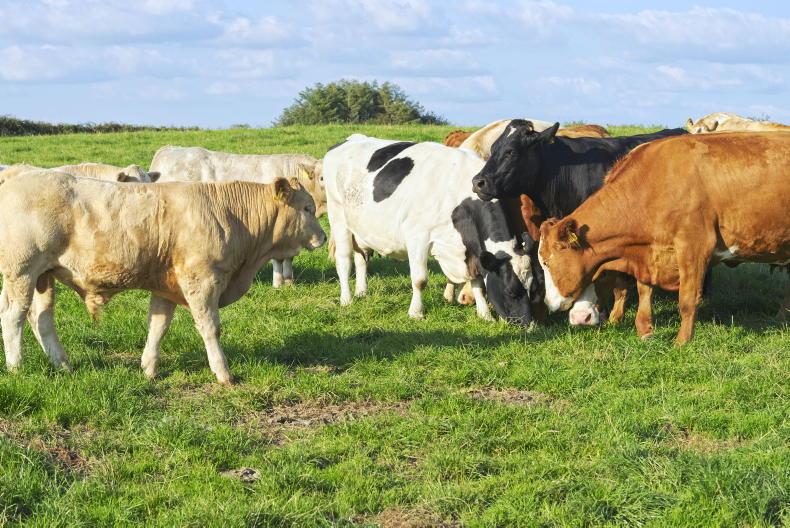
Livestock systems are too precious to society to fall victim to simplistic solutions to environmental, climate and resource issues, a large group of academics have stated in a peer-reviewed journal from Oxford University Press.
The April edition of Animal Frontiers asserts the critical role of meat in society. It states that meat can play a crucial role in a healthy balanced diet, providing protein and essential nutrients.
The role livestock can play in managing ecosystems, maintaining the circular flow of materials in soils, water and the atmosphere, is also highlighted. With global hunger rates rising, human rights to food should be prioritised over animal rights, it said.
Assumptions that cell-based meat will be more cost-effective and have less-environmental impact than today’s livestock systems are described as “currently far from realistic”.
It is stated that “reducing meat consumption may backfire as it could further undermine nutrient security, especially in populations with elevated needs”.
Elsewhere there is warning that the “unintended economic, social, and environmental consequences when abandoning livestock could prove catastrophic”.
The special edition of Animal Frontier references the Dublin Declaration on the societal role of livestock, which has been signed by over 1,000 academics worldwide since the international summit hosted by Teagasc in Dublin last year.
Reaction
“Livestock farming supports the livelihoods of about one in six people on the planet,” said Teagasc assistant director of research, Declan Troy. “It supplies food, nutrition, income and more, to hundreds of millions of people.”
Dr. Adegbola Adesogan, director of the University of Florida’s Global Food Systems Institute, said “dietary recommendations to eliminate animal-source foods from diets ignore their importance, particularly the great need for these foods in diets of the undernourished in the Global South.”






SHARING OPTIONS