



UK shoppers continue to spend more money buying beef, but have less in their basket as a result of rising retail prices.
In the 12 weeks to 19 April, Worldpanel by Numerator UK data, published by the Agriculture and Horticulture Development Board (AHDB), shows that total beef retail spend increased by 7.6%, driven by average price rises of 14.7%, resulting in a 6.2% decline in the amount of beef sold.
Looking at the data for individual cuts of beef, it is clear that the price of some parts of the carcase have increased by more than others during this period compared with a year ago.
While the average price per kilo increased by 14.7% to £10.62, the range of price increases varied from roast beef cuts being 26% higher at £13.06/kg to stewing beef increasing by just 6.3% to £11.55/kg compared with the same 12-week period last year.
The price of minced beef, which is the biggest seller in UK supermarkets, was 24.8% higher at an average retail price of £9.51/kg.
Volume sales
Even though shoppers spent more money buying all types of beef, the higher retail prices meant that they didn’t increase their spend by enough to get the same amount of beef.
Volume sales of all types of beef fell, but, again, it was by varying amounts. For example, the amount of diced beef bought by shoppers was down 20%, while the volume of mince purchased declined by 6.2%.
Mince is the best-selling type of beef in UK retail by a considerable distance.
In the 12 weeks to 19 April, shoppers bought 32,600 tonnes (t) of mince and a further 11,000t of burgers and grills.
Steak meat is the most expensive and 9,300t of it was bought during the period, a 10.9% drop compared with the same period in 2025, while sales of roasts were down 9.9% to 8,300t.
This trend has continued over several periods of data reported, even though farmgate steer prices in Britain are 74p/kg (86c/kg) lower than this time last year.
In Britain, cattle prices peaked in May 2025 and have been on a downward trend since, even though retail beef prices have continued to increase.
The Irish R3 steer price is 87c/kg lower at the end of April this year compared with the same time last year.
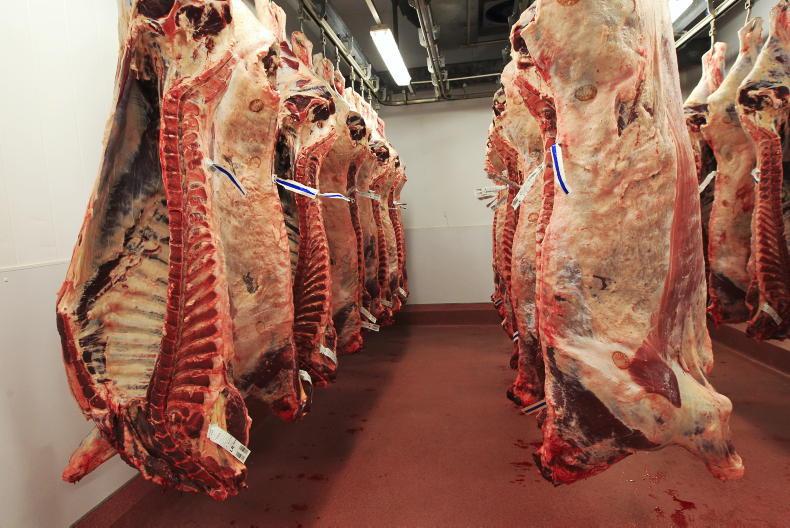
While the price of cattle is just one of the contributing factors to the retail price of beef, farmers might have been expecting to see some downward adjustment given that cattle are a substantial part of the cost and they have fallen significantly in value.
It should also be noted that there is a lag of several weeks before changes in farmgate prices filter through the supply chain.
This means that in the first five months of last year, when farmgate prices were increasing rapidly, there was little movement upwards in retail prices.
It is therefore inevitable that retail prices continue to increase long after farmgate prices have turned downwards, but even with rising processing and distribution costs, consumers will hope to get at least some benefit from the lower prices farmers have had to accept for beef.
However, this isn’t guaranteed because retailers, who are believed to have lost money on beef sales last year, may decide to prioritise restoration of their margin over encouraging volume sales.



SHARING OPTIONS