


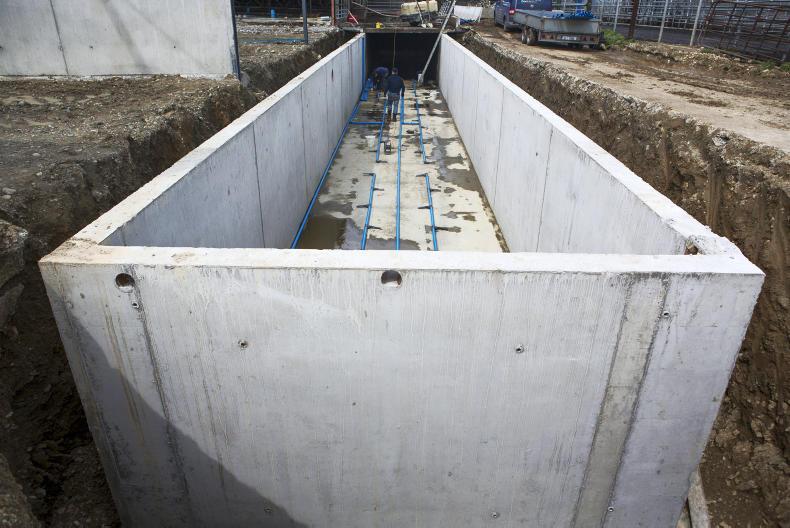
With the recent woes of farmers desperate to get slurry out on land, now is a good time to assess your farm’s storage capacity, ahead of the upcoming closing date of 23 February for trance nine of TAMS II.
Farmers are required to have adequate storage for all cattle, depending on what area of the country they are located in. Zone A requires 16 weeks of storage, Zone B 18 weeks, while for Zone C there are different requirements.
Farms in Donegal and Leitrim must have storage for 20 weeks, while both Cavan and Monaghan are required to have storage for 22 weeks. For sheep manure, the storage requirement is only six weeks.
These are the minimum requirements and do not mean that additional storage space should not be available.
Eighteen weeks of storage equates to approximately four and a half months.
However, for many farms in Zone B, such as those in Mayo, Galway, Limerick, Clare and Kerry, land is often not accessible for much longer than four and a half months of the year.
An additional requirement under nitrates regulations is for farmers to have excess capacity to allow for poor weather conditions.
The stark reality is that this is becoming less common on farms, while at the same time we are getting more severe weather events.
Dairy washings
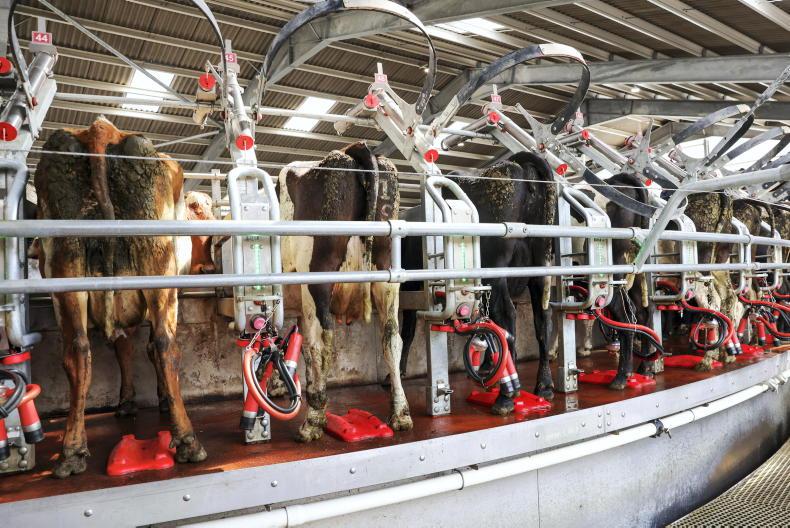
Farmers building new facilities must ensure that dairy washings are stored separately to slurry to help reduce the slurry burden in January.
Dairy washings, excreta from the milking parlour and wash-down from the collecting area are all permitted to be spread to the land during the closed period.
However, it can only be applied when ground and weather conditions are suitable.
That said, farmers should also try to prevent the quantity of dirty water produced on the farm.
Farmers are encouraged to look around their farmyard and reduce the amount of time that cattle spend on uncovered concrete. This will reduce soiled water produced.
William Conlon






SHARING OPTIONS