Energy output from renewables is variable. For example, solar output peaks during the afternoon when sunlight is strongest. However, energy consumption is also variable, with demand typically peaking in the evening time.
A long-standing constraint of the renewable industry was its inability to match generation with demand. In the absence of any reliable method of storing excess electricity, larger renewable energy systems generally dealt with surplus production by exporting that energy to the national grid.
However, in smaller, commercial and residential situations, renewable systems are generally sized so that this scenario will not happen. This is done by installing a renewable system that, when operating at full output, provides as much of the base load as possible.
While effective, this limits the scale of the renewable energy system which can be installed, and could rule out opportunities to go completely off-grid.
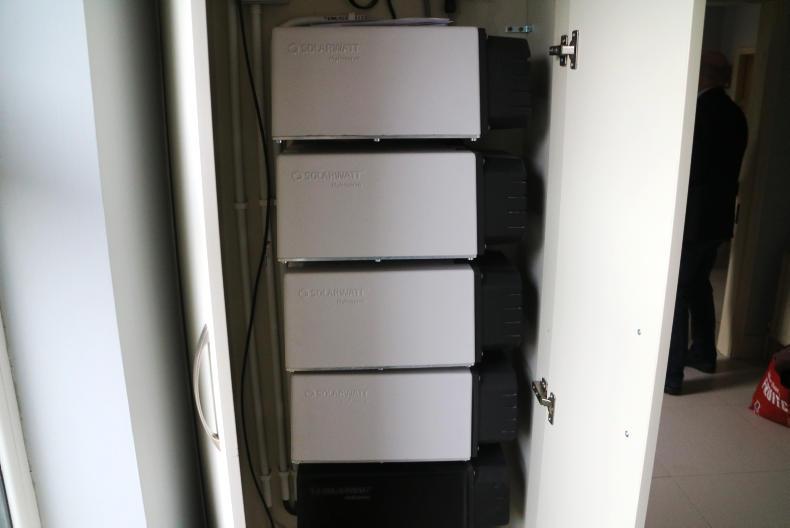
Recently, however, more and more viable systems are now available for homes, farms and businesses which can store this excess energy using battery technology for it to be used at a later time.
An evolving space
Battery storage technology has come on in leaps and bounds in the last four years, and not just on a small scale. In the UK for example, large-scale battery storage capacity exceeds 450MW, with 250MW completed in 2018 alone.
According to the European Storage Association (EASE), the European battery storage market is estimated to reach 3.5GW of capacity by the end of 2019. This implies a growth of more than two-folds within a span of two years.
Storing electricity on Irish farms
Existing renewable technology, such as solar and wind, has become an attractive option on Irish farms but in the absence of an adequate means of dealing with surplus production, farms are often limited to installing a system below the farms base load, ie the minimum amount of power required to run the operation.
This can prove to be an issue where a farm’s energy consumption spikes during certain times of the day.
We spoke with Pat Smith, chair of the Micro Renewable Energy Federation, who explains that batteries can provide a solution when dealing with variabilities in energy demand, when using a renewable energy system.
However, he said that every effort should be made to use up the excess energy first, and use the battery as a backup.
For example, an average dairy farm has a base load of electricity usage of between 2kwh and 6kwh every hour. However, there are significant peaks in the morning and evening at milking times. Say if a dairy farm has a 5kwh solar panel system installed, the energy required during peak time demand will come from the grid. This is because the farm’s energy requirement surpasses the capabilities of the solar panels installed.
Where renewable systems produce more than base load demand, the surplus energy is often diverted to water heating systems, as hot water is generally used in many farming systems, as well as residential properties.
However, when the surplus electricity generation exceeds the energy required to heat water, or when hot water isn’t required, battery storage offers a real solution to this problem.
By installing batteries capable of storing this surplus electricity, batteries can then release this surplus energy during peak time demands.
Advantages
In addition to storing excess electricity generated from renewable energy systems, batteries can also operate AC or DC.
This means they can be charged DC by surplus renewable energy during the day and once discharged can be recharged on cheaper night-rate electricity for discharge in the morning when electricity costs more.
Power outages due to storms or heavy snow have been a particular issue on some farms this year. Batteries can also act as a power backup in case of outage. This course is only possible if the battery is charged when the outage occurs.
What to look out for in a battery
There are a number of key points to look out for when considering investing in battery technology. The capacity of a battery is typically described by the amount of energy it can store in kilowatt hours (kWh) and its maximum power output in kilowatts (kW). The discharge rate of the battery is the amount of power (in watts) that it can deliver.
Some batteries are incapable of discharging 100% of the stored energy, decreasing its efficiency and increasing the payback period of the technology.
The response time of the battery is also important when switching from grid to battery power.
All products should come with a warranty but be careful as some manufacturers base the warranty on cycles, ie how many times the battery charges and discharges. Once the designated amount of cycles are reached, the warranty expires.
Battery technology
Lithium-ion batteries are best known as a key component in mobile devices and, more recently, electric cars. Battery technology is moving at a fast pace and, as a result, costs are steadily decreasing.
Battery storage in Ireland can cost between €600 and €1,200 per kWh installed depending on technology chosen.
Costs
Costs are expected to decrease further however. Since 2010, there has been an approximate 80% decrease in lithium-ion battery prices per MWh, according to Bloomberg New Energy Finance.
While this trend is expect to continue, there have been concerns raised as to the continued supply of cobalt graphite lithium, 60% of which is mined in the Democratic Republic of Congo where conflict is ongoing.
Read more
Dry autumn hampers EU sugar beet harvest and grain emergence
Tillage update: rainfall may curb ploughing plans next week
Energy output from renewables is variable. For example, solar output peaks during the afternoon when sunlight is strongest. However, energy consumption is also variable, with demand typically peaking in the evening time.
A long-standing constraint of the renewable industry was its inability to match generation with demand. In the absence of any reliable method of storing excess electricity, larger renewable energy systems generally dealt with surplus production by exporting that energy to the national grid.
However, in smaller, commercial and residential situations, renewable systems are generally sized so that this scenario will not happen. This is done by installing a renewable system that, when operating at full output, provides as much of the base load as possible.
While effective, this limits the scale of the renewable energy system which can be installed, and could rule out opportunities to go completely off-grid.
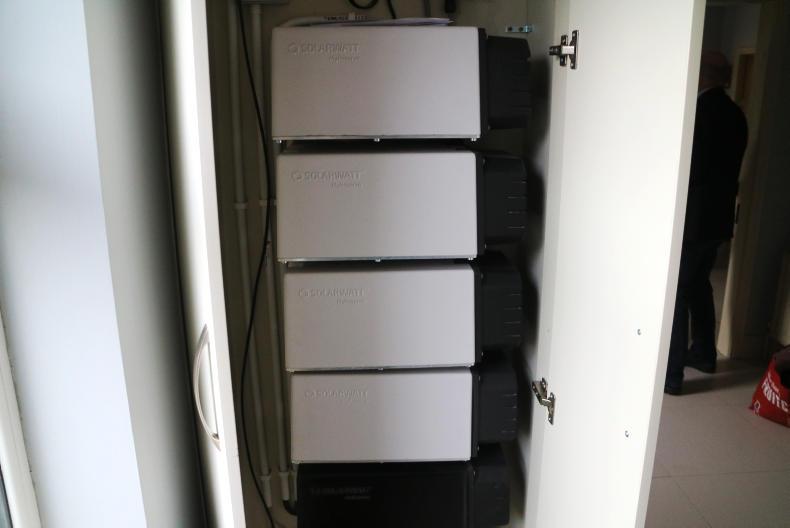
Recently, however, more and more viable systems are now available for homes, farms and businesses which can store this excess energy using battery technology for it to be used at a later time.
An evolving space
Battery storage technology has come on in leaps and bounds in the last four years, and not just on a small scale. In the UK for example, large-scale battery storage capacity exceeds 450MW, with 250MW completed in 2018 alone.
According to the European Storage Association (EASE), the European battery storage market is estimated to reach 3.5GW of capacity by the end of 2019. This implies a growth of more than two-folds within a span of two years.
Storing electricity on Irish farms
Existing renewable technology, such as solar and wind, has become an attractive option on Irish farms but in the absence of an adequate means of dealing with surplus production, farms are often limited to installing a system below the farms base load, ie the minimum amount of power required to run the operation.
This can prove to be an issue where a farm’s energy consumption spikes during certain times of the day.
We spoke with Pat Smith, chair of the Micro Renewable Energy Federation, who explains that batteries can provide a solution when dealing with variabilities in energy demand, when using a renewable energy system.
However, he said that every effort should be made to use up the excess energy first, and use the battery as a backup.
For example, an average dairy farm has a base load of electricity usage of between 2kwh and 6kwh every hour. However, there are significant peaks in the morning and evening at milking times. Say if a dairy farm has a 5kwh solar panel system installed, the energy required during peak time demand will come from the grid. This is because the farm’s energy requirement surpasses the capabilities of the solar panels installed.
Where renewable systems produce more than base load demand, the surplus energy is often diverted to water heating systems, as hot water is generally used in many farming systems, as well as residential properties.
However, when the surplus electricity generation exceeds the energy required to heat water, or when hot water isn’t required, battery storage offers a real solution to this problem.
By installing batteries capable of storing this surplus electricity, batteries can then release this surplus energy during peak time demands.
Advantages
In addition to storing excess electricity generated from renewable energy systems, batteries can also operate AC or DC.
This means they can be charged DC by surplus renewable energy during the day and once discharged can be recharged on cheaper night-rate electricity for discharge in the morning when electricity costs more.
Power outages due to storms or heavy snow have been a particular issue on some farms this year. Batteries can also act as a power backup in case of outage. This course is only possible if the battery is charged when the outage occurs.
What to look out for in a battery
There are a number of key points to look out for when considering investing in battery technology. The capacity of a battery is typically described by the amount of energy it can store in kilowatt hours (kWh) and its maximum power output in kilowatts (kW). The discharge rate of the battery is the amount of power (in watts) that it can deliver.
Some batteries are incapable of discharging 100% of the stored energy, decreasing its efficiency and increasing the payback period of the technology.
The response time of the battery is also important when switching from grid to battery power.
All products should come with a warranty but be careful as some manufacturers base the warranty on cycles, ie how many times the battery charges and discharges. Once the designated amount of cycles are reached, the warranty expires.
Battery technology
Lithium-ion batteries are best known as a key component in mobile devices and, more recently, electric cars. Battery technology is moving at a fast pace and, as a result, costs are steadily decreasing.
Battery storage in Ireland can cost between €600 and €1,200 per kWh installed depending on technology chosen.
Costs
Costs are expected to decrease further however. Since 2010, there has been an approximate 80% decrease in lithium-ion battery prices per MWh, according to Bloomberg New Energy Finance.
While this trend is expect to continue, there have been concerns raised as to the continued supply of cobalt graphite lithium, 60% of which is mined in the Democratic Republic of Congo where conflict is ongoing.
Read more
Dry autumn hampers EU sugar beet harvest and grain emergence
Tillage update: rainfall may curb ploughing plans next week










SHARING OPTIONS